
Lieferung heute & morgen

Qualitätsgarantie

Willkommens-Angebote freischalten: KOSTENLOSE Lieferung | Bis zu 80 % RABATT | Kostenlose 30-Tage-JoyPlus-Testphase
App herunterladen
Electric ride-on vehicles range from small RC cars for children to powerful off-road electric motorbikes. However, the differences in voltage, speed, seating capacity and controls can be considerable. Focusing only on the design or a high wattage could result in buying a vehicle that is unsuitable for the child’s age, height or intended riding environment.
A 12V ride-on vehicle for children is typically designed for lower speeds and younger children. A 36V ride-on vehicle for children can be considerably more powerful and therefore requires greater experience, more space and closer parental supervision. Voltage alone does not indicate the actual running time, charging time or quality of the brakes.
What matters is the combination of motor power, top speed, speed settings, braking system and vehicle weight. For a pre-school child, a slow-starting electric car with a remote control is usually easier to control than a fast electric motorbike.
The recommended age is a useful guide, but it is not a complete fit assessment. You should also check:
An electric ride-on vehicle for children aged 3 and over should have a manageable speed, a stable seat and an easily accessible power cut-off. For older children, larger wheels and suitable frame geometry are more important than additional music or lighting effects.
Manufacturers’ battery-life claims depend, among other things, on the child’s weight, the surface, temperature, gradient and selected speed. An advertised range should therefore not be treated as a guaranteed running time. Look at the battery capacity in Ah or Wh, the charging time and whether the battery can be removed.
Some models also specify different protection ratings for the motor, controller and battery. An IP rating describes protection against certain external influences; it does not automatically mean that the entire vehicle can be submerged or used continuously in the rain.
For younger children, several speed settings and a gentle start are practical features. A children’s electric ride-on vehicle with remote control allows adults to stop the vehicle, correct its direction or limit its speed. Check whether the remote control has a separate emergency-stop function and what range is specified.
For an electric motorbike for children, tyre width, wheelbase and brake type are also relevant. A two-wheeled vehicle requires greater balance and should only be used on suitable, clearly visible private land. Public roads, pavements and cycle paths are generally not intended for unlicensed toy vehicles.
Do not compare only the nominal voltage. Also check:
The battery should be charged after each ride according to the instructions and stored in a dry place. Use only the specified charger. If the battery becomes unusually hot, is damaged or develops an unusual smell, stop using it immediately.
An electric ride-on car should have a stable seat, a safety belt and controlled start and stop functions. With a two-seater electric car for children, the permitted total load must be considered for both children together. Additional doors or suspension can make the vehicle more comfortable to operate, but they do not replace supervision.
Look for information about the CE marking, warnings, operating instructions in German and the responsible person within the EU. Suitability for a particular child should be assessed using the manufacturer’s specifications and product documentation.
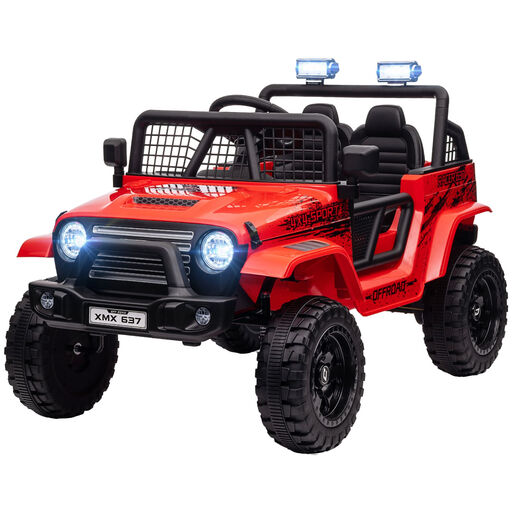
Why this product suits this profile: According to the product information, this 12-volt vehicle is designed for children aged 3 to 7 and features a remote control and two motors.
The stated top speed is 3 to 8 km/h. A 2.4-GHz remote control with three speed settings supports parental control.
Two seats, safety belt, soft-start function and 12V battery. The stated load capacity is 50 kg.
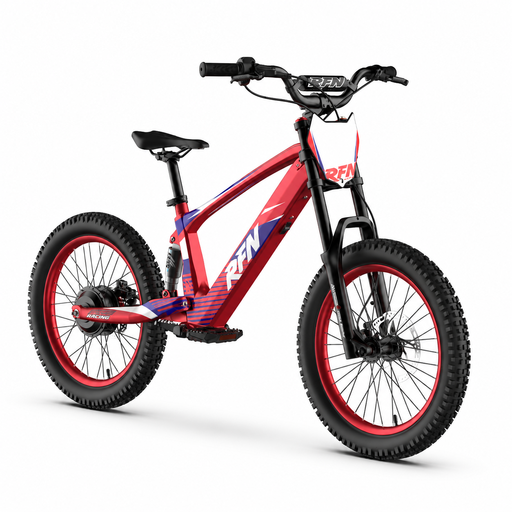
Why this product suits this profile: This off-road electric motorbike is aimed at taller, more experienced children for whom 20-inch wheels, hydraulic brakes and three riding modes are important.
According to the data sheet, the speed can be set to 15, 25 or 35 km/h. Before buying, carefully compare the child’s height, riding ability and intended riding area.
36 V, 750 W rated power, hydraulic front and rear brakes, front suspension and a stated range of 39 km.
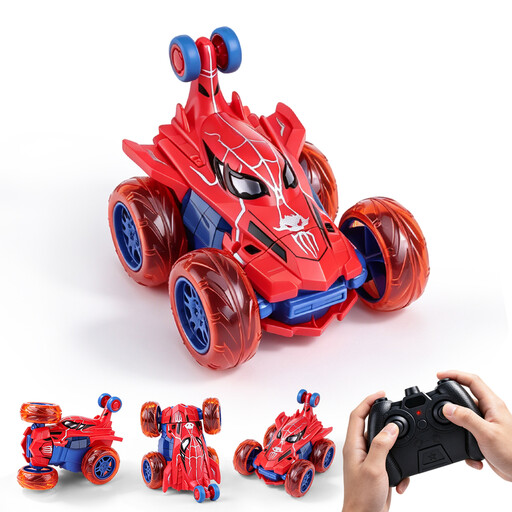
Why this product suits this profile: This remote-controlled vehicle is specified for children aged 4 to 12 and is suitable for short rides on sand, grass and firm surfaces.
The product information specifies a 3.7V battery and a 2.4-GHz remote control. This clearly classifies the model as an RC toy rather than a ride-on vehicle that children can sit in.
Four-wheel drive, 360-degree stunts, illuminated wheels and USB charging cable. The remote control requires two AA batteries.
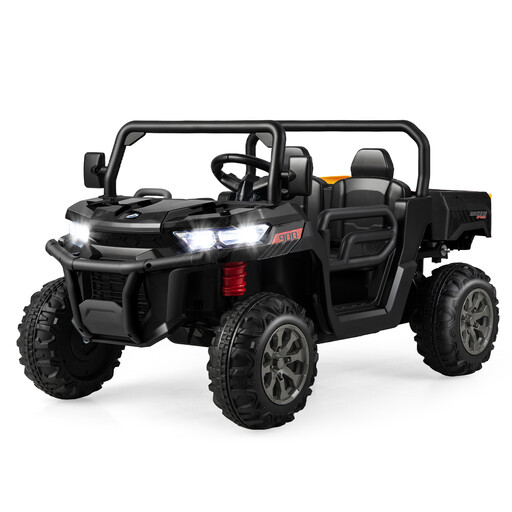
Why this product suits this profile: According to the product information, this two-seater electric car for children is designed for ages 3 to 8, speeds of 3 to 8 km/h and a load of 50 kg.
The low stated speed, safety belts, lockable doors and soft-start function address typical control and starting issues.
Two motors, 12V battery, 2.4-GHz remote control and suspension. The battery is specified with a charging time of 8 to 12 hours.
Read the operating instructions in full and charge the battery according to the instructions before using the vehicle for the first time. Initially, the child should ride on a flat, dry and clearly visible surface. A suitable helmet and closed-toe shoes are advisable, particularly with an off-road electric motorbike for children.
Before every use, check the brakes, tyres, seat, cables, charging socket and remote control. Children should be supervised while riding. With an electric car featuring a remote control, it is advisable to check the connection and emergency-stop function beforehand, without the child in the vehicle.
We have put together a complete, regularly updated list of products that fully meet these strict selection criteria and the safety regulations applicable in the EU.
Running time depends on the battery capacity, selected speed, surface, temperature and load. Manufacturers’ specifications should therefore be treated as a guide. Usable capacity may decrease after several charging cycles. A replaceable battery can make continued use easier.
The electricity cost per charge is usually low. For a realistic estimate, multiply the battery voltage by its capacity and divide the result by 1,000 to obtain an approximate watt-hour figure. Actual consumption depends on the charger and charging losses. Parents should also factor in potential costs for replacement batteries, tyres or remote-control batteries.
Most ride-on vehicles and RC toys are intended for private land and are not approved for use on public roads. Check the product description, operating instructions and local regulations. Every ride also requires supervision, suitable protective equipment and a speed appropriate for the child.