
Lieferung heute & morgen

Qualitätsgarantie

Willkommens-Angebote freischalten: KOSTENLOSE Lieferung | Bis zu 80 % RABATT | Kostenlose 30-Tage-JoyPlus-Testphase
App herunterladen
An electric ride-on vehicle for children can provide varied entertainment in the garden, on private paths or in suitable indoor areas. The selection ranges from classic children’s electric cars and remote-controlled electric ride-on vehicles for children to electric diggers and children’s electric scooters. An eye-catching design is not the only consideration. Age, riding area, speed, battery and safety features must all be matched to one another.
The “12V” specification describes the battery voltage; it does not automatically indicate the vehicle’s actual driving performance. Likewise, a higher motor output alone says little about how smoothly the vehicle starts or which surfaces it is suitable for. Also consider:
A 12V electric ride-on vehicle for children is sufficient for many straightforward rides. On grass, gentle inclines or uneven paths, however, the drive system, ground clearance and suspension may matter more than the voltage rating.
Manufacturer range figures depend on factors including the child’s weight, surface, temperature, speed and battery charge level. The stated range should therefore be treated as a guideline rather than a guaranteed distance. Also check the charging time and whether a replacement battery is available.
With a battery-powered ride-on vehicle for children, the charger should only be used in accordance with the operating instructions. After use, dry and sheltered storage is recommended. The battery should not be left completely discharged for extended periods.
“Remote control”, “off-road” and “safety belt” are initially just equipment specifications. For practical use, what matters is how these features are implemented. With an electric ride-on vehicle for children with remote control, parents should check whether it includes forward and reverse drive, speed settings and a stop or emergency-braking function.
A children’s ride-on vehicle with a safety belt only provides meaningful protection when the belt is adjusted correctly and the child remains strapped in throughout the ride. Doors, a low centre of gravity and a gentle start can make the vehicle easier to control. Adult supervision remains essential.
The recommended age is a useful guide, but seat position, legroom, handlebar height and maximum load are even more important. A model for children aged 3 to 8 will not automatically suit every child in that age range. Check the product dimensions and compare them with the child’s height.
For older children up to around twelve, a vehicle with a higher load capacity and adjustable speed may be a sensible choice. When buying for two children, you must also take the combined load limit into account.
For younger children, low speed settings and a controlled start are practical features. Models with parental remote control allow adults to supervise the ride from a distance or bring the vehicle to a stop. With a children’s electric car, therefore, do not look only at the top speed; also check the lowest available setting.
A children’s electric scooter also requires a secure standing platform, easily accessible controls and a suitable riding surface. A model with a folding mechanism can be particularly useful where storage space is limited.
An electric off-road vehicle for children with large wheels and suspension is generally designed for firm outdoor surfaces, asphalt or compacted paths. This does not mean that every model is suitable for mud, steep inclines or wet terrain. Follow the manufacturer’s guidance on suitable surfaces.
For indoor use, dimensions, turning circle, tyre type and noise levels are all relevant. Also check that doors, furniture and stairs are a safe distance from the riding area.
Before buying, the product description and instructions should provide information about age, load capacity, battery, charger and assembly. Look for the CE marking and details of the responsible person in the EU. The CE marking is not an independent quality seal; it indicates that the responsible party has declared the product’s conformity.
After delivery, check the screws, plug connections, belt, wheels and charging port. If there is any visible damage, do not use the vehicle until the cause has been clarified.
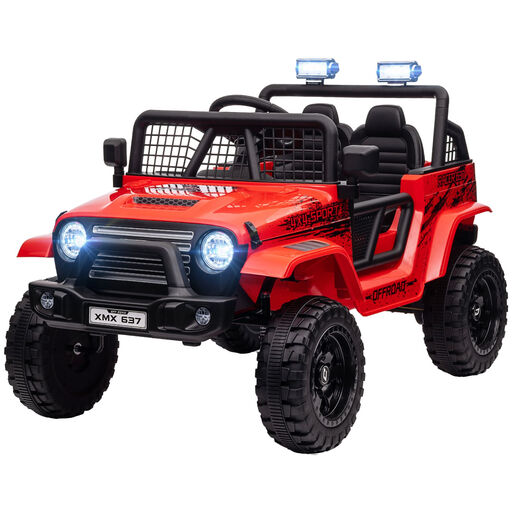
Why it fits: For families looking for a straightforward vehicle for children aged around 3 to 7, with parental control.
The product description clearly specifies 12V dual drive, a safety belt, lighting and remote control.
Suitable for first rides; the remote control gives adults an additional way to supervise the vehicle.
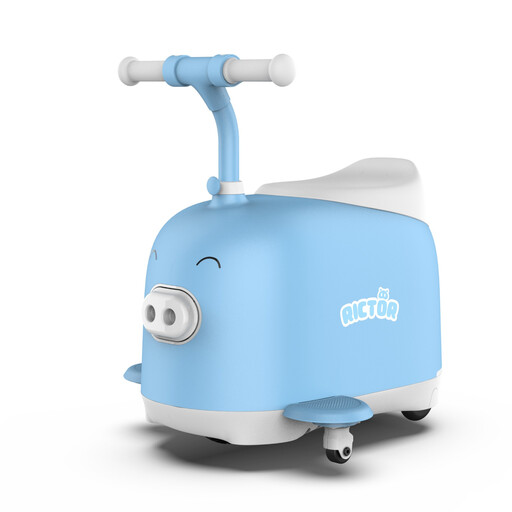
Why it fits: A foldable vehicle for families who want to transport the model after use or store it in a space-saving manner.
The model offers three speed settings of 5, 10 and 15 km/h, along with an app that allows adults to set a speed limit.
Five wheels, a low centre of gravity, a slip-resistant foot platform, puncture-proof solid rubber tyres and a maximum load of 60 kg.
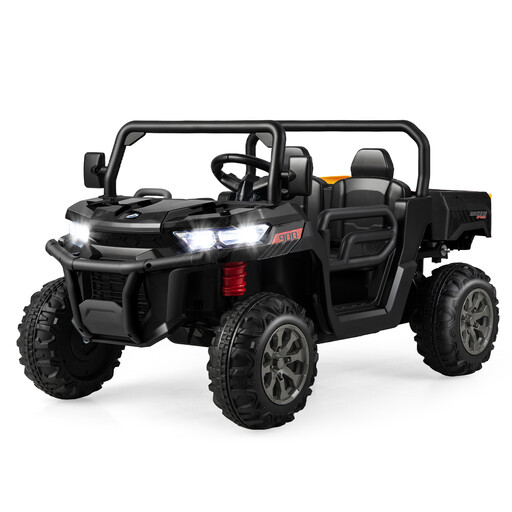
Why it fits: For two smaller children and families who want a tipper bed, shovel and off-road features.
The product data lists a speed range of 3–8 km/h, a 50 kg load capacity, safety belt, soft start, suspension and a 2.4 GHz remote control.
Two seats, four large wheels, suspension, USB/MP3 connection, detachable shovel and electrically operated tipper bed.

Why it fits: An alternative for children aged around 5 to 12 when a compact scooter for indoor and outdoor use is required.
The folding design reduces storage requirements, while app control and three speed settings allow the vehicle to be adapted to different riding environments.
120W motor, 24V 4.5Ah battery, stated range of 15–20 km and five tip-resistant wheels.
Explore the complete category to discover more models and compare features, dimensions and intended uses directly.
That depends on the specific model, seating position and controls. Many vehicles are designed for children from around three years old, while scooters with higher speeds tend to be marketed for older children. The manufacturer’s specifications regarding age, height, load capacity and supervision are decisive. Children should initially ride on a level, unobstructed surface at the lowest speed setting.
The operating time per charge depends on battery capacity, load, surface, temperature and riding style. For the 12V models mentioned, charging can take around 8 to 12 hours, for example. Charge the battery according to the instructions, use only the supplied or approved charger and store the vehicle in a dry place.
The electricity cost per charging cycle is generally manageable, but can only be calculated using the battery capacity, charging losses and your individual electricity tariff. Additional costs may arise from wear parts such as tyres, fuses or a replacement battery. Before buying, it is therefore worth checking spare-parts availability, warranty terms and whether clear instructions in English are provided.