
Lieferung heute & morgen

Qualitätsgarantie

Willkommens-Angebote freischalten: KOSTENLOSE Lieferung | Bis zu 80 % RABATT | Kostenlose 30-Tage-JoyPlus-Testphase
App herunterladen
The decision to buy an e-scooter is often the first step toward greater flexibility in urban life. However, the market is overwhelming and full of marketing promises that rarely hold up in practice. Many buyers only realise after a few weeks that the advertised range is unattainable, the vehicle is not legally permitted on public roads, or it starts showing defects after the first rain shower. As your Joybuy Product Recommendation Officer, I'll help you identify these pitfalls and make an informed decision.
Before we dive into the technical details, let's highlight the three most common issues that lead to disappointment:
To avoid buyer's remorse, focus on objective, verifiable criteria. These three parameters are crucial for long-term satisfaction.
In Germany, a distinction is made between different classes of personal light electric vehicles, each with its own set of rules:
Instead of relying solely on the manufacturer's kilometre specification, you should look at the battery capacity in watt-hours (Wh). A higher Wh number generally means a greater actual range. As a rule of thumb, a battery with around 300 Wh allows for a realistic range of 20–25 km, while models with over 500 Wh are suitable for a long-range e-scooter of 40 km and more.
The motor power, specified in watts (W), determines the acceleration and the ability to tackle inclines. For city traffic, motors with a nominal power of 350 W are often sufficient. Those who regularly ride up hills or have a higher body weight should consider a model with 500 W or more. A good suspension (hydraulic or elastomer) and reliable brakes (preferably disc brakes) are not luxury features but are crucial for ride comfort and safety.
Based on these objective criteria, we have compiled a selection of models suitable for different needs.
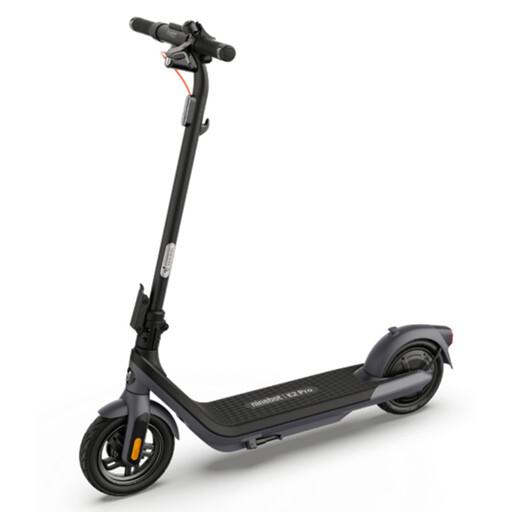
Why This Fits Their Persona: Ideal for the daily commute to work or university. It's lightweight, street-legal, and offers a solid set of essential features for city traffic.
According to the manufacturer, this model has street-legal certification (ABE) and IPX4 water resistance (battery IPX6), making it a reliable choice for daily use and protecting against legal issues and weather damage.
Traction Control System (TCS) for more stability on slippery surfaces. Integrated turn signals and maintenance-free hollow-chamber tyres.
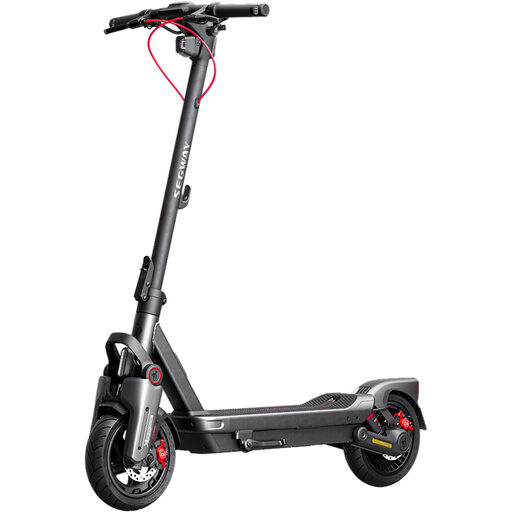
Why This Fits Their Persona: Perfect for users with long commutes or for extended weekend rides. Offers high ride comfort and a very long range.
With a range of up to 80 km (according to the manufacturer in Eco mode) and a large 597 Wh battery, it solves the problem of unrealistic range claims. The high IPX6 water resistance provides reliable protection against the elements.
Dual hydraulic suspension (front and rear) for maximum comfort. 11-inch self-sealing tyres and smart features like Apple Find My.
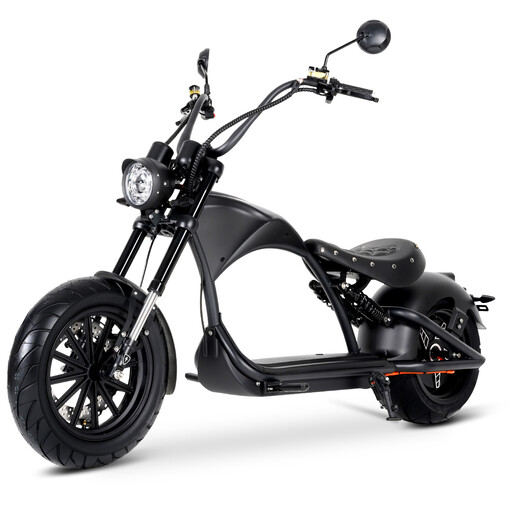
Why This Fits Their Persona: For anyone for whom 20 km/h is not enough. This 45 km/h class (L1e-B) electric scooter is an alternative to a car for urban and inter-city travel.
This model comes with the necessary COC papers for registration and transparently clarifies the legal requirements (driver's license, helmet mandatory). This prevents any nasty surprises after the purchase.
2000W motor for a top speed of 45 km/h and strong acceleration. High payload capacity of 200 kg and hydraulic disc brakes for safety.
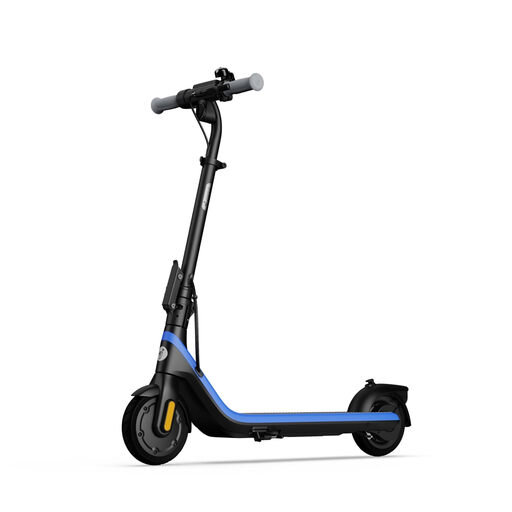
Why This Fits Their Persona: A safe and fun recreational device for kids and teens. Ideal for use in the yard or on other private property.
The product description explicitly states that this e-scooter for kids does not have street-legal certification. This prevents the mistaken purchase of a device that cannot be legally used on public roads.
Three riding modes to gradually adjust the speed (up to 16 km/h). Height-adjustable handlebar that grows with the child, and an integrated Bluetooth speaker.
For users who need even higher performance and range, we have compiled a selection of powerful electric mopeds that meet all legal requirements.
For an e-scooter with a General Operating Permit (ABE, up to 20 km/h), third-party liability insurance is required by law. You provide proof of this with an insurance sticker that is visibly attached to the rear of the scooter. You can obtain this directly from most insurance providers. For faster electric scooters (e.g., 45 km/h), similar but vehicle-class-specific insurance obligations apply.
That depends on the vehicle class:
To maximize the battery's capacity and lifespan, you should follow a few basic rules: Avoid completely draining the battery. Store the scooter and battery at moderate temperatures (ideally 10–25 °C) and avoid direct sunlight or frost. Only use the charger supplied by the manufacturer.