
Lieferung heute & morgen

Qualitätsgarantie

Willkommens-Angebote freischalten: KOSTENLOSE Lieferung | Bis zu 80 % RABATT | Kostenlose 30-Tage-JoyPlus-Testphase
App herunterladen
An electric scooter for children can make it easier to get started with electric mobility and may be suitable for leisure rides on private property. However, your choice should not be based solely on top speed, lighting or a low price. Age, height, load capacity, brakes, tyres and legally permitted use are all crucial factors.
An electric scooter with a top speed of 16 km/h sounds appealing on paper. For younger children, however, this speed only makes sense if several riding modes are available. A beginner mode allows children to get used gradually to acceleration and braking behaviour.
Important: The stated top speed does not indicate that a model may be used on public roads. According to the product information, the products mentioned here are not approved for public roads. Before buying and before every use, parents must check the applicable regulations. In Germany, electric micro-vehicles used in public traffic are also generally subject to a minimum age of 14, provided the vehicle meets the relevant legal requirements.
Solid rubber tyres or maintenance-free tyres generally do not require pressure checks and are less susceptible to conventional punctures. On uneven paths, however, they may provide less cushioning than pneumatic tyres. An electric scooter for children with solid rubber tyres is practical for smooth courtyards and private paths; for rougher surfaces, tyre size, the deck and, where applicable, suspension are also important.
RGB lighting, Bluetooth speakers or an app can make riding more enjoyable. However, they cannot replace an easily accessible brake, a suitable handlebar height or sufficient load capacity. A safe electric scooter for children should first and foremost suit the child’s height and riding ability. Entertainment features only become relevant afterwards.
The stated age is only a starting point. Height should also be taken into account. For example, the Segway-Ninebot C2 Lite is specified for 6 to 10 years and a height of 115 to 145 cm. Its maximum load is 50 kg. According to the product description, the Segway-Ninebot C2 Pro E is designed for 6 to 14 years and has an adjustable-height handlebar. Its maximum load is also 50 kg.
For an electric scooter for children aged 6 and over, the following should therefore be clarified before buying:
An electric scooter for children should accelerate in a controlled manner and slow down reliably. Three riding modes, as specified for both Segway-Ninebot models, can make it easier to adapt the scooter to different levels of experience. According to the product data, the models feature a mechanical drum brake and a child-friendly drum brake respectively.
The Ladped LP65 is specified with a dual braking system, a top speed of 15 km/h and a range of up to 16 km. The actual range depends, among other things, on the child’s weight, the surface, the temperature and the riding mode. Manufacturers’ range figures should therefore be treated as a guide.
The range of a children’s electric scooter must suit the intended use. For short rides on private grounds, 14 to 17 km may be sufficient. The C2 Lite is specified with a range of up to 14 km, while the C2 Pro E offers up to 17 km. Charging takes approximately 5.5 hours for the C2 Lite and approximately 4 hours for the C2 Pro E.
A folding electric scooter for children is easier to store in the boot of a car or in a storage room. Weight is still important, though: According to the product data, the C2 Lite weighs 7.8 kg and the C2 Pro E weighs 10.7 kg. A heavier model may offer more features, but it is more difficult for younger children to carry.
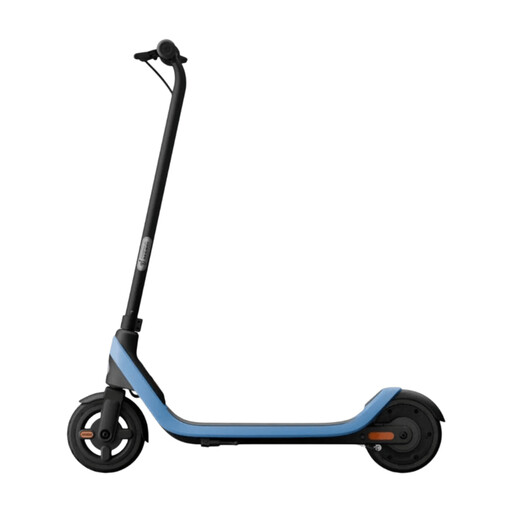
Why this product suits the profile: According to the specifications, this model is aimed at children aged 6 to 10 and offers three riding modes for a gradual introduction on suitable private land.
The three riding modes reduce reliance on a single high speed. The 7-inch solid rubber tyres avoid conventional punctures associated with pneumatic tyres.
Top speed of 16 km/h, range of up to 14 km, folding frame, weight of 7.8 kg and IPX4 splash protection.
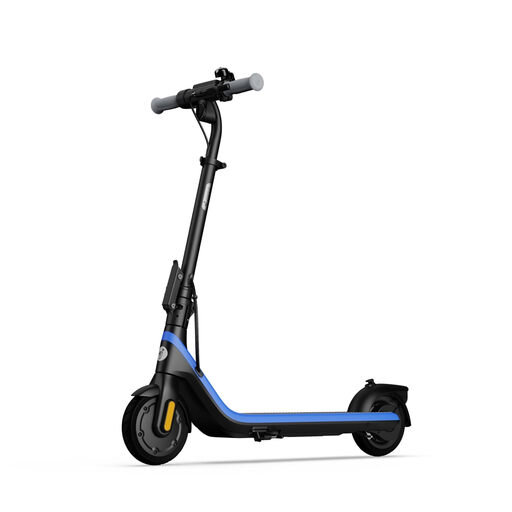
Why this product suits the profile: The adjustable-height handlebar and three riding modes are designed for a longer period of use within the stated age range.
The adjustable handlebar height helps avoid a fixed, inflexible fit. Maintenance-free 7-inch wheels do not require regular pressure checks.
Top speed of 16 km/h, range of up to 17 km, folding aluminium frame, drum brake and Bluetooth speaker.
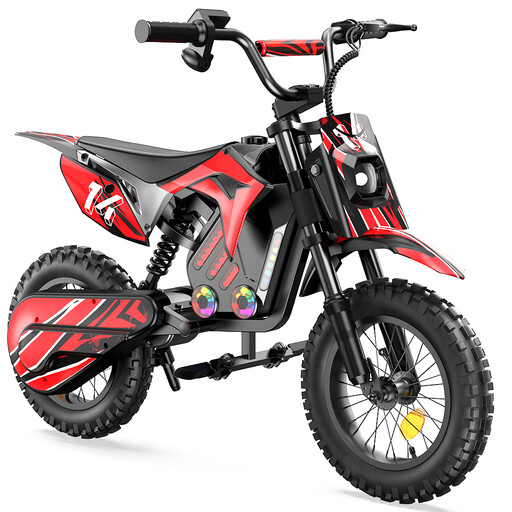
Why this product suits the profile: The stated range of up to 22 km, 14-inch all-terrain tyres and maximum load of 80 kg make it suitable for users who need greater reserves.
The larger tyre design and stated dual suspension are intended for uses where small solid rubber tyres may reach their limits.
Range of up to 22 km, 14-inch all-terrain tyres, disc brakes and Bluetooth speaker according to the product description.
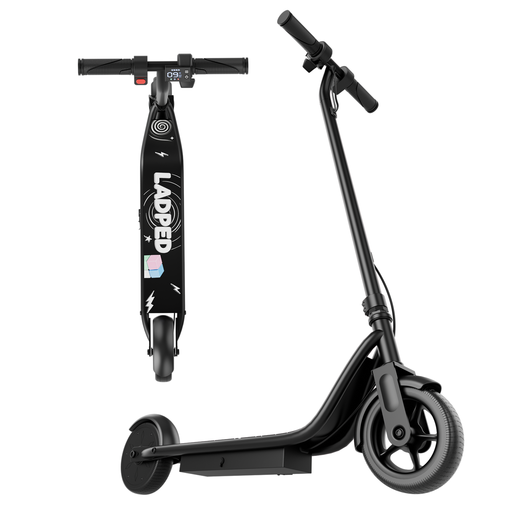
Why this product suits the profile: The combination of a top speed of 15 km/h, a range of up to 16 km and stated suitability for ages 6–12 is well suited to manageable rides on suitable private land.
The dual braking system is a specific feature that should not be overlooked in favour of purely design-focused features when comparing models.
Maximum motor power of 250 W, top speed of 15 km/h, range of 16 km and 6.5-inch solid rubber tyres according to the product specifications.
We have put together a complete, regularly updated list of products that fully meet these strict selection criteria and the safety regulations applicable in the EU.
That depends on the specific vehicle, where it is used and the applicable regulations. According to the product information, the models mentioned are not approved for public roads. They may therefore only be used on suitable private land, provided the owner gives permission. Parents should check the operating instructions and the current legal position.
The usage time per charge depends on the range, weight, riding mode, surface and temperature. Manufacturers’ figures such as 14, 16, 17 or 22 km are intended as guides. To help extend battery life, use the supplied charger, store the battery in a dry place and follow the charging instructions.
In addition to the purchase price, the main costs are electricity for charging, along with potential expenses for protective equipment and replacement parts. Solid rubber tyres can reduce the need for puncture repairs, while the brakes, folding mechanism and charger should be checked regularly for visible damage.