
Lieferung heute & morgen

Qualitätsgarantie

Willkommens-Angebote freischalten: KOSTENLOSE Lieferung | Bis zu 80 % RABATT | Kostenlose 30-Tage-JoyPlus-Testphase
App herunterladen
By Joybuy Product Recommendation Officer, August 30, 2026
The search for an electric scooter for urban commuting can quickly become overwhelming. Many promise an eco-friendly and cost-effective alternative to a car, but the path to the right model is paved with potential pitfalls. False assumptions about legal requirements or exaggerated manufacturer claims often lead to disappointment and unexpected costs. This guide will help you understand the crucial criteria and make an informed choice.
Before you make a decision, you should be aware of the most common misunderstandings that often lead to a poor purchase.
To avoid these pitfalls, focus on the following non-negotiable technical and legal specifications.
The crucial term for your search is L1e-B. This EU vehicle class defines a two-wheeled moped with a design-based top speed of up to 45 km/h. Only vehicles that meet this classification and have a corresponding EU type-approval (CoC papers) can be legally operated on public roads as an electric moped. This clearly distinguishes them from slower eKF scooters or license-free pedelecs. A vehicle declared as a street-legal e-moped must belong to this class.
Instead of relying solely on the manufacturer's mileage claims, you should check the battery capacity. This is specified in watt-hours (Wh) or can be calculated from the voltage (V) and ampere-hours (Ah) values (V × Ah = Wh). A higher Wh value is a more reliable indicator of greater potential range. For daily commuters who need high reliability, an electric scooter with an 80 km range (or more, according to the manufacturer) is a good benchmark. This typically requires a battery with well over 1,000 Wh.
To ride an L1e-B electric scooter on public roads in Germany, a valid driver's license is mandatory. This is usually the AM license category, which is included in most higher car license categories (e.g., Class B). Additionally, insurance is compulsory. You must take out third-party liability insurance and display proof of it on the vehicle in the form of an e-scooter insurance license plate, which must be renewed annually.
Here are some recommendations tailored to specific user profiles that take the aforementioned pitfalls into account.
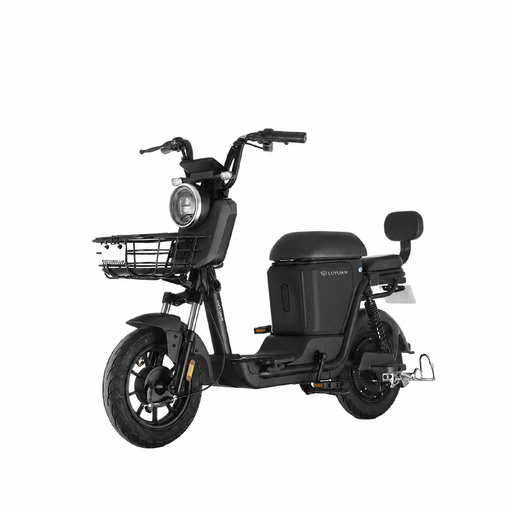
Why This Fits Their Persona: Ideal for users seeking a fully-fledged, legal alternative to a car or public transport for their daily commute. The specifications are designed for continuous urban use.
This model is clearly declared as an L1e-B electric scooter and comes with the necessary CoC papers, eliminating legal uncertainty. The high battery capacity of 48V 24Ah (1152 Wh) substantiates the manufacturer's range claim and provides a realistic basis for commuters.
Full road approval as a moped. The combination of a 400W motor and a large battery enables a practical range for most urban commutes.
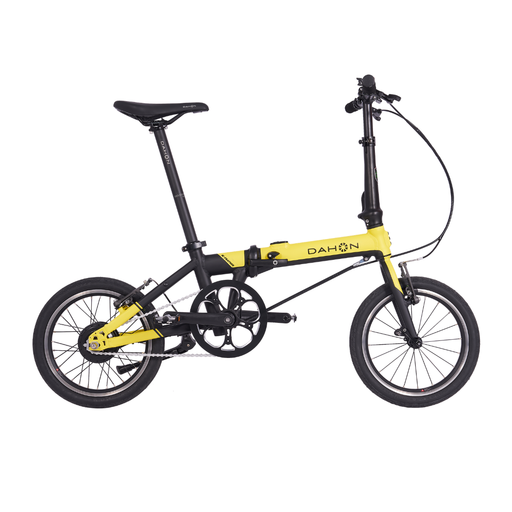
Why This Fits Their Persona: Perfect for users who need to combine their vehicle with public transport or store it compactly in an apartment or office. Ideal for the "last mile."
This model is an e-folding bike (pedelec), not an L1e-B scooter. It bypasses the "hidden costs" trap, as pedelecs with motor assistance up to 25 km/h have no license or insurance requirement. It clarifies the legal distinction for users who don't need a moped.
High portability due to its folding mechanism and low weight. No bureaucratic hurdles like insurance or a special driver's license, making it easy to get started.
To better understand the technology behind these vehicles, it can be helpful to look at the core components. We have compiled a complete, up-to-date list of products that meet strict selection criteria.
1. What kind of driver's license is needed for a road-legal electric scooter? For an electric scooter of the L1e-B class (up to 45 km/h) in Germany, you need at least an AM category driver's license. This is included in most car licenses (Class B, formerly Class 3) and motorcycle licenses. Check your license to be sure.
2. How much does an e-scooter with an insurance license plate cost per year? The cost of the mandatory third-party liability insurance varies depending on the insurance provider and the driver's age. Annual premiums are typically between €40 and €80. The insurance license plate is included in the price and must be renewed every year on March 1st.
3. How far can you really go on a single battery charge? The actual range depends heavily on usage. As a rule of thumb, you can expect about 60–70% of the optimal range stated by the manufacturer. Frequent starting and stopping in city traffic, riding in the cold (below 10°C), and steep inclines will reduce the range the most. A model with a high battery capacity (e.g., over 1,000 Wh) offers the greatest reserves.