
Lieferung heute & morgen

Qualitätsgarantie

Willkommens-Angebote freischalten: KOSTENLOSE Lieferung | Bis zu 80 % RABATT | Kostenlose 30-Tage-JoyPlus-Testphase
App herunterladen
Manually driving screws, especially during furniture assembly or repairs, can be time-consuming and tiring. Using the wrong tool can also easily lead to stripped screw heads or damaged surfaces. An electric screwdriver offers an efficient and precise alternative. It streamlines the job, ensures consistent results, and is often compact enough to be used in hard-to-reach places.
This article serves as a guide. It explains the key features to look for when making your choice and presents various models for different applications—from assembling new furniture to repairing delicate electronics.
To find the right tool for your projects, a few technical specifications are crucial. The following points will help you better understand and compare model specifications.
Torque, measured in Newton-metres (N·m), describes the rotational force applied to the screw. A cordless screwdriver with adjustable torque is particularly versatile:
The speed (RPM) indicates how fast the screwdriver bit rotates. A higher speed gets the job done faster, while a lower speed allows for more control.
Most modern devices are USB-rechargeable, allowing for flexible charging via power banks, laptops, or standard power adapters. The battery capacity, measured in milliampere-hours (mAh), determines the runtime. A battery with 1500 mAh or more typically provides enough power for longer projects. Lithium-ion batteries are the standard here, as they have no memory effect and low self-discharge.
Ergonomics and included accessories are crucial for practical use.
Here is a selection of electric screwdrivers that are well-suited for different tasks due to their specific features.
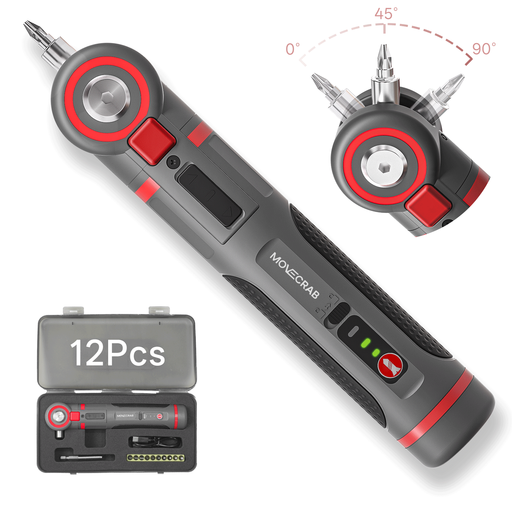
What sets it apart: This model combines flexibility with solid performance. Its key advantage is the head, which can be locked in three positions (0°, 45°, 90°), making it much easier to work in corners and other hard-to-reach areas. The adjustable torque makes it a versatile tool for various materials.
Pros:
Who is it for? Ideal for DIY enthusiasts who regularly assemble furniture or perform household repairs and need a flexible tool that adapts to different situations.
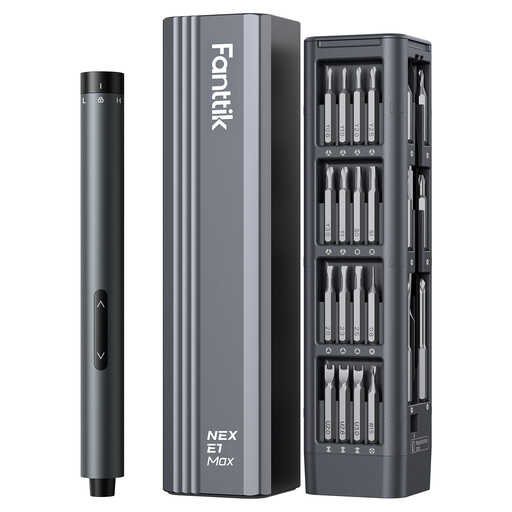
What sets it apart: The Fanttik E1 Max is designed as a precision screwdriver and has been recognised for its design (iF Design Award 2023, Red Dot Design Award 2024). With its very low torque and extensive bit set, it specialises in delicate work on electronic devices. The magnetic storage case keeps everything organised and quickly accessible.
Pros:
Who is it for? Perfect for tech enthusiasts, hobbyists, and anyone who regularly repairs smartphones, laptops, cameras, or other small devices.
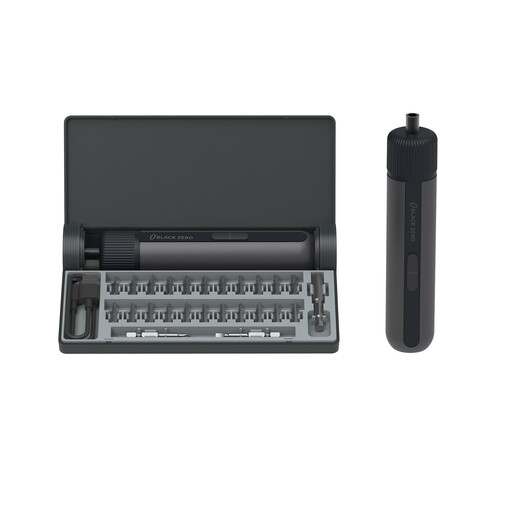
What sets it apart: The BLACKZERO screwdriver is a compact all-rounder that offers impressive power for its size. With a maximum hard torque of 8 N·m, it is suitable for a wide range of DIY projects. A special feature is the integrated magnetiser, which re-magnetises the bits as needed.
Pros:
Who is it for? A great choice for general household use. It's suitable for users looking for a reliable and powerful tool for various tasks, from furniture assembly to minor repairs.
The models featured here already cover a broad spectrum of needs. If you haven't found the right tool for your specific project, you can find more alternatives in our product range.
Explore our full range of tools in the compact set category and find the perfect solution for your tasks.
Torque indicates the rotational force the tool applies to a screw. Higher torque means more power and is necessary for driving screws into harder materials. Low torque is important for delicate materials like plastic or when repairing electronics to prevent over-tightening the screws.
Most electric screwdrivers are primarily designed for driving and removing screws. Their speed and power are optimised for this purpose. For drilling into materials like wood, metal, or masonry, a cordless drill or a power drill is the better choice, as these tools have higher speeds, more torque, and a chuck to hold drill bits. However, some powerful screwdrivers can drill small holes in very soft materials.
The battery life depends on several factors: the battery capacity (in mAh), the load (the required torque), and the material being screwed into. A device with a capacity of 1500–2000 mAh can last through the assembly of several pieces of furniture or for numerous smaller repairs before needing to be recharged via its USB port.