
Lieferung heute & morgen

Qualitätsgarantie

Willkommens-Angebote freischalten: KOSTENLOSE Lieferung | Bis zu 80 % RABATT | Kostenlose 30-Tage-JoyPlus-Testphase
App herunterladen
From assembling new furniture and building a gaming PC to repairing small electronics, many household projects require precise screw work. A manual screwdriver can quickly lead to fatigue, while a large drill driver is often too cumbersome and overkill. An electric screwdriver fills this exact gap. It offers the necessary comfort and precision for delicate jobs without sacrificing the power needed for everyday tasks.
This article serves as your guide. We'll explain the key features to consider when making your choice and present a selection of models for various applications.
Selecting the right device depends heavily on your intended use. Three central criteria will help you make an informed decision.
Torque, measured in Newton-metres (N.m), describes the rotational force of the screwdriver. Higher torque means more power to drive screws into tough materials.
The portability of an electric screwdriver is determined by its battery. Pay attention to the battery capacity (measured in milliamp-hours, mAh) and charging time. Modern devices increasingly feature a USB-C port, simplifying charging with your existing power adapters.
The form factor is also relevant. A compact, cordless pen-style screwdriver is particularly handy and can reach tight spaces. A mini cordless screwdriver is lightweight and portable, perfect for on-the-go use or quick jobs.
A versatile tool is only complete with the right accessories. A good cordless screwdriver set includes a wide range of bits for different screw heads (e.g., Phillips, Slotted, Torx, Hex). For specialised applications like repairing smartphones or laptops, a precision screwdriver set with very small bits is essential. Magnetic bit holders and extensions further enhance user comfort by preventing screws from being dropped.
Based on the criteria above, we have compiled a selection of models suited for a variety of projects.
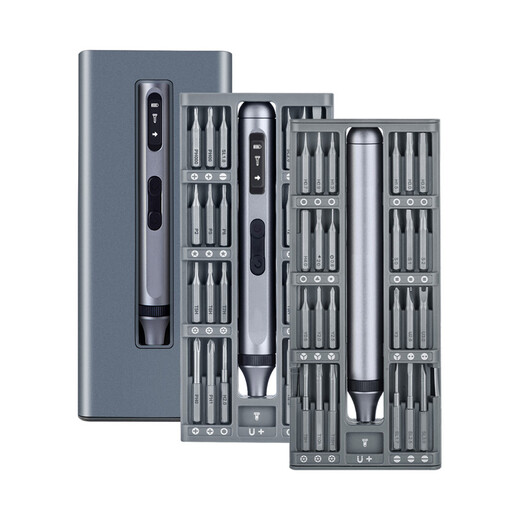
Why it stands out: With its slim aluminium handle and 48 included bits, this set is designed for precision work. The low electric torque is ideal for sensitive electronics, while the manual mode provides extra power reserves.
Pros:
Who is it for?: Ideal for electronics hobbyists, PC builders, and anyone who regularly works on small devices like smartphones, laptops, or cameras.
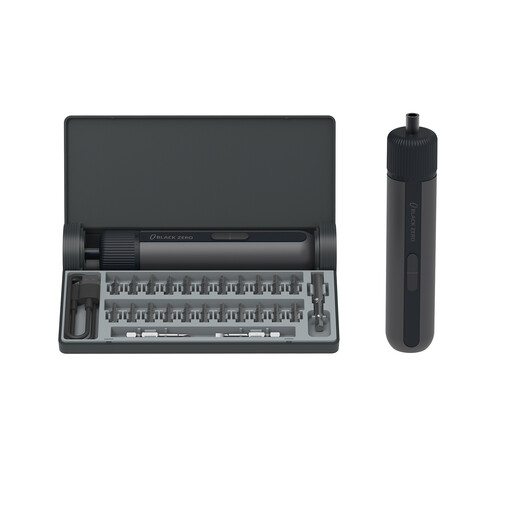
Why it stands out: The BLACKZERO screwdriver is a powerful all-rounder for the home. With a maximum hard torque of 8 N.m and five torque settings, it effortlessly handles furniture assembly and general DIY projects.
Pros:
Who is it for?: A practical tool for DIY enthusiasts who need a reliable device for furniture assembly, installations, and general repairs around the house.
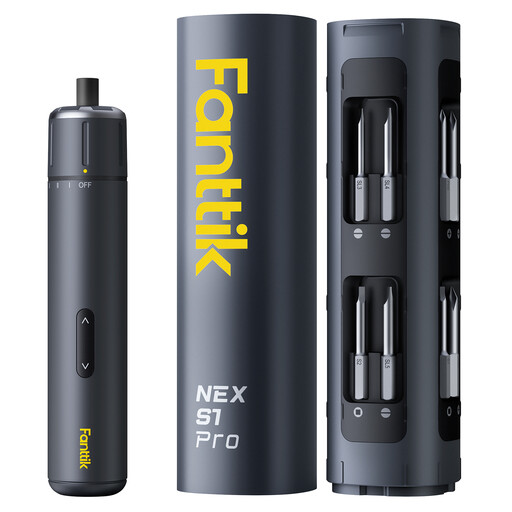
Why it stands out: The Fanttik S1 Pro combines high performance with premium craftsmanship. The long-lasting 2000 mAh battery, three precise torque settings, and S2 steel bits make it a robust companion for more demanding projects.
Pros:
Who is it for?: For tech enthusiasts and demanding DIYers looking for a powerful and durable tool for PC building, furniture assembly, and other regular projects.
If these recommendations don't include the perfect model for your specific needs, you can find more options in our broader selection. Discover our full range of screwdriving tools for different power and precision requirements.
? Discover more torque screwdrivers here
An electric screwdriver is typically smaller, lighter, and has lower torque than a conventional cordless drill (often called a cordless drill driver). It is primarily designed for driving and removing screws, especially in precision mechanics or during furniture assembly. A cordless drill is larger, heavier, has significantly higher torque, and often includes a drilling function, qualifying it for more demanding construction and renovation work.
For building or upgrading a PC, a low, easily controllable torque is crucial to avoid damaging sensitive components like motherboards or SSDs. An electric torque between 0.2 N.m and 1.5 N.m is ideal. Many electric precision screwdrivers offer exactly this range or feature adjustable torque settings.
To ensure the longevity of the bits, they should be cleaned of dust and debris after use. Always store the bits in their supplied case in a dry place to prevent corrosion. Avoid using the bits for tasks they are not intended for (e.g., as a prying tool), as this can lead to deformation or breakage.