
Lieferung heute & morgen

Qualitätsgarantie

Willkommens-Angebote freischalten: KOSTENLOSE Lieferung | Bis zu 80 % RABATT | Kostenlose 30-Tage-JoyPlus-Testphase
App herunterladen
From assembling a new shelf to repairing a laptop, having the right tools is crucial for a clean and efficient result. A manual screwdriver is sufficient for many tasks, but for projects involving numerous screws or delicate electronics, the work can quickly become tedious and prone to error. An Electric Screwdriver Set offers a precise, effort-saving alternative.
This article serves as your guide. We will introduce various models and explain the key features to consider when making your selection. Our goal is to provide you with the information needed to make an informed decision based on objective product characteristics.
The right device for you depends heavily on its intended application. Three key criteria will help you narrow down your options.
Torque, measured in Newton-metres (N.m), describes the rotational force the screwdriver applies to a screw.
Some models offer adjustable torque settings, which increases their versatility.
A good set is distinguished by a diverse selection of bits. Ensure that the most common types (Slotted, Phillips, Torx, Hex) are included in various sizes. For working on modern electronics, special bits like Pentalobe or Tri-wing are often required.
The material of the bits is also important. S2 steel is known for being durable and resistant to wear. Another practical feature is magnetic bits. They hold the screw securely, making it much easier to position in tight or hard-to-reach areas.
The battery capacity, measured in milliamp-hours (mAh), determines the device's runtime. A higher capacity means you can work longer before needing to recharge. For occasional use, smaller batteries are often sufficient, while models with 2000 mAh or more are advantageous for extensive projects.
A USB-C port has become the modern standard. It allows for convenient charging with the same cable used for many other devices, such as smartphones or laptops.
Based on the criteria mentioned, we have compiled a selection of models suitable for various use cases.
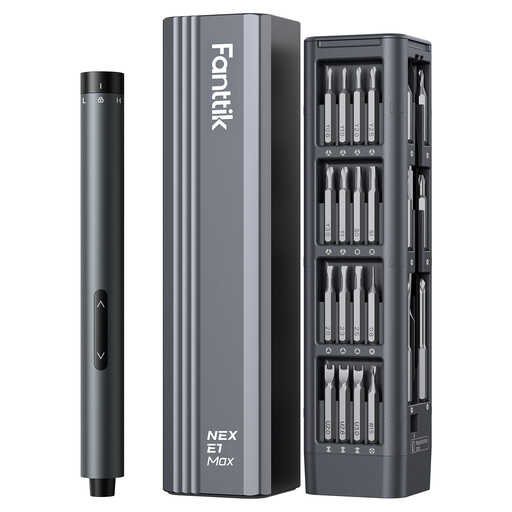
Why It Stands Out: This model is specifically designed as an electronics tool kit. Its design has been honoured with the iF Design Award 2023 and the Red Dot Design Award 2024. The magnetic storage case features a pop-up mechanism, ensuring all 50 bits are stored neatly and are always within reach.
Pros:
Who Is It For? This set is aimed at tech hobbyists and anyone who regularly works on small electronic devices like smartphones, laptops, cameras, or drones and requires a high-precision tool.
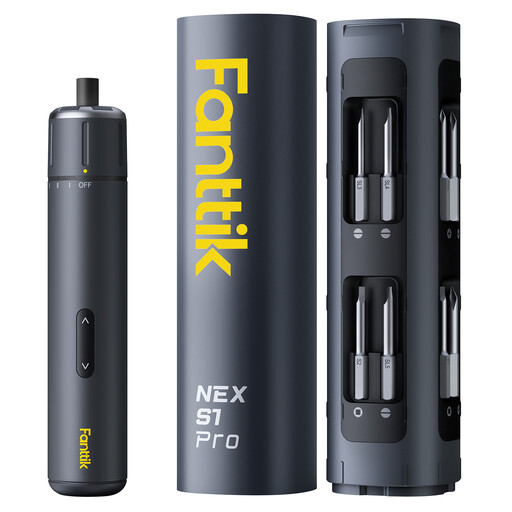
Why It Stands Out: The Fanttik S1 Pro is a powerful electric screwdriver that bridges the gap between a precision tool and a classic cordless screwdriver. With significantly higher torque, it is well-suited for more demanding assembly jobs.
Pros:
Who Is It For? Ideal for furniture assembly, building gaming PCs, and general household DIY projects that require more power than electronics repair.
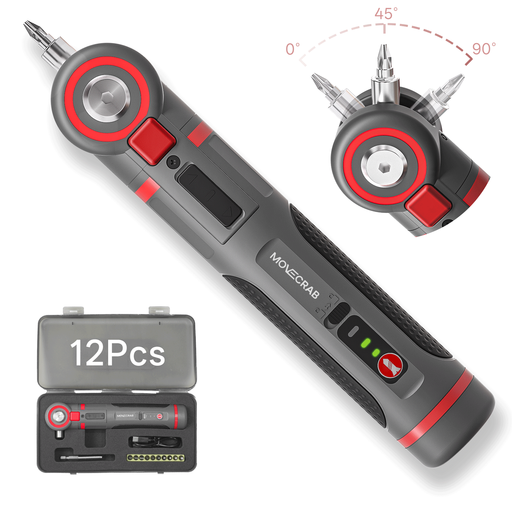
Why It Stands Out: The standout feature of this model is its adjustable head, which can be locked into three positions: 0°, 45°, and 90°. This allows you to work in hard-to-reach places where a straight screwdriver wouldn't fit.
Pros:
Who Is It For? This tool is the right choice for users who need maximum flexibility. It's well-suited for repairs inside appliances, in cars, or for assembling furniture with complex joints.
The products featured here cover common use cases. If you haven't found the right model for your specific project or are looking for more alternatives, you can find additional options in our broader product category.
Discover more screwdrivers on Joybuy.de
What is the difference between a cordless screwdriver and an electric precision screwdriver? The main difference lies in the torque and form factor. A precision screwdriver set is a mini cordless screwdriver with very low torque, designed for delicate components in electronics. A classic cordless screwdriver is larger, more powerful, and intended for general DIY tasks like furniture assembly.
What is a good torque range for a mini cordless screwdriver? For electronics repair, torque settings between 0.05 N.m and 0.3 N.m are common to avoid damaging circuit boards or threads. For lighter assembly tasks that don't require significant force, values up to 1.5 N.m or 2 N.m can be useful.
Why are magnetic bits useful in an electronics tool kit? When working with the very small screws found in laptops or smartphones, precision is key. Magnetic bits hold the screw securely to the tip of the screwdriver. This prevents the screw from being dropped and lost and makes it easier to position it perfectly in the screw hole.