
Lieferung heute & morgen

Qualitätsgarantie

Willkommens-Angebote freischalten: KOSTENLOSE Lieferung | Bis zu 80 % RABATT | Kostenlose 30-Tage-JoyPlus-Testphase
App herunterladen
An electric screwdriver set can make furniture assembly, household repairs and DIY projects much easier. However, tools vary considerably in terms of torque, design, bit selection and intended use. A large accessory compartment alone says little about whether a tool is suitable for electronics, woodworking or heavy-duty fastening.
If you focus only on high figures or a large number of bits, you can quickly end up buying the wrong model. The following criteria will help you assess marketing claims and choose a set that suits your needs.
A high Nm figure is not automatically an advantage. For computer cases, small household appliances or furniture fittings, too much force can damage screw heads, threads or delicate materials. An adjustable torque is therefore more important for many applications than the highest possible peak value.
For light-duty tasks, around 0.1 to 3 Nm is often sufficient. A powerful cordless drill driver with up to 50 Nm, on the other hand, is more suitable for wood, metal and certain drilling jobs. A cordless combi drill with several torque settings is more versatile, but is usually larger and heavier than a compact electric screwdriver.
A set with 48 or 90 pieces sounds comprehensive. However, what matters is whether it contains the profiles and sizes you need. Furniture assembly commonly involves Phillips, slotted, Torx and hex bits. For electronics, small PH, SL and Torx profiles are relevant.
You should also check the bit holder, length and material specification. A coated or hardened S2 steel bit may indicate a particular construction in the product details. Even so, bits should be replaced when visibly worn. A screwdriver with bits is only practical if the storage is well organised and the pieces can be removed safely.
The figure in mAh describes capacity, not a fixed number of screws that can be fastened. Torque, load, material, charge level and motor all affect runtime. A small battery is often sufficient for occasional repairs. For longer assembly jobs, a second battery can reduce waiting times.
A clear charge indicator and a standardised connection are useful features. A USB-C electric screwdriver can be charged with a suitable 5-V charger, while other models require their own dedicated charger.
For delicate tasks, several torque settings and finely controllable operation are useful. A low speed makes it easier to position the tool accurately, while higher speeds can accelerate assembly work. With a two-speed tool, it should be clear which range is intended for screwdriving and which for drilling.
An electric screwdriver for electronics requires different specifications from a powerful cordless combi drill. For car repairs or seized screws, a cordless impact wrench, or a cordless impact driver with a suitable square drive, may be worth considering. These tools are not intended to replace a precision screwdriver.
A mini cordless screwdriver or precision screwdriver is better suited to tight housings and drawers. For furniture assembly, an ergonomic handle with a secure grip is helpful. Models with adjustable angles can offer advantages in hard-to-reach areas.
Before buying, check:
For electric tools, there should be clear operating instructions, warnings, manufacturer details and a responsible person based in the EU. The CE mark should not be considered in isolation: the complete product information and intended use are what matter. Batteries must not be disposed of with household waste and should be recycled through the local return options available.
The safety and protection instructions stated in the product information should be read before first use. Avoid working in damp environments, potentially explosive areas or with an overloaded tool.
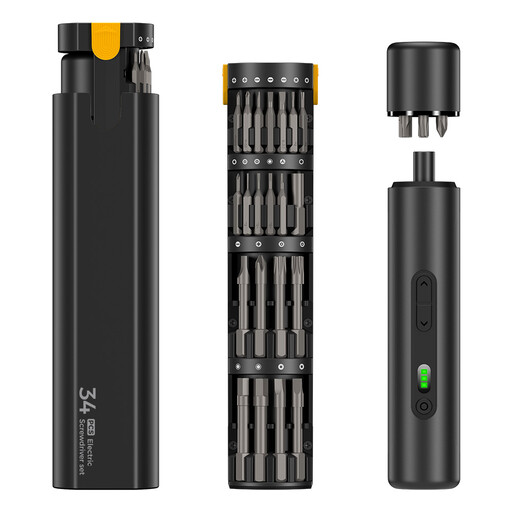
Why this product suits this profile: This set is designed for typical repairs, furniture assembly and household DIY tasks, and includes 26 common bits in a magnetic storage box.
The three selectable settings from 1.2 to 3 Nm limit the force more effectively than a tool without torque control. The product details also state a runtime of up to 60 minutes.
26 bits, a magnetic case and a 1,500-mAh battery. For larger drilling jobs, the limited torque range should be taken into account.
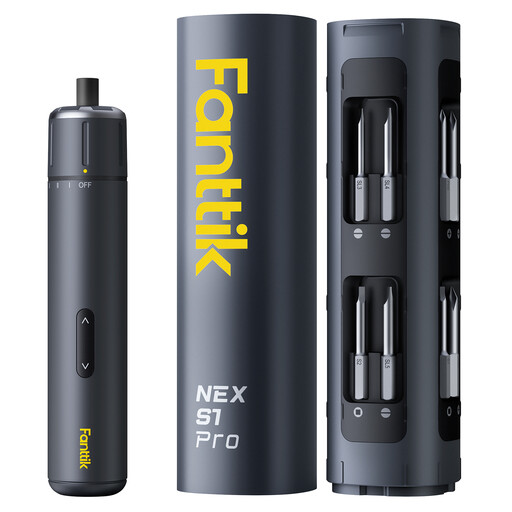
Why this product suits this profile: This compact model is designed for furniture, gaming PCs, computers and general maintenance work. A magnetic metal box keeps the tool and bits together.
Three torque settings and a stated maximum hard torque of 6 Nm make it easier to adapt the tool to different screwdriving tasks. For precision work, the lowest setting should be used.
16 S2 bits, LED lighting, a 2,000-mAh battery and a USB-C connection. The smaller number of bits focuses on selected profiles.
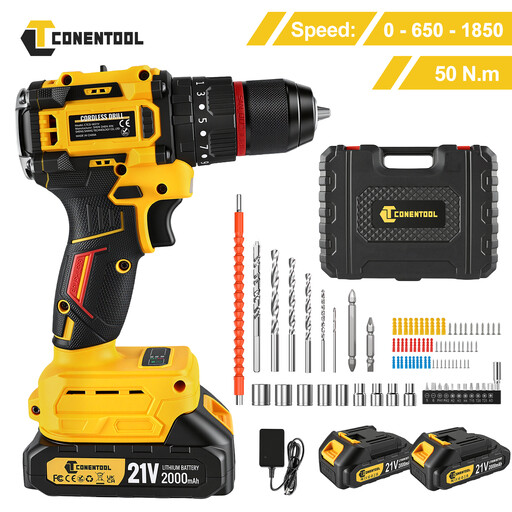
Why this product suits this profile: The 3-in-1 system is designed for users who want one tool for screwdriving, drilling and impact drilling.
With 25+3 settings, two speed ranges and a variable trigger, it allows more precise adjustment than a basic single-setting tool.
The stated specifications include up to 50 Nm, two 2,000-mAh batteries, an LED work light and a 10-mm keyless chuck. Its greater weight should be considered during longer jobs.
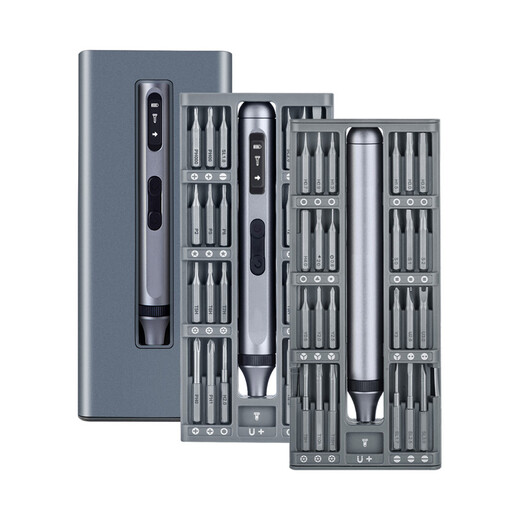
Why this product suits this profile: This set combines a small electric screwdriver with 48 bits, tweezers and a pry tool for delicate repair work.
The electric torque is specified as 0.3 Nm, while up to 3.5 Nm is possible in manual mode. This allows you to work more carefully with delicate screws.
350-mAh battery, stated charging time of 90 minutes and 48 bits. Its low electric torque range is not intended for drilling wood or installing large fixings.
We have put together a complete, regularly updated list of products that fully meet these strict selection criteria and the safety regulations applicable in the EU.
For many furniture joints, a low to medium range is sufficient, often around 1 to 5 Nm. The screw size, material and furniture manufacturer's specifications are what matter. Start with a low setting and increase the force only if the joint is not secure enough.
Runtime depends on battery capacity, load and motor. Small precision tools may be designed for short repairs, while models with 1,500 or 2,000 mAh offer more reserve capacity for longer use. Product claims such as ‘up to’ should be treated as a guide, not as guaranteed working time under every load.
USB-C is convenient if you already have compatible chargers and regularly transport the tool. Before buying, check whether a charging cable is included, which charging parameters are supported and whether the tool may be used while charging. For intensive workshop tasks, a replaceable battery system may be more practical.