
Lieferung heute & morgen

Qualitätsgarantie

Willkommens-Angebote freischalten: KOSTENLOSE Lieferung | Bis zu 80 % RABATT | Kostenlose 30-Tage-JoyPlus-Testphase
App herunterladen
An electric screwdriver set can make assembling furniture, repairing electronics and carrying out small maintenance tasks much easier. But not every compact tool suits every job. A mini electric screwdriver for smartphone screws needs different features from a cordless screwdriver for furniture or light woodwork.
The key buying decisions aren’t just about the number of bits. What really matters is controllable torque, the right bit profiles, battery capacity, and whether the tool is intended for delicate screw connections or heavier workloads.
A screwdriver with 48 or 50 bits sounds versatile. What’s important, though, is whether the included profiles match your own devices. For a tool used for phone and laptop repairs, for example, small Phillips, Torx, slotted, Pentalobe or specialist profiles matter more than a large number of duplicate bits.
Also, buyers should pay attention to bit size and material specification. For delicate screw heads, precisely fitting bits made from suitable tool steel are more sensible than a confusing collection with no clear organisation.
A cordless screwdriver with a powerful motor is fine for furniture assembly or stubborn screws. With smartphones, cameras and laptops, however, too much force can damage threads or screw heads. So look out for the distinction between electric torque, manual torque and, where applicable, multiple torque settings.
The figure given in newton metres (N·m) describes the force at the tool. A low value is often easier to control for precision work. With an electric precision screwdriver, it should be possible to start on the lowest setting.
Manufacturers frequently quote battery life as a no-load or maximum value. Under actual load, it can be lower. So check whether the figure is explicitly described as no-load runtime and what type of battery is fitted.
A USB-rechargeable screwdriver is practical if you already have a suitable charger. Also important are charging time, charging port and a visible battery indicator. For longer projects, a larger battery can be useful, while a small 350 mAh battery stays more compact for short repair jobs.
For sensitive electronics, low torque settings, a start function without jerky engagement and a manual tightening option are helpful. For furniture and general DIY tasks, the torque can be higher. A tool with forward and reverse also makes it easier to remove screws.
Bear in mind that manufacturers’ figures aren’t always directly comparable. An electric torque of 0.2 N·m is not the same as a manual torque of 3 N·m. The manual value describes use as a conventional screwdriver with the motor switched off or the drive locked.
A precision screwdriver set should include bits for the applications you actually plan to do. For electronics, small shaft sizes and magnetic holders are often practical. For furniture assembly, on the other hand, larger PH, PZ, Torx and hex bits are usually needed.
Also check:
An aluminium handle can be sturdy and grippy, while a slim plastic housing reduces weight. For longer jobs, the balance between grip diameter, weight and reachable screw matters.
For all devices, follow the instructions in the user manual. Electric screwdrivers should not be used in damp environments. Before repairing electronics, devices must be switched off and disconnected from power sources. Small bits and accessories should be kept out of reach of children. An automatic start lock or safety switch can prevent accidental activation.
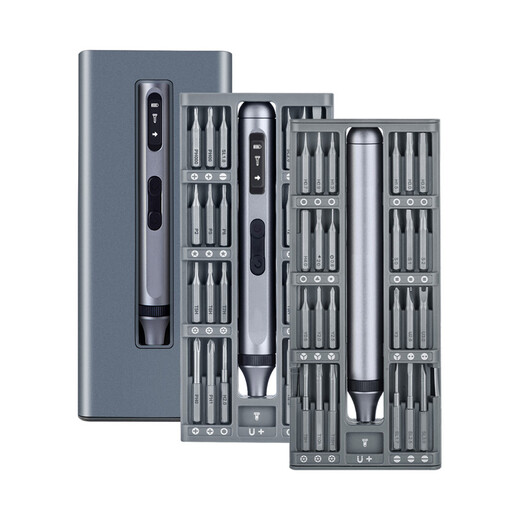
Why this product fits the profile: The set combines a compact design with 48 bits and additional accessories for household and electronics repairs.
The specifications separate electric torque from manual torque: 0.3 N·m electric and 3.5 N·m manual. This makes it easier to assess suitability for finer work.
350 mAh battery, up to 120 minutes no-load runtime according to product specs, 90 minutes charging time, plus tweezers and prying tool.
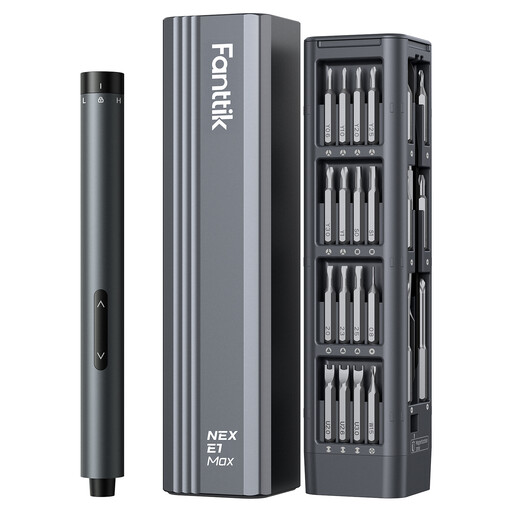
Why this product fits the profile: The combination of aluminium alloy, magnetic case and 50 bits is designed for tidy precision work on phones, cameras, watches and laptops.
Two electric torque settings at 0.05 and 0.2 N·m allow for more nuanced selection than a tool with only one fixed power level.
50 bits made from S2 steel according to product description, USB-C charging port, 200 rpm and up to 3 N·m manual torque.
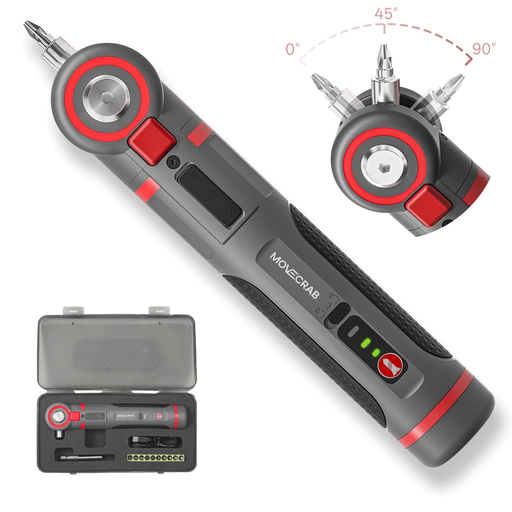
Why this product fits the profile: The adjustable design with 0°, 45° and 90° is aimed at DIY enthusiasts and assemblers who also work in tight or hard-to-reach spaces.
Three selectable torque settings at 3, 4 and 5 N·m provide clearer adaptation to electronics, assembly and more demanding tasks.
2,000 mAh battery according to product specs, LED lighting, safety lock and adjustable working angles.
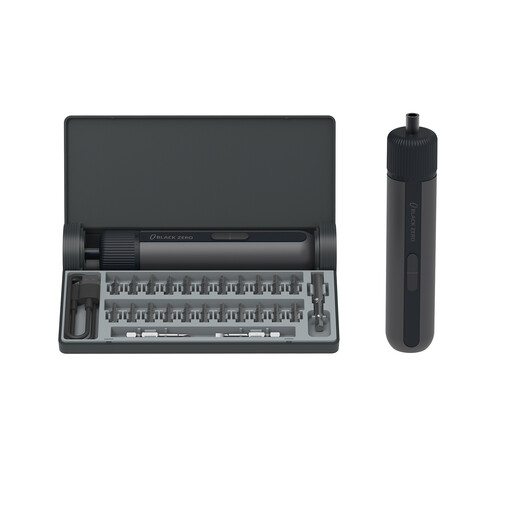
Why this product fits the profile: The tool is aimed at furniture, cabinets, household repairs and light maintenance work, offering greater power reserves than typical precision models.
Five speed and four torque settings allow adjustment to different materials and screw sizes.
24 bits, USB-C port, battery indicator, magnetiser and up to 8 N·m hard torque according to product specs.
We’ve put together a complete, regularly updated list of products that fully meet these strict selection criteria and the safety regulations in force in the EU.
For electronics, an electric precision screwdriver with a low torque setting, small bits and good control is sensible. The tool should have forward and reverse and allow manual use. Before working, the battery, charger and any other power sources must be disconnected from the device.
Runtime depends on battery capacity, load, torque and frequency of use. No-load figures are not directly comparable with actual working time. A USB-rechargeable model should not be stored permanently in a deeply discharged state after use. For specific care, follow the manufacturer’s instructions.
For repeated furniture assembly, household repairs and DIY projects, a cordless screwdriver can save time and hand strength. For occasional precision work, a mini model with low torque is sufficient. If you tackle different tasks, look for multiple settings, suitable bits and solid storage.