For cleaning large shower walls
If you want to tackle a large area of tiled wall and higher-up spots after hosting guests, weigh up the reach against how much storage space you have. Ryobi describes its R18TPS-0 as having an extendable handle.


For tall or large shower walls, a brush with a telescopic handle is an obvious choice. For grout, taps and individual spots, a compact handheld model is easier to guide precisely. The key things to check are that the brush head is suitable for your surfaces, that you follow the specific model’s guidance on use in wet conditions, and that you know exactly what’s included. An electric scrubber is no substitute for using cleaning products suited to the material, or for rinsing and drying the surface.
If you want to tackle a large area of tiled wall and higher-up spots after hosting guests, weigh up the reach against how much storage space you have. Ryobi describes its R18TPS-0 as having an extendable handle.
If you mainly want to clean narrow gaps and the areas around taps, look for suitable detail brush heads rather than focusing on a wide brush head alone. Bosch and Clatronic describe models for tiles, grout and shower areas.
If you want to clean tiles, grout or delicate surfaces nearby, choose a brush head and cleaning product suited to the material. The North Rhine-Westphalia Consumer Advice Centre recommends soft cleaning tools for glossy or coated surfaces and marble.
A good fit if: you want to reach high areas of wall without relying on an improvised extension.
Things to consider: A larger brush head is harder to guide precisely along narrow grout lines. Also check how much storage space it needs and what’s included.
A good fit if: you want to clean accessible tiles, grout and corners precisely with a handheld device.
Things to consider: Without a suitable extension, you won’t have the reach for high areas of wall. Bosch and Clatronic provide wet-use and application guidance for their respective models; this won’t necessarily apply to other devices.
| What to consider | What to look for | Who it matters most to |
|---|---|---|
| Reach | Compare handle length, head adjustment, brush size and storage requirements. Ryobi states that the R18TPS-0 can be adjusted from 97 cm to 1,4 m. | If I want to reach high areas of wall without an improvised extension, the right reach matters to me. Around 36 % of consumers say reach is their top buying priority. |
| Grout and corners | Check whether a suitable narrow or detailed brush head is included and can be changed. | If I mainly want to clean joins, grout and areas around taps, a precision brush head matters more than a wide brush head. Around 29 % of consumers put precision in grout lines and corners first. |
| Protecting surfaces and wet-use suitability | Consider the surface and grout material. Check that the brush head and cleaning product are suitable, and read the device and charging guidance for the specific model. | If I’m cleaning delicate or coated surfaces, I don’t want to damage them with unsuitable scrubbing or cleaning products. Around 21 % of consumers prioritise protecting the surface. |
| What’s included | Check the device, battery, charger and suitable replacement brush heads included with the specific offer. | If I want to budget for the brush and the accessories I need, what’s included matters more to me than the brush itself. Around 14 % of consumers pay particular attention to the overall cost. |
Manufacturers’ claims apply to specific models and may refer to different parts of the device. They don’t mean that the device can be submerged or charged in a wet area.
Read the instructions for use, cleaning and charging separately. Never touch a plugged-in power adapter with wet hands.
Using the device incorrectly could damage it and create a safety risk.
Glossy or coated surfaces and delicate materials may need a softer cleaning tool.
Check that the brush head is suitable for the surface and test it carefully on an inconspicuous area first.
An unsuitable brush head could damage delicate surfaces.
According to the manufacturer, the Einhell PICOBELLA 18/90 doesn’t include a battery or charger. Replacement brush heads may also be sold separately as a set, such as for the Clatronic ERB 3815 A.
Before ordering, check what’s included and whether the replacement parts you need are compatible with the exact model.
Depending on the model, you may need to buy an additional battery, charger or suitable replacement brush heads.
The Consumer Advice Centre recommends vinegar-based cleaner or citric acid for limescale, but specifically excludes acid-sensitive materials such as marble. Using a brush doesn’t make an unsuitable cleaning product safe for the material.
Read the care instructions for your tiles and grout before choosing a cleaning product.
An unsuitable product could damage delicate materials.
The UniversalBrush is a handheld model for tiles, grout and shower areas. The TAYDO set is another option, with a specified pack of brush heads.
ONE+ brushes vary in reach, among other things: the R18CPS-0 is a handheld model, while the R18TPS-0 has a telescopic handle.
The ERB 3815 A is described as a compact brush for tiles, grout and showers, and a model-specific replacement brush head set is available.
The PICOBELLA 18/90 is described as suitable for a range of indoor and outdoor uses, including the kitchen and bathroom. It may be worth considering if you already have a compatible Power X-Change battery.
This selection includes electric scrubbers with telescopic or extension handles and brush heads for tiles, grout and bathroom surfaces. Check that the stated features and brush heads apply to the specific version you’re considering.
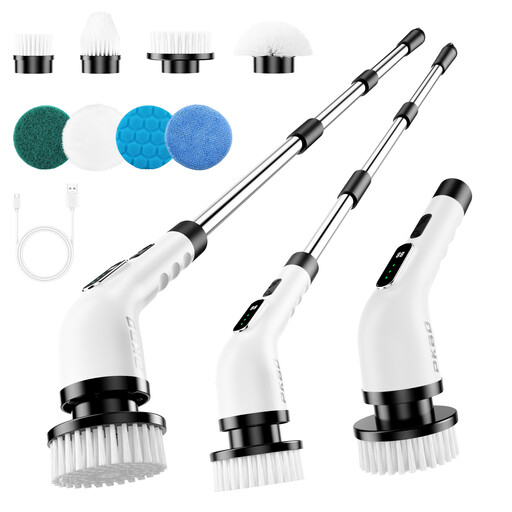 No image available
According to the product description, the adjustable telescopic handle is designed for reaching high and low areas.
Features listed include a 2500-mAh battery, three speeds, eight brush heads and an LCD display. The description names tiles, grout and showers as suitable uses.
 No image available
The product description lists tiled walls and showers as suitable uses, as well as a corner brush head for grout and edges.
The product title lists seven interchangeable brush heads, and an extension handle measuring 30–130 cm.
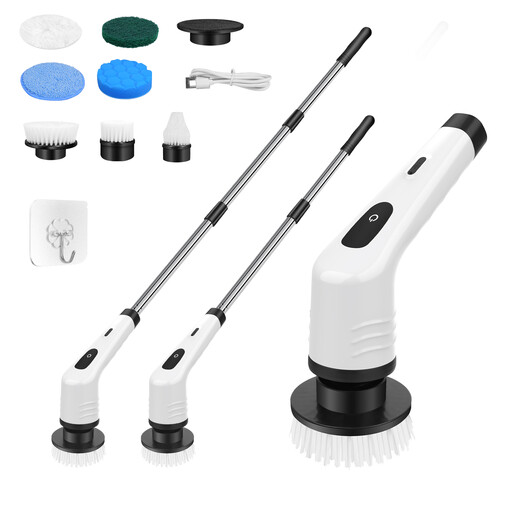 No image available
The description lists bathroom tiles and grout as suitable uses, and says the telescopic handle adjusts in length to reach higher and lower areas.
The product title lists seven interchangeable brush heads and an LED battery indicator.
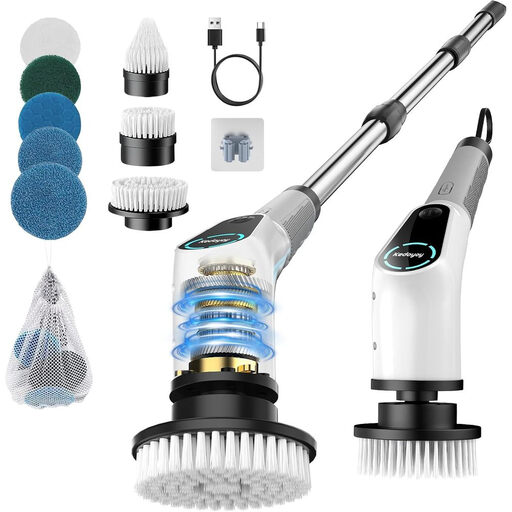 No image available
The adjustable handle is designed for different working heights. The listed uses include bathrooms, tiles and baths.
The title lists an adjustment range of 30–137 cm, two speeds, eight interchangeable brush heads and USB-C charging. The description says not to immerse the device.
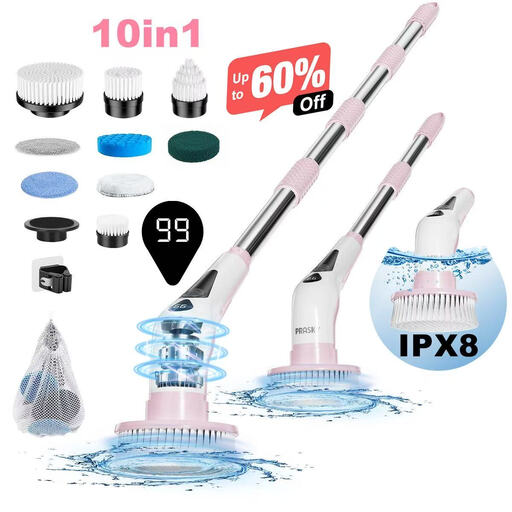 No image available
The product description lists shower and tiled walls, as well as narrow gaps, as suitable uses.
Features listed include nine interchangeable brush heads and an adjustable handle measuring 21,65 to 47,24 inches. The product title specifies an EU plug.
No. The product category alone doesn’t tell you whether a device is suitable for wet conditions. Check the details and instructions for the specific device: Bosch states that the UniversalBrush has IPX5 protection; Clatronic says not to immerse the ERB 3815 A in water to clean it and warns against touching a plugged-in power adapter with wet hands.
No. The Consumer Advice Centre recommends vinegar-based cleaner or citric acid for limescale, but specifically excludes acid-sensitive materials such as marble. Also follow the care instructions for your tiles and grout.
Rinse the surfaces after cleaning, then remove water droplets with a squeegee or cloth. The German Environment Agency recommends wiping or using a squeegee to help prevent limescale marks; a brush alone won’t prevent new water marks.
According to the German Environment Agency, standard cleaning products are generally enough for everyday dirt in bathrooms and toilets. A family gathering alone isn’t a reason to use a disinfectant.
For electrical and electronic equipment covered by the relevant rules, the manufacturer uses the marking to declare that the product meets the applicable EU requirements. CE marking isn’t a quality mark awarded by a central EU body, and it doesn’t certify cleaning performance or suitability for your shower tiles.