For tight alcoves and recesses
If you want to clean short sections of grout, corners or areas next to fittings, the brush head and the space needed for the device body are key. A large brush head is of little use if the device can’t reach the spot.


If you mainly want to clean narrow grout lines, corners or areas around fittings, a compact handheld device with a detail attachment that’s confirmed to fit is likely to be the better choice. For mostly open areas of tile, a larger surface brush may be more practical. Measure the access point, allowing room for the body of the device, and check that the model is suitable for your surfaces and the level of water exposure, as well as what’s included in the box.
If you want to clean short sections of grout, corners or areas next to fittings, the brush head and the space needed for the device body are key. A large brush head is of little use if the device can’t reach the spot.
If you want to protect the surface or its coating, check that the attachment and cleaning product are suitable for the material before use. Start gently rather than assuming the brush is suitable for every surface.
If you’ll mainly be cleaning tiles that are easy to access, wider attachments may be a good option. Make sure there’s enough room to position the brush, and check whether the device you choose needs a battery and charger.
A good fit if: most of the work involves short grout lines, corners and areas around fittings, and the device and attachment fit through the access point you’ve measured.
The trade-off: A small head covers less open wall space with each pass. Also check whether the attachment you need is included in the set.
A good fit if: you mainly need to clean open areas of tile with enough room to move the brush around.
The trade-off: Wider attachments won’t necessarily fit through narrow gaps, so check before buying. Also check whether the battery and charger are included.
A good fit if: you can find a Versa base unit that’s compatible with the conical or flat PC370-2 detail brush.
The trade-off: Dremel lists the PC10-1/10 base variant reviewed here as discontinued. The availability of an accessory alone doesn’t confirm that a compatible device is available.
| Criteria | What to look for when buying | Who it matters to |
|---|---|---|
| Access to narrow grout lines | Measure the clear width and depth; check that the brush head, holder and device body will all fit together. | If I need to clean grout next to fittings or in narrow gaps, the whole device needs to fit. Around 39% of consumers put access for the brush head and device body first. |
| Protecting tiles and grout | Identify the material and its coating; check the guidance for the attachment and cleaning product, and start gently. | If I don’t want to damage delicate tiles or nearby materials, I choose a brush and cleaning product that suit the surface. Around 23% of consumers prioritise protecting materials. |
| Open wall areas | Consider how much of the surface is open compared with the tight spots; allow for the size of the attachments and the room needed to position them. | If I mainly clean tiles that are easy to reach, I want to be able to cover the area with a suitable attachment. Around 23% of consumers prioritise cleaning larger areas of wall. |
| Wet cleaning | Check the specifications and instructions for the exact device model; don’t assume the same level of water resistance applies to accessories or other models. | If I expect splashes or damp conditions while cleaning, I want to know what the manufacturer allows for that specific device. Around 15% of consumers prioritise suitability for the type of wet cleaning they have planned. |
Bosch DIY lists the UniversalBrush for tiles and grout, and describes its detail brush as suitable for small or hard-to-reach areas. Bosch DIY gives the UniversalBrush an IPX5 rating, while Einhell gives the PICOBELLA 18/90 an IPX4 rating. These manufacturer specifications apply to the individual models and are not blanket approval for submersion or use in any level of water exposure.
The holder and device body also need to fit in front of the area you’re cleaning. Manufacturers’ specifications for detail attachments can’t tell you whether they’ll fit your particular access point.
Measure the clear opening and depth, then check them against every part of the assembled device.
Bosch DIY gives the UniversalBrush an IPX5 rating, while Einhell gives the PICOBELLA 18/90 an IPX4 rating. These ratings apply to the respective models and don’t mean the devices are approved for submersion.
Follow the manufacturer’s instructions for wet cleaning, cleaning the device and charging it.
Einhell states that the battery and charger aren’t included with the PICOBELLA 18/90. Dremel describes the PC370-2 as an accessory, while the Versa base variant PC10-1/10 reviewed here is listed as discontinued.
Check what’s included, model compatibility and the availability of each part you need.
The Verbraucherzentrale (German Consumer Advice Centre) warns that acidic cleaners, such as vinegar cleaner or citric acid, aren’t suitable for materials that are sensitive to acid, such as marble. According to the Umweltbundesamt (German Environment Agency), the cause of excess moisture must be identified and dealt with when tackling mould.
Identify the material and the cause of the dirt before choosing an attachment and cleaning product.
The UniversalBrush is described as a compact handheld device for tiles, grout and tight spots.
The Versa range includes the PC370-2 detail brushes for grout, corners and small tiled areas.
The PICOBELLA 18/90 is described as a cordless surface brush for indoor and outdoor use, including in kitchens and bathrooms.
These products are designed for cleaning tiles, bathroom surfaces and grout. Before buying, check that the brush head and device body will fit through the access point you need to use.
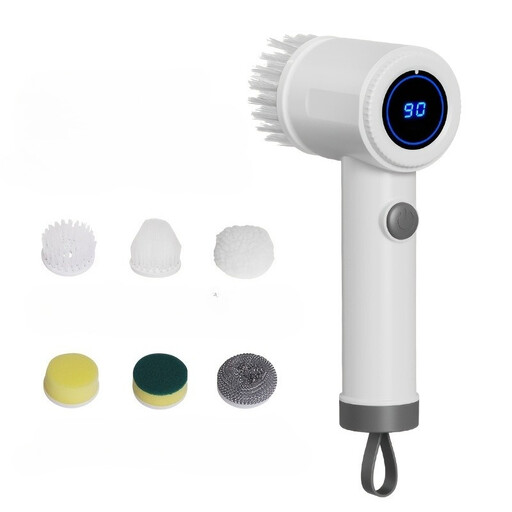 No image available
For cleaning tiles and bathrooms when you want to switch between different cleaning tasks.
Six interchangeable brush heads; 800 mAh battery; digital display and one-button operation.
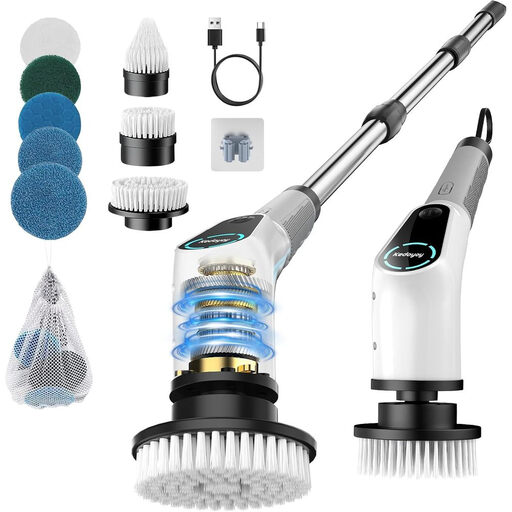
 No image available
For cleaning tiles with a choice of brush heads. Before buying, check that the device body will fit through tight access points.
Seven interchangeable brush heads; LED battery indicator; rechargeable.
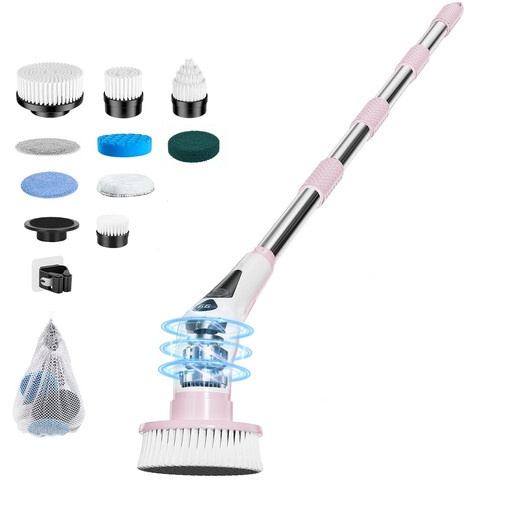
 No image available
For bathrooms and tiled surfaces, if an adjustable handle suits the area you plan to clean.
Eight interchangeable brush heads; handle extends from 30–137 cm; two speed settings; USB-C charging port. According to the product description, the device must not be submerged.
 No image available
For tiled walls and grout: the set is described as including a flat head for tiles and a corner head for grout and edges.
Nine interchangeable brush heads; extendable handle from 30–130 cm.
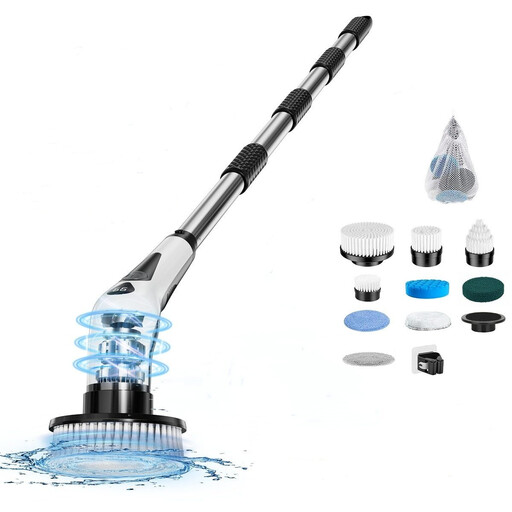 No image available
For tiles and walls; according to the product details, a corner head is designed for grout and edges.
Nine interchangeable brush heads; two speed settings; extendable handle from 30–130 cm.
A detail attachment is designed for targeted cleaning in corners and short sections of grout. A larger surface brush may be more practical for mostly open tiled areas. In tight spots, also measure the space needed for the device body.
Check the compatibility and contents of the specific set. Einhell states that the battery and charger aren’t included with the PICOBELLA 18/90; Dremel’s PC370-2 is an accessory for a compatible Versa base unit.
No. The Verbraucherzentrale (German Consumer Advice Centre) lists vinegar cleaner and citric acid as limescale removers, but specifically excludes materials that are sensitive to acid, such as marble. Also check the guidance for the wall material, grout, attachment and device.
Scrubbing alone won’t address the cause of excess moisture. The Umweltbundesamt (German Environment Agency) advises that the cause must be identified and dealt with when tackling mould.
Your statutory rights if a product is faulty are separate from any voluntary guarantee. The Umweltbundesamt (German Environment Agency) lists local collection points and designated retailers as return options for electrical waste. Used batteries should be taken to battery collection points.