
Lieferung heute & morgen

Qualitätsgarantie

Willkommens-Angebote freischalten: KOSTENLOSE Lieferung | Bis zu 80 % RABATT | Kostenlose 30-Tage-JoyPlus-Testphase
App herunterladen
Choosing an electric shaver is based on an analysis of technical specifications and how they align with individual requirements. Factors such as shaving head type, battery capacity, and cleaning mechanisms are crucial for performance and user comfort. This article highlights the essential criteria for differentiating current models and presents a selection of devices with specific feature sets.
The choice of an electric shaver should be based on an evaluation of objective parameters. The following technical aspects are key to a device's performance and suitability.
The most fundamental distinction in a men's shaver lies in the construction of the shaving head.
A Wet & Dry shaver offers enhanced flexibility. The ability to use the device with shaving foam, gel, or in the shower can increase comfort and reduce skin irritation. Technically, this is achieved through a complete seal of the housing and electronics (e.g., to IPX7 standard). This also simplifies cleaning, as the shaving head can be rinsed under running water.
Modern electric shavers almost exclusively use lithium-ion batteries. Relevant metrics include:
A shaver with a cleaning station automates the device's maintenance. These stations typically perform four functions:
These systems contribute to the longevity of the shaving head and help maintain a high standard of hygiene.
High-quality materials such as surgical-grade stainless steel for blades or trimmers ensure sharpness and durability. Coatings on the shaving heads (e.g., hydrophilic coatings) can reduce friction on the skin, which is particularly relevant for shavers for sensitive skin. Sensors that measure beard density and automatically adjust motor power are another feature of high-end devices.
Based on the technical criteria above, we present three models that stand out for their specific characteristics and feature sets.
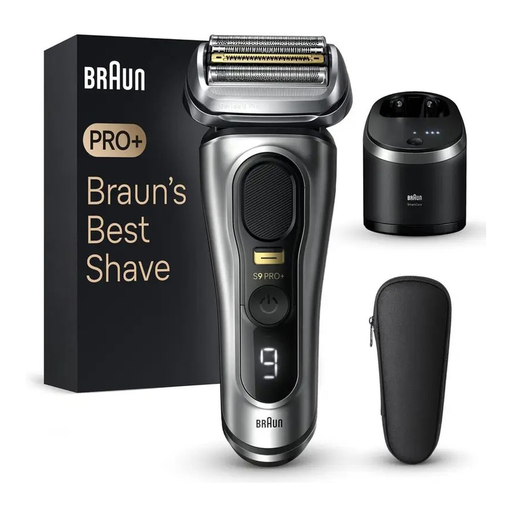
Why this model is worth considering: The Braun Series 9 Pro+ is a foil shaver designed for maximum efficiency on denser beards. Its shaving head combines five separate cutting elements, including a special ProLift trimmer that lifts and cuts flat-lying hairs. This is particularly relevant for shaving multi-day beards.
Technical Advantages (Pros):
Best suited for: Users with heavy or dense beard growth who aim for a close shave even on a 7-day beard and appreciate the convenience of a fully automatic cleaning and care station.
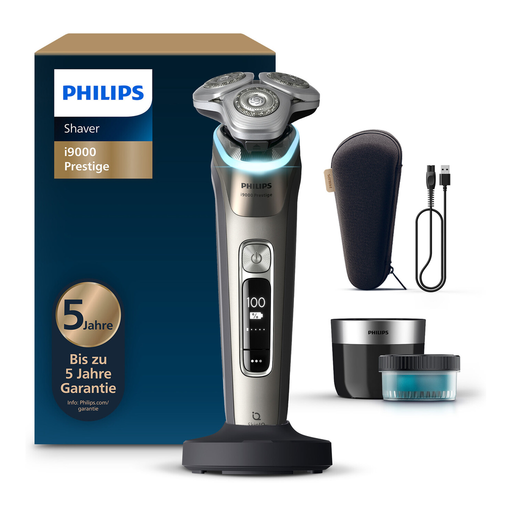
Why this model is worth considering: This rotary shaver model from Philips focuses on an exceptionally close shave and sensor-based adjustment. The Triple-Action Lift & Cut system lifts the hair before cutting it. A pressure sensor provides visual feedback via a light ring to ensure optimal pressure, thereby maximising skin protection.
Technical Advantages (Pros):
Best suited for: Tech-savvy users with normal to dense beard growth who value a personalised, sensor-guided shave and maximum skin protection through pressure control.
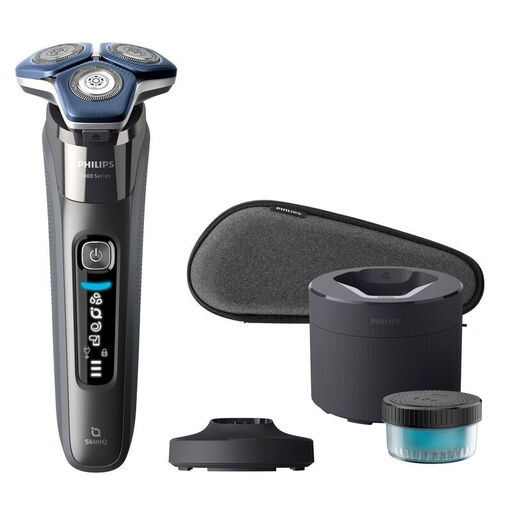
Why this model is worth considering: The Philips Series 7000 is positioned as a high-performance rotary shaver with a strong focus on skin protection, especially for sensitive skin. The Nano SkinGlide coating on the shaving head rings is designed to minimise friction. The SkinIQ technology dynamically adjusts the power to match beard density.
Technical Advantages (Pros):
Best suited for: Users with sensitive skin who are looking for a rotary shaver that combines a close shave with advanced skin protection technologies.
The models presented cover specific user profiles. If these devices do not exactly meet your needs, or if you would like a broader overview of available technologies and price ranges, you will find a more comprehensive selection in our main category. There, you can filter and compare various models based on your individual criteria.
Discover more models in the electric dry shavers category.
1. What is the difference between a foil and a rotary shaver? A foil shaver uses a straight head with an oscillating blade under a foil, which is well-suited for precise contours and tends to be better for sensitive skin. A rotary shaver uses multiple round, flexible heads with rotating blades that adapt well to uneven areas of the face and can be advantageous for dense, irregular beard growth.
2. How often should you replace the shaving head of an electric shaver? Most manufacturers recommend replacing the shaving heads or foils every 18 to 24 months. This is a guideline that depends on the frequency of use and beard density. Regular replacement is crucial to maintain a consistently close and skin-friendly shave and to minimise wear on the motor.