
Lieferung heute & morgen

Qualitätsgarantie

Willkommens-Angebote freischalten: KOSTENLOSE Lieferung | Bis zu 80 % RABATT | Kostenlose 30-Tage-JoyPlus-Testphase
App herunterladen
A new shower system can transform your daily shower experience—from a simple necessity to a moment of relaxation. But the market is flooded with products whose marketing promises often outshine the actual engineering. Many buyers only realize after installation that the new system doesn't fit their plumbing, the material tarnishes after just a few months, or the advertised water-saving feature makes the water pressure unusable.
As your Joybuy Product Recommendation Officer, I'm here to help you avoid these pitfalls. We'll focus on the facts and the crucial features so you can make an informed decision that suits your needs and your bathroom.
Before we look at solutions, let's identify the typical problems that lead to disappointment and unnecessary costs.
To avoid a bad purchase, you should check three core aspects before making a decision. These determine durability, functionality, and compatibility.
The choice of material is crucial for the lifespan of your shower system.
Therefore, check carefully which components (shower rail, overhead shower, handheld shower with hose) are made from which material.
Clarify what type of installation is suitable for your bathroom before you buy.
In many regions, hard, limescale-heavy water is a problem. An anti-limescale shower head with an integrated filter can provide a solution.
Here are some recommendations tailored to specific user profiles and their requirements.
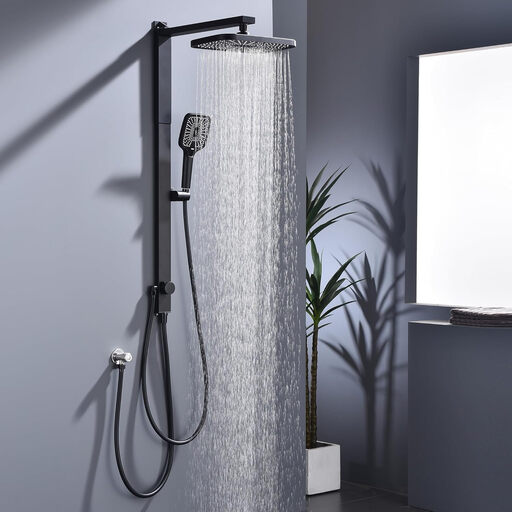
Why This Fits Their Persona: Ideal for renters or homeowners who want to quickly modernise their bathroom without major structural changes. The matte black design adds a modern touch, while the height-adjustable rail offers flexibility for the whole family.
Designed as a shower system without a faucet, it bypasses the compatibility problem by connecting to any standard shower faucet. The combination of aluminium and metal promises greater durability than pure plastic solutions.
An easy retrofit solution for a quick upgrade. The large 300 x 200 mm rain shower head provides an expansive shower experience.
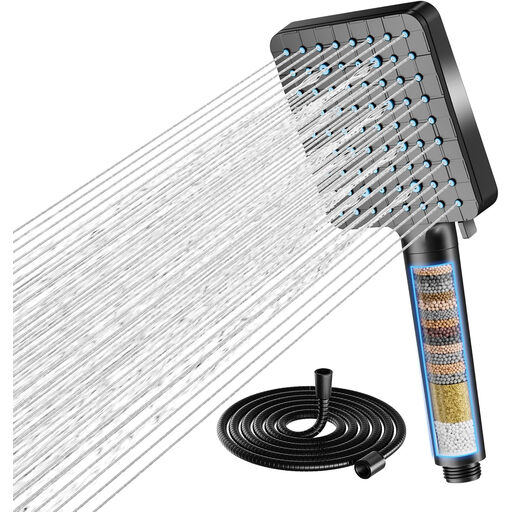
Why This Fits Their Persona: Perfect for anyone living in a region with hard water who wants to minimise the negative effects of limescale and chlorine on their skin and hair. This is a targeted problem-solver, not a complete system overhaul.
This product focuses on a single, crucial function: water filtration. It doesn't promise a complete system transformation but instead solves the specific problem of hard water, which is often a hidden flaw.
The 20-stage filtration system with KDF and calcium sulfite is designed to reduce chlorine and heavy metals. Six different spray modes offer additional comfort.
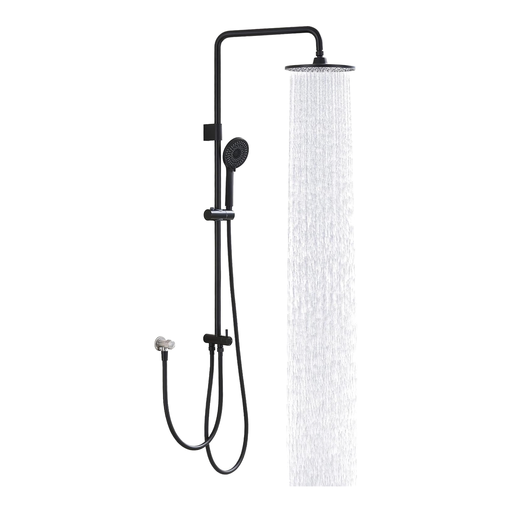
Why This Fits Their Persona: For buyers seeking a long-term investment who value robust, proven materials. This system is designed for extended use and withstands the rigours of daily life.
It directly confronts the material trap by consistently using SUS304 stainless steel—from the shower bar to the overhead and handheld shower heads. This is a clear commitment to quality over superficially coated plastic.
The stainless steel construction ensures exceptional corrosion resistance and durability. The handheld shower with 4 functions offers added flexibility.
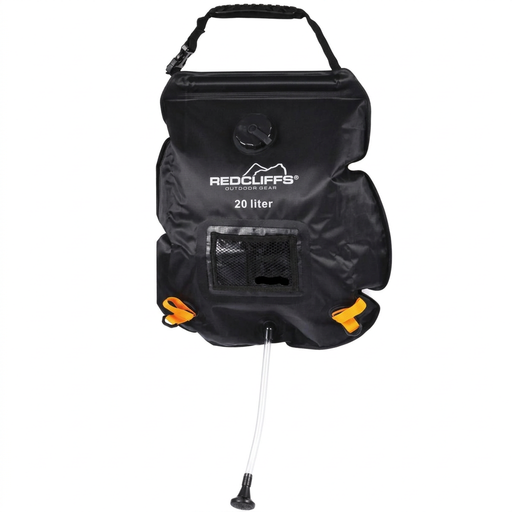
Why This Fits Their Persona: A practical solution for anyone who doesn't want to go without a shower when away from fixed sanitary facilities. Perfect for camping, festivals, or a quick rinse in the garden after work.
As a niche product, this **camping shower** bypasses all the compatibility and installation problems of fixed systems. It is an honest, simple solution for a specific use case.
Lightweight, portable, and with a 20-litre capacity, it's sufficient for a short shower. It operates purely by gravity and requires no power or water connection.
We have compiled a complete, up-to-date list of products that fully meet these strict selection criteria and relevant safety standards.
Yes, in most cases, this is possible. Shower systems without a faucet are specifically designed for retrofitting and are connected via a flexible hose to the water outlet of your existing faucet (thermostat or single-lever mixer). Check if your faucet has a standard G1/2-inch outlet for the shower hose, which is the case with almost all modern faucets.
The replacement interval for filter cartridges depends heavily on local water hardness and frequency of use. As a general guideline, most manufacturers recommend a replacement every 3 to 6 months. A noticeable decrease in water pressure is often a clear indication that the filter is saturated and needs to be changed.