
Lieferung heute & morgen

Qualitätsgarantie

Willkommens-Angebote freischalten: KOSTENLOSE Lieferung | Bis zu 80 % RABATT | Kostenlose 30-Tage-JoyPlus-Testphase
App herunterladen
An electric sprayer can save time when painting, cleaning or caring for your garden. However, not every device produces a suitable spray pattern or is easy to clean. Poor purchasing decisions are common because product descriptions tend to focus on power and accessories, while important details such as viscosity, nozzle care and battery life receive less attention.
A high power rating alone says little about whether a device is suitable for wall paint, varnish or thin cleaning solutions. Other key factors include material viscosity, flow rate, nozzle diameter and spray pattern. Even an electric paint sprayer with a powerful motor can become blocked if the material is too thick.
A paint sprayer with several nozzles is only practical if the nozzle sizes suit the material you plan to use. Smaller openings are generally better suited to thin varnishes and stains, while larger diameters may be needed for more viscous paints. Each nozzle must also be cleaned thoroughly after use.
Dried paint, cleaning solution residue or plant protection residues can block the intake tube, filter and nozzles. With a cordless sprayer, the liquid container should be easy to remove. For regular use, a cleaning needle, brush and clearly explained care instructions are useful.
First, check which liquids the manufacturer permits. The Tilswall 800 W system is described as suitable for applying varnishes, water- and solvent-based paints, primers, stains and sealants. According to the product description, the model with a 100-DIN-S rating is designed for materials up to this viscosity, provided dilution is required.
DIN-S is a measurement of flow time and therefore indicates how easily a material flows. The precise dilution depends on the product being used. The instructions on the paint or varnish container should always take priority. Incorrect dilution can lead to uneven application, dripping or strain on the motor.
For a paint sprayer for walls and furniture, three spray patterns are also useful: horizontal, vertical and round or elliptical. This allows you to adapt the spray pattern to the surface and direction of movement.
A sprayer with an adjustable nozzle allows you to switch from a fine mist to a more directed jet. With paint spraying systems offering several nozzle sizes, the opening should match the material being used. According to the product data, the Tilswall 800 W system has 1.0, 1.8 and 2.6 millimetre nozzles, as well as a maximum flow rate of up to 1,100 millilitres per minute.
An HVLP paint spraying system uses a high volume of air at comparatively low pressure. With the right settings, this can help produce a controlled application of paint. For a clean result, however, you will need to use steady movements, maintain the correct distance from the surface and test the settings on cardboard or scrap wood.
A corded device provides a continuous power supply, but requires a socket and extension lead. A cordless sprayer offers greater flexibility, but you should check the battery capacity, charging time and what is included. According to the product information, the Tilswall Hornet weighs 450 grams and has three operating modes, two nozzle sizes and two batteries.
A transparent container is useful for cleaning tasks because you can see the fill level. According to the description, the cordless model with a 1.5-litre tank has USB charging, an adjustable brass nozzle and one-button operation with a safety lock. A larger tank means fewer refills, but usually increases the overall weight when full.
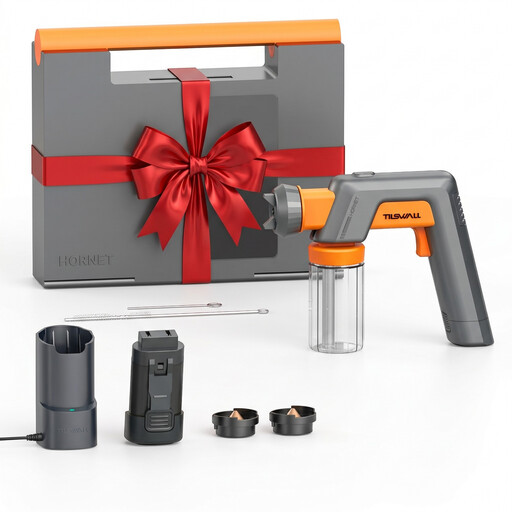
Why this product suits this profile: According to the product information, this compact cordless sprayer is designed to be lightweight, cordless and easy to use. It is suitable for small DIY projects, targeted touch-ups and mobile applications.
The two specified nozzle sizes and three modes offer more flexibility than a model with just one fixed setting. You should still check material compatibility before use.
450 grams according to the product information, cordless operation and two batteries included.
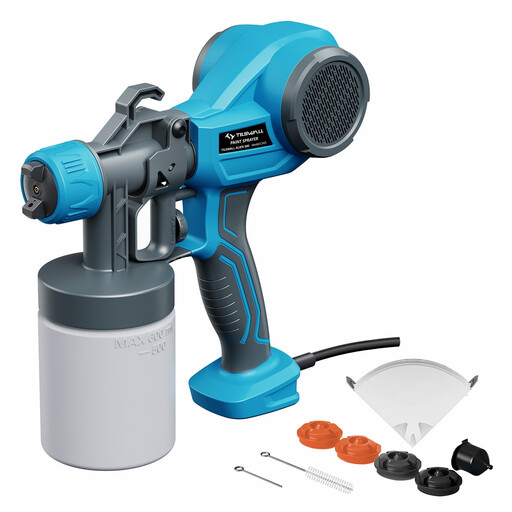
Why this product suits this profile: This electric paint sprayer is aimed at users who want to use different nozzles and spray patterns on furniture, doors, fences or cupboards.
Four nozzles measuring 1.0, 1.5 and 2.0 millimetres, along with three spray patterns, reduce reliance on a single setting.
0.7 kilograms according to the product data, tool-free assembly and a removable tank.
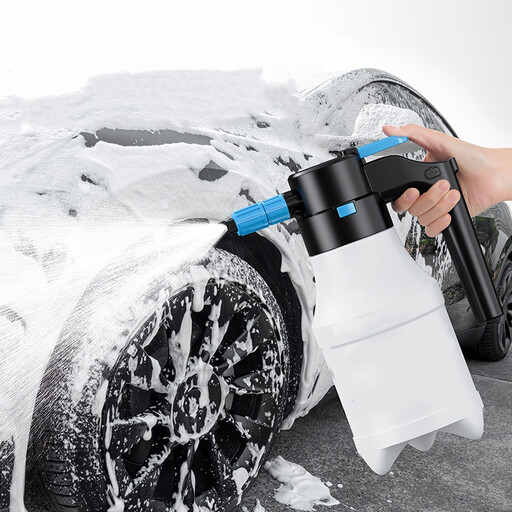
Why this product suits this profile: This cordless foam sprayer is designed for car washing, household use, gardening and applying suitable liquids. One-button control supports straightforward operation.
The transparent 1.5-litre container makes it easier to monitor the fill level. A safety lock and cleanable nozzle address operating and maintenance concerns.
1.5-litre tank capacity, USB charging, adjustable brass nozzle and cordless use.
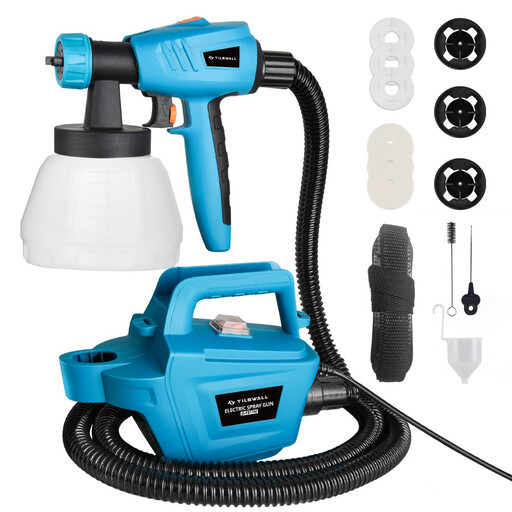
Why this product suits this profile: This corded system with a 2.5-metre air hose is suitable for users who want to work continuously during renovation projects without having to hold the motor.
The removable 1,300-millilitre container with a wide opening makes cleaning easier. Pressure control, three nozzles and three patterns allow settings to be tailored to the project.
800 W motor, up to 1,100 millilitres per minute according to the product data and a 2.5-metre hose.
Before using the device for the first time, check the operating instructions, approved materials and safety information. When using solvent-based paints, good ventilation, safety goggles, suitable respiratory protection and chemical-resistant gloves are important. The device must not be directed at people, animals or sockets. An electric sprayer must be disconnected from the mains before assembly, dismantling or cleaning.
Ongoing costs mainly consist of electricity or battery charging, cleaning agents, thinners and, where necessary, replacement nozzles. Cleaning the device immediately after each use can help reduce build-up. Use only the method suitable for the paint or cleaning solution. A pressure sprayer for gardening and cleaning is not automatically suitable for varnishes; likewise, an electric paint sprayer must not be used with arbitrary garden chemicals without the manufacturer’s approval.
The permitted viscosity is stated in the device instructions or indicated by a DIN-S value. Only thin the paint according to the paint manufacturer’s instructions, and test the spray pattern first on an inconspicuous area. Material that is too thick can block the nozzle, while material that is too thin can cause runs.
There is no single operating time that applies to every model. It depends on the battery capacity, spray mode, material, nozzle setting and charge level. Models with interchangeable batteries or two batteries included can provide practical solutions for taking breaks during longer jobs. After use, the battery should be charged and stored according to the instructions.
An electric foam sprayer may be designed for water, suitable cleaning solutions or gardening applications. The manufacturer’s approved material list is the deciding factor. Cleaning products should be dosed correctly, and plants, surfaces and painted parts should only be treated with products suitable for them.