
Lieferung heute & morgen

Qualitätsgarantie

Willkommens-Angebote freischalten: KOSTENLOSE Lieferung | Bis zu 80 % RABATT | Kostenlose 30-Tage-JoyPlus-Testphase
App herunterladen
An electric sprayer can make renovation work, car washing and watering plants easier. However, electric paint spray guns, HVLP paint sprayers, foam sprayers and cordless pressure washers differ considerably. If you focus only on wattage, pressure ratings or a large list of accessories, you may end up buying a device that is unsuitable for its intended purpose.
A high wattage initially describes the motor’s power consumption. On its own, it does not indicate how evenly a paint sprayer works or how strongly a water jet hits the surface. With a pressure washer, working pressure in bar and water flow rate in litres per hour are more important.
An electric paint spraying system, on the other hand, is often assessed by its spray patterns, nozzle diameter and material viscosity. An HVLP paint sprayer uses a high volume of air at comparatively low pressure. This can be suitable for walls, furniture or fences, but it does not replace a pressure washer.
Paints, lacquers and stains have different flow properties. Specifications such as 100 DIN-S or 120 DIN-S provide guidance on the maximum suitable viscosity. If the material is too thick, the electric spray gun may become blocked, spray unevenly or put additional strain on the motor.
Before buying, you should therefore check:
The manufacturer’s viscosity specification is more important than a blanket statement such as “suitable for all paints”.
Paint residue dries quickly in the nozzle, needle and intake channel. A removable container, cleaning brush and cleaning needle reduce maintenance work. After every use, the relevant components should be rinsed immediately with the appropriate cleaning agent until no more material residue comes out.
The same applies to a sprayer for gardening and car washing: filters, hoses and nozzles must be checked regularly for deposits. A device with many attachments is only practical if they can also be cleaned easily and secured safely.
For a paint sprayer for walls and furniture, at least two or three spray patterns are useful. A horizontal or vertical oval is suitable for surfaces, while a round pattern can be useful for edges and smaller components.
The nozzle diameter also affects the result:
A container holding around 1,000 to 1,300 ml reduces interruptions for refilling. A long hose and long mains cable increase the working radius, but do not automatically make the device suitable for outdoor areas without a power socket.
A pressure washer is designed for patios, vehicles, bicycles or garden furniture. A portable cordless pressure washer can draw water from a bucket or another suitable source. Before use, the hose, filter and water connection must be fitted correctly, as air in the system can affect the water flow.
Look out for:
A high-pressure water jet must not be directed at people, animals, power sockets, delicate paintwork or fragile materials. Plants generally require a controllable, considerably gentler spray.
When spraying paint, safety goggles, suitable respiratory protection and gloves are advisable. Indoor areas should be well ventilated. The device must only be used with materials expressly approved in the relevant product description.
Water-based and solvent-based products have different cleaning and safety requirements. The system must be cleaned thoroughly before changing materials. Electrical devices must be disconnected from the mains before assembly, disassembly and cleaning; with cordless devices, the battery should be removed.
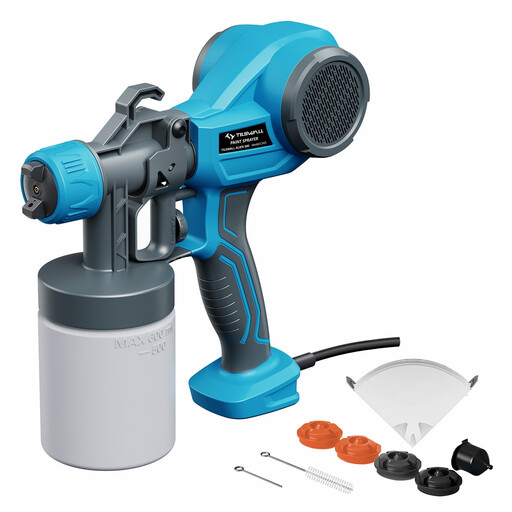
Why this product suits this profile: Weighing 0.7 kg, this lightweight system comes with four nozzles and three spray patterns, making it suitable for smaller DIY projects involving furniture, cupboards, fences or walls.
The stated compatibility of up to 100 DIN-S makes it easier to choose the right material. A cleaning brush and needle are listed as included.
Four nozzles, three spray patterns, removable container and tool-free assembly.
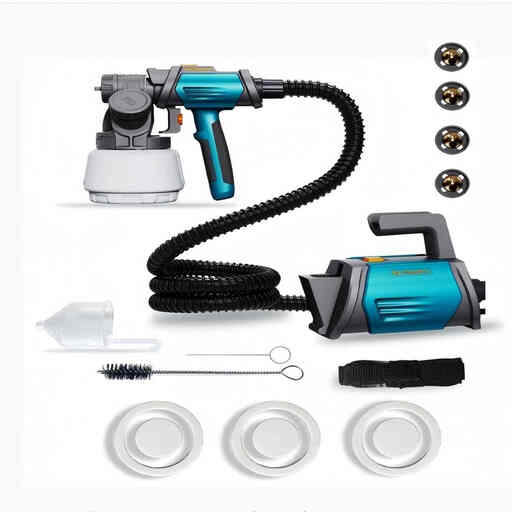
Why this product suits this profile: This 800 W HVLP system is aimed at users who want to work on larger surfaces such as walls, ceilings, fences or patios.
Four brass nozzles from 1 to 3 mm and a stated viscosity of up to 120 DIN-S make it easier to match the sprayer to different paints.
2.5 m hose, 3 m mains cable, side filling and three spray patterns.
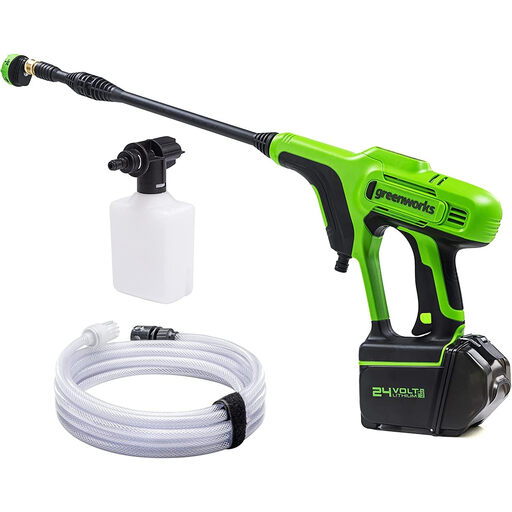
Why this product suits this profile: For mobile cleaning jobs involving bicycles, cars, balconies or garden furniture, cordless operation without a fixed water connection is particularly practical.
The technical specifications state 24 bar, 180 l/h, a 6 m hose and a 5-in-1 nozzle. Check whether the battery and charger are included, depending on the specific variant.
24 V system, water intake from a clean source, multi-nozzle and foam bottle.
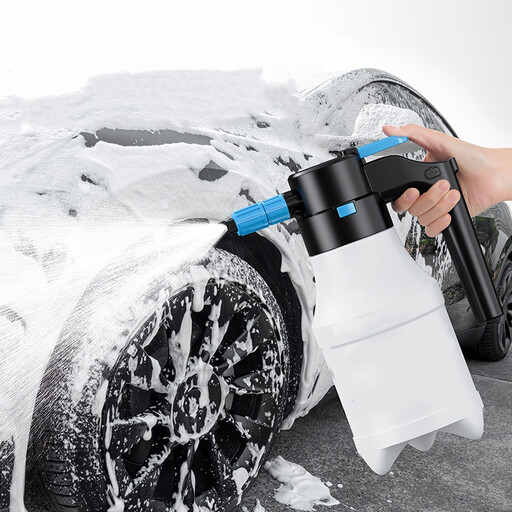
Why this product suits this profile: This compact foam sprayer is designed for car washing, household cleaning, plant care and applying suitable liquids.
A transparent 1.5 L container, adjustable brass nozzle and safety lock make the capacity and operation clear.
USB-rechargeable battery, one-button operation, adjustable spray and foam function.
We have put together a complete, regularly updated list of products that fully meet these strict selection criteria and the safety regulations applicable in the EU.
First, prepare the material according to the manufacturer’s instructions and dilute it if necessary. You should then test it on a piece of cardboard or an area of leftover material. Adjust the spraying distance, movement speed and spray width gradually. When spraying paint, even, overlapping passes are recommended. Do not hold the nozzle over one spot for too long, as this can cause runs.
Its service life depends heavily on the material used, frequency of use and cleaning. Paint mist, dried particles and unsuitable liquids can put strain on seals, the needle or the pump. After every use, the container, nozzle, hose and filter should be cleaned according to the instructions. Cordless devices should be stored in a dry place and not kept with a completely discharged battery during longer periods of non-use.
In addition to the purchase price, you may incur costs for paint, thinner, cleaning agents, replacement nozzles, filters or batteries. With a pressure washer, water and cleaning agents may also be required. A device with a higher flow rate uses more water over the same period of use. A small cordless sprayer may be sufficient for occasional jobs; for larger surfaces, container size, hose length and the effort required for refilling are crucial.