
Lieferung heute & morgen

Qualitätsgarantie

Willkommens-Angebote freischalten: KOSTENLOSE Lieferung | Bis zu 80 % RABATT | Kostenlose 30-Tage-JoyPlus-Testphase
App herunterladen
An electric sprayer can save you time when painting, washing your car, watering plants or cleaning. However, models vary considerably in pressure, flow rate, nozzles, battery life and the liquids they can handle. A model suitable for wall paint won’t necessarily work as a garden sprayer or pressure washer.
If you focus only on wattage, tank capacity or claims such as ‘for every application’, you could easily end up with a device that’s impractical for everyday use. The following points will help you look beyond the marketing claims and choose a model that suits your needs.
A cordless pressure washer operates at a very different pressure from an electric paint spray gun. High pressure is better suited to removing dirt, while a paint sprayer needs to deliver a controlled, even spray. A forceful jet of water may not be suitable for delicate surfaces such as paintwork, wood or vehicle parts.
So check whether the manufacturer describes the intended use as paint spraying, low-pressure spraying, foam generation or pressure washing.
A large tank means fewer refills, but it also adds weight. With a wall paint sprayer, a full 1,300-ml tank can quickly become tiring to hold along with the device. A split motor-and-handle design with a hose can take the weight off your hand, but it needs more storage space and involves extra cleaning steps.
A smaller tank is often enough for short jobs on furniture. If you’re tackling fences, walls or larger areas, also check the hose and cable lengths, as well as how easy the tank is to refill.
Dried paint, cleaning products or fertiliser can clog nozzles and filters. With an HVLP paint sprayer in particular, using a material with the right viscosity is essential. Material that’s too thick can affect the spray pattern and put extra strain on the motor.
Before you buy, check:
When using solvent-based paints, follow the manufacturer’s instructions, ensure good ventilation and wear suitable personal protective equipment. The device must be disconnected from the mains before cleaning or dismantling it.
For furniture, doors and smaller areas, having several nozzle and spray pattern options is useful. Horizontal, vertical and round settings let you adapt the spray to the surface and direction of movement. A small nozzle is better suited to fine work, while larger nozzles can deliver more liquid when used with suitable materials.
Viscosity is sometimes measured in DIN-S. This value indicates how easily a material flows, and is only meaningful if the measurement method is followed. Don’t exceed the manufacturer’s stated maximum viscosity. A paint sprayer for furniture and fences won’t automatically be suitable for every type of wall paint or varnish.
A stated flow rate, such as up to 1,100 ml/min, indicates the potential liquid output, not necessarily the actual working performance. This depends on factors including the material, nozzle, spray pattern and settings.
For longer jobs, these features can make things easier:
A cordless sprayer gives you freedom to move around, but battery life and charging time matter. With a cordless pressure washer, also check whether it needs to be connected to a tap or can draw water from a bucket. Models with self-priming are more flexible for mobile car cleaning or garden care.
A portable pressure washer is designed for bikes, vehicles, balconies or garden furniture. It won’t necessarily replace a mains-powered pressure washer with a higher continuous pressure. So check specifications such as battery voltage, water flow rate, maximum pressure and the accessories supplied.
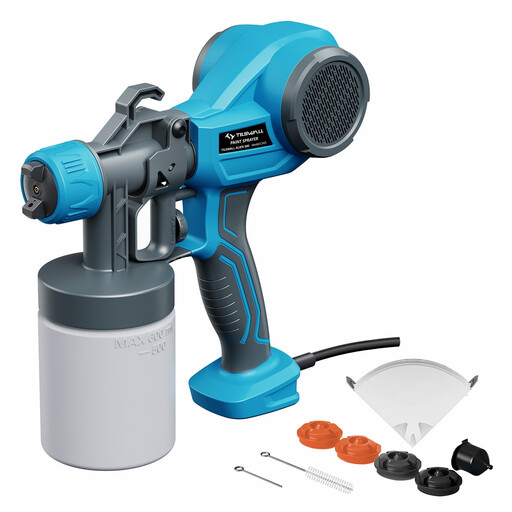
Why this product suits this user: Weighing just 0.7 kg and requiring no tools to assemble, it’s designed for occasional DIY projects on furniture, cupboards, walls or fences.
Four nozzles and three spray patterns mean you’re not limited to a single inflexible setting. The removable paint container makes cleaning easier.
Weighs 0.7 kg, with three spray patterns and compatibility up to 100 DIN-S, according to the product details.
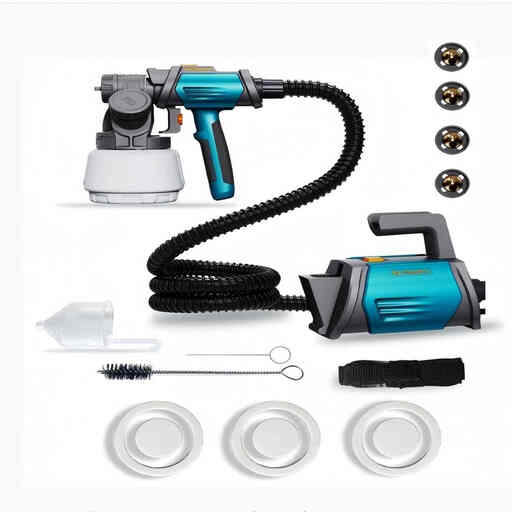
Why this product suits this user: The 800 W HVLP system, four brass nozzles and three spray modes offer plenty of adjustment options for walls, ceilings, fences and furniture.
The stated viscosity limit of up to 120 DIN-S, adjustable controls and four nozzles make it easier to match the settings to the material.
800 W, four brass nozzles, a 2.5-m hose and a 3-m mains cable, according to the product details.
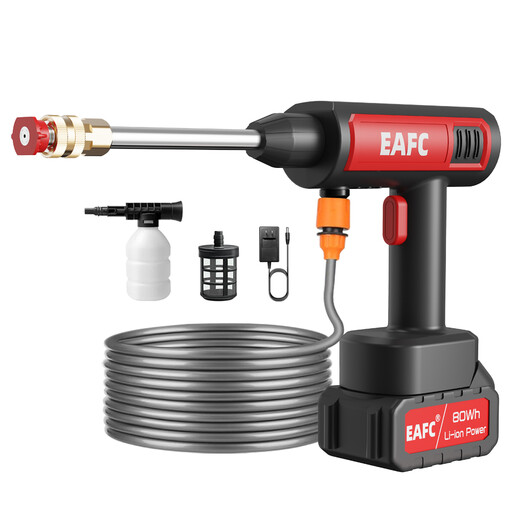
Why this product suits this user: This battery-powered device is designed for cleaning on the go, vehicle care, balconies, floors and watering.
Drawing water from a bucket and its cordless design mean you’re not tied to a fixed tap or mains cable.
Lithium battery, self-priming function and foam attachment, according to the product description; suitable for use on the go.
We’ve put together a complete, regularly updated list of products that meet these strict selection criteria and fully comply with the safety regulations in force in the EU.
Before using the sprayer for the first time, test the spray pattern on cardboard or a scrap piece of material. Keep the electric spray gun as parallel to the surface as possible and move it at a steady speed. If you’re using a car foam sprayer, make sure the cleaning product is suitable for the nozzle and the job.
After each use, we recommend that you:
No. Suitability depends on the viscosity, nozzle size and the manufacturer’s approval. Some devices can handle wall paint only after it has been diluted, while others are designed for specific water-based materials only. Always follow the product information before buying and using the device.
There’s no single answer. Battery life depends on the battery capacity, pressure setting, flow rate, temperature and how often you stop during use. If you use the sprayer frequently, a spare battery or a model with an easily accessible charging port may be worth considering.
With mains-powered models, the main running cost is electricity. Cordless models also have charging costs and may require replacement batteries. To work out the total cost, factor in nozzles, seals, cleaning products and the paint or water used as well. That’s why the initial price isn’t the only useful point of comparison.