
Lieferung heute & morgen

Qualitätsgarantie

Willkommens-Angebote freischalten: KOSTENLOSE Lieferung | Bis zu 80 % RABATT | Kostenlose 30-Tage-JoyPlus-Testphase
App herunterladen
Choosing a new electric toothbrush can quickly become overwhelming. Manufacturers advertise a multitude of features, from AI-powered coaching to countless cleaning modes. But not every innovation is worth the premium. As your Joybuy Product Recommendation Officer, I'll help you see through the marketing hype and make an informed decision tailored to your actual needs.
Before you invest, you should know the most common pitfalls that lead to dissatisfaction and unnecessary expense:
To avoid buyer's remorse, focus on three objective core parameters that fundamentally determine the performance and user-friendliness of an electric toothbrush.
This is the most fundamental decision. Both technologies can effectively remove plaque, but they differ in application and feel.
Brushing with too much pressure is one of the main causes of gum recession and enamel erosion. An electric toothbrush with pressure control is therefore not a luxury feature, but an essential one for long-term oral health. Modern sensors warn you with a visual signal (e.g., a light-up ring), a vibration, or a reduction in brushing intensity if you press too hard. This protects your gums and ensures an effective yet gentle clean.
Nobody wants to charge their toothbrush every other day. Pay attention to the battery life specified by the manufacturer. A good rechargeable toothbrush with long battery life should last at least two weeks with twice-daily use. For frequent travellers, models with a battery life of several months and universal charging options like USB-C are particularly practical. A sturdy travel case, ideally with a charging function, completes an electric travel toothbrush.
Based on these objective criteria, we have identified a few models that are particularly well-suited for different user profiles.
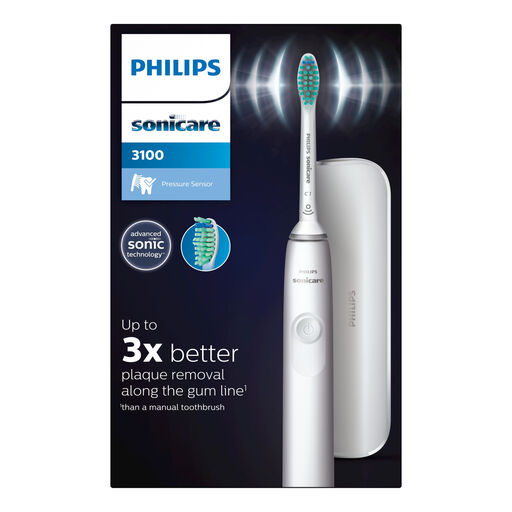
Why This Fits Their Persona: This model focuses on the essentials: effective cleaning with proven sonic technology. It's ideal for users switching from a manual toothbrush who are looking for a reliable, straightforward solution from an established brand.
It forgoes complex app integration, instead offering the truly important features like a pressure sensor and a timer directly on the device. This way, you don't pay for unused "smart" features.
Integrated Pressure Sensor: Actively protects teeth and gums from excessive pressure.
Solid Battery Life: Up to 14 days of use on a single charge, which is sufficient for daily life and short trips.
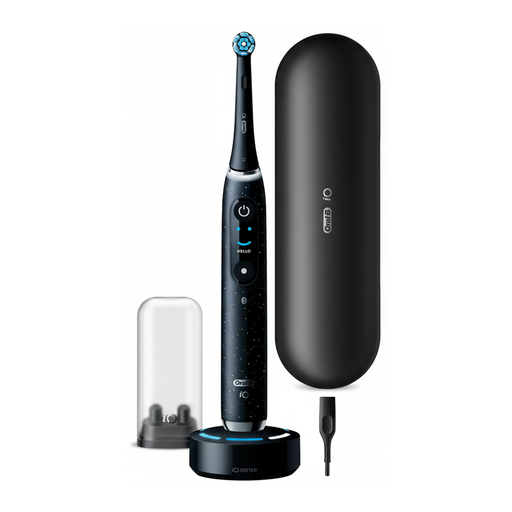
Why This Fits Their Persona: For users who want the maximum technical support for their oral hygiene. This model offers personalised real-time feedback, AI-powered position detection, and a variety of cleaning modes.
The iOsense charging base provides live feedback on brushing area, time, and pressure without needing to have the app open on your smartphone. The smart functions are thus seamlessly integrated into the daily routine.
AI Position Detection: 3D tracking of brushing movements across 16 zones ensures complete coverage.
7 Cleaning Modes: Offers specialised programmes for things like whitening, gum care, or tongue cleaning.
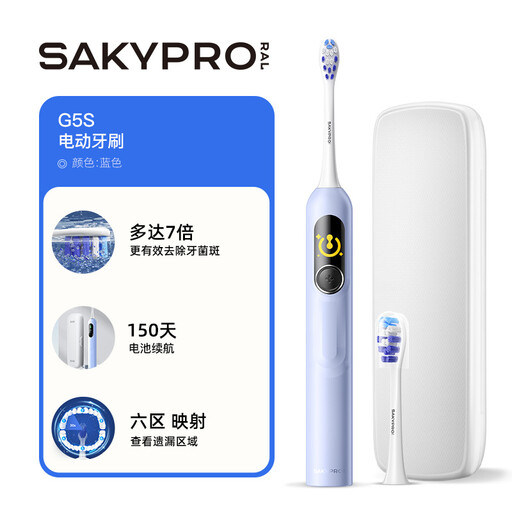
Why This Fits Their Persona: Perfect for business travellers, digital nomads, or anyone who doesn't want to deal with constant charging. The extremely long battery life is this model's standout feature.
This model solves the problem of short battery life and dependence on proprietary chargers. With up to 150 days of runtime and a USB-C charging port, it offers maximum independence.
150-Day Battery Life: According to the manufacturer, up to 5 months of use are possible on a full charge.
Integrated Display: Shows a visual map of the brushed areas directly on the handle, no app required.
Especially for travel, there are models optimised for compactness and long battery life. We have compiled a list of products that meet these criteria.
Most manufacturers and dentists recommend changing the brush head every three months. Worn bristles clean less effectively and can harbour more bacteria. Some models have indicator bristles that fade to show when a replacement is due, or remind you via an app. Plan to budget for four brush heads per year.
In general, sonic technology is often perceived as gentler because it cleans through high-frequency vibrations rather than mechanical rotation. However, many models of both technologies offer a special sensitive mode with reduced intensity. The most crucial feature for sensitive gums is pressure control, which ensures you don't brush too hard, regardless of the technology you choose.
Yes, electric toothbrushes with lithium-ion batteries are permitted in carry-on luggage on flights. There are no specific restrictions beyond the general rules for electronic devices. A sturdy travel case is recommended to protect the device from damage and prevent it from accidentally turning on in your bag. Many models have a travel lock feature, which is activated by a long press of the power button.