
Lieferung heute & morgen

Qualitätsgarantie

Willkommens-Angebote freischalten: KOSTENLOSE Lieferung | Bis zu 80 % RABATT | Kostenlose 30-Tage-JoyPlus-Testphase
App herunterladen
An electric tyre inflator can come in handy for your car, bicycle or motorbike, or when you’re camping. However, it doesn’t replace regular tyre pressure checks, nor is it a substitute for a professional garage if your tyres are damaged. Before buying, consumers in Germany should pay close attention to the power supply, measurement accuracy, run time and accessories.
Figures such as 150 PSI or 160 PSI mainly indicate the maximum stated pressure. They don’t automatically tell you how quickly the inflator will fill a flat car tyre. Airflow, cylinder diameter, motor power and the permitted run time also make a difference.
A compact electric bicycle pump is usually enough for a bicycle tyre or ball. Inflating a car tyre takes considerably more time and energy. So choose a portable car air pump based on how you intend to use it, rather than simply going for the highest figure on the packaging.
A cordless tyre inflator gives you the flexibility to use it at the roadside, in a car park or when camping. However, run time depends on battery capacity, tyre pressure, outside temperature and how many tyres you need to inflate. A high stated battery capacity doesn’t automatically mean it can inflate several completely flat car tyres.
Look for clear information about charging time and run time. For longer journeys, it’s also worth keeping a charging cable or alternative power supply in your vehicle.
A digital air pump with automatic shut-off stops inflating when it reaches the pre-set pressure. This reduces the risk of overinflating, but you should still check the recommended tyre pressure provided by the vehicle manufacturer. The figures on the door pillar, fuel flap or in the vehicle’s handbook are the ones to follow.
If you regularly need to switch between PSI, BAR, kPa and kg/cm², look for an easy-to-read display with several pressure units. A separate tyre pressure gauge can provide an additional check for safety-critical applications.
A battery-powered tyre inflator doesn’t rely on a socket and can also be used away from the vehicle. This makes it handy for motorcyclists, cyclists and outdoor activities. Make sure the battery is fully charged before use.
A 12 V tyre compressor is usually powered through the cigarette lighter or accessory socket. It doesn’t need to be charged in advance, making it a good choice if you plan to keep it in your car. With this type, the engine should be running as directed by the manufacturer, to avoid putting unnecessary strain on the car battery.
Inflation time depends on tyre size and starting pressure. Manufacturer claims such as ‘30 seconds’ often refer to topping up a tyre, rather than inflating a completely flat car tyre. Figures for L/min, specific tyre sizes, and starting and target pressures are therefore more useful.
For both corded and battery-powered models, check the maximum continuous run time too. Some models need to cool down after several minutes. If you regularly need to inflate several car tyres, check this before buying.
A tyre inflator for cars, motorbikes and bicycles should fit the relevant valve. Presta and Schrader connections may be needed for bicycles, while balls usually require a ball needle. Handy features include built-in storage compartments, a flexible air hose and an LED light for use in poor lighting.
Automatic shut-off is useful once you’ve set the correct pressure. Even so, check that the valve connector is fitted securely, as a loose connection can affect the reading and inflation time.
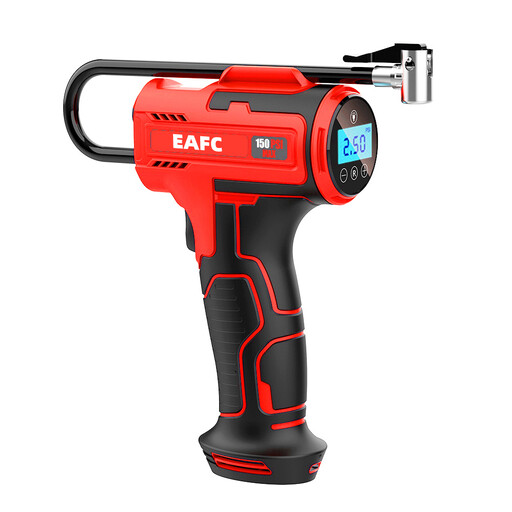
Why this product suits this profile: This cordless model is a good fit if you’re looking for a compact option for your car, motorbike, bicycle and ball. Its stated battery capacity is 2000 mAh × 2 at 7.4 V.
The description gives specific guidance for different uses and highlights the digital display with pre-set shut-off. Actual run time will depend on tyre pressure and how you use it.
Cordless operation, LED lighting and compatibility with several types of valve and inflatables.
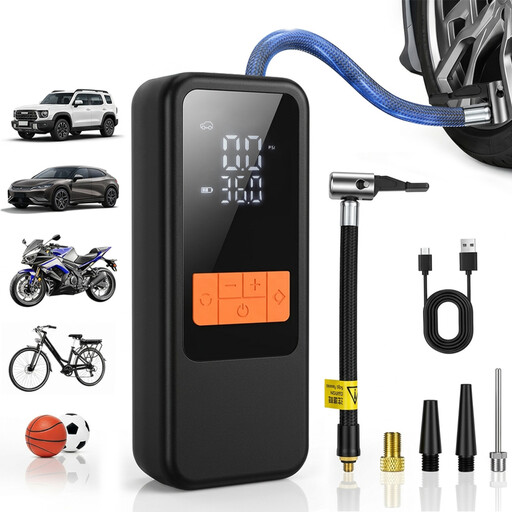
Why this product suits this profile: This model is for buyers who want to compare technical details such as charging time, airflow and measurement accuracy before making a purchase. Its stated specifications include 26 L/min, 150 PSI and a detection accuracy of ±0.01 kg/cm².
The product details distinguish between inflating from flat and topping up, and state a run time of up to 25 minutes on a full charge.
Five pre-set modes, USB-C charging port, LED modes and a power bank output.
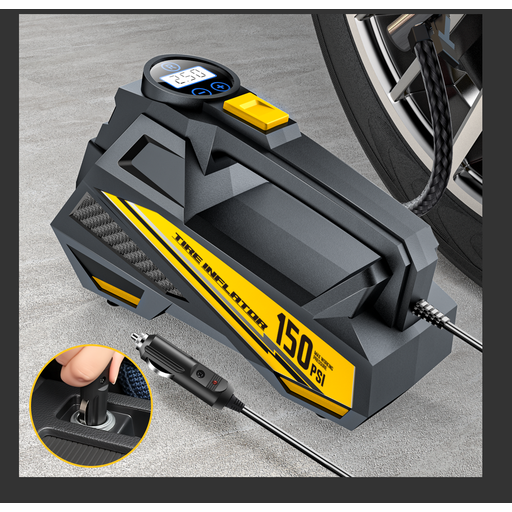
Why this product suits this profile: This corded 12 V tyre compressor is a good choice for drivers who want to keep it in their vehicle at all times without having to remember to charge a battery.
The instructions specify when the engine needs to be running, use of the 12 V socket and a cool-down period after extended use. This makes important operating limits clear.
Digital LCD display, automatic shut-off, LED light and several pressure units; suitable for cars, SUVs, motorbikes, bicycles and balls.
We’ve put together a complete, regularly updated range of products that meet these strict selection criteria and fully comply with the safety regulations in force in the EU.
A lower operating pressure is enough for bicycle tyres, balls and many motorbike tyres, depending on the application. A figure of 150 PSI indicates the maximum stated pressure, not the recommended tyre pressure. Always follow the manufacturer’s recommendations for your vehicle, bicycle or inflatable.
A battery-powered tyre inflator is more flexible and suits use with bicycles, motorbikes, camping and emergencies away from the vehicle. A 12 V compressor doesn’t need to be charged in advance, making it a practical option for regular use with a car. The right choice depends on where you’ll use it, tyre size and the run time you need.
Its lifespan depends on the battery, motor, frequency of use, storage and whether you allow it to cool down as instructed. So don’t just look at the manufacturer’s maximum pressure figures. Check the guidance on continuous use, battery care and proper storage too.