
Lieferung heute & morgen

Qualitätsgarantie

Willkommens-Angebote freischalten: KOSTENLOSE Lieferung | Bis zu 80 % RABATT | Kostenlose 30-Tage-JoyPlus-Testphase
App herunterladen
An electric vehicle for children can provide varied play and driving experiences in the garden, on private paths or indoors. The choice ranges from electric ride-on cars and battery-powered ride-on vehicles to electric scooters for children. However, design is not the only deciding factor. Age, speed, surface, supervision and battery technology all determine whether a model suits your family's everyday needs.
The indication “from 3 years” is no substitute for checking the seat height, handlebar position, pedal distance and weight limit. A child may reach the recommended age but still be unable to reach the ground or pedals safely with their feet. Before buying, parents should compare the child's measurements with the product specifications.
Manufacturers' range figures often apply under specific conditions. Weight, inclines, surface, temperature and frequent starting all affect the actual running time. Depending on the model, a 12V children's vehicle with a lead-acid battery may need several hours to charge. A more powerful battery does not automatically mean longer use if the vehicle is heavily loaded or driven on uneven ground.
Music, LED lighting, a USB port or an eye-catching vehicle design may be appealing, but they cannot replace controllable speed. More important features include a soft-start function, an easily accessible brake, non-slip surfaces, sturdy wheels and – for younger children – a children's vehicle with parental control. A remote control should also have an easy-to-reach stop or emergency-braking function.
For younger children, low speeds and finely adjustable acceleration are usually easier to control. A children's electric car often has a stated top speed of around 3 to 8 km/h. An electric scooter for children, by contrast, may reach higher speeds. Parents should therefore look not only at motor power, but above all at speed settings and limiting options.
For a model with two motors or a more powerful drive system, you should also check whether the vehicle is designed for the child's weight and the intended surface. Asphalt, concrete, paving and wood differ considerably in terms of grip and ride comfort.
Battery voltage – for example 12V or 24V – does not by itself indicate the range. Capacity in Ah, charging time and the option to replace the battery when needed are also important. Figures such as “15–20 kilometres” should be treated as a guide, not as a guaranteed distance under all conditions.
For everyday use, a dedicated charging area in a dry, well-ventilated environment is recommended. The charger should only be used in accordance with the instructions. Before each ride, it is worth carrying out a quick check of the cables, connectors, wheels and casing.
A low centre of gravity, wide wheels and a sufficiently large standing or seating area can help improve stability. With a children's vehicle with a safety belt, the belt must be adjusted correctly and should not hang loosely over clothing. Doors, locks and footrests should be easy to operate without creating a risk of trapping fingers.
Also check the markings and documentation supplied. Depending on the type of product, the CE marking, conformity information, warnings and details of relevant EU requirements may all be important. A CE marking is not a quality seal; it indicates that the manufacturer has declared compliance with applicable regulations. The relevant user manual and age approval remain decisive.
The following models cover a range of applications. The technical details correspond to the product information provided. Before buying, check the current product page, contents of delivery and safety information.
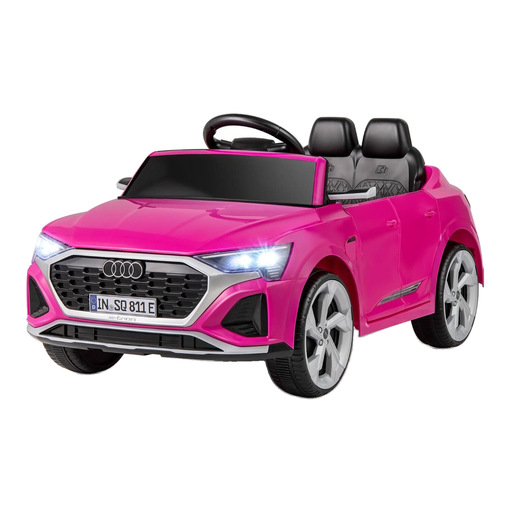
Why this product suits the profile: According to the product information, this compact children's electric car is designed for children aged 3 and over. It travels at 3–5 km/h and offers manual control as well as parental control via remote control.
The three speed settings and soft-start function limit sudden acceleration. The safety belt and lockable doors are relevant safety features for the intended seated use.
12V battery, two 12V motors, suspension, safety belt and 2.4-GHz remote control with three speed settings.
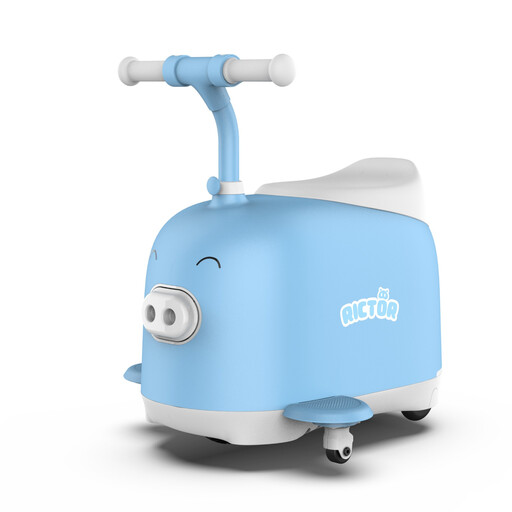
Why this product suits the profile: According to the supplier, this electric ride-on vehicle is intended for children aged 5 to 12. It combines a foldable design with app-based parental control and three speeds ranging from 5 to 15 km/h.
The adjustable speed means the purchasing decision is not based solely on the maximum speed. The five-wheel design and low centre of gravity are specified as stability features.
120W motor, 24V 4.5Ah battery, stated range of 15–20 km, puncture-proof solid rubber tyres and foldable design.
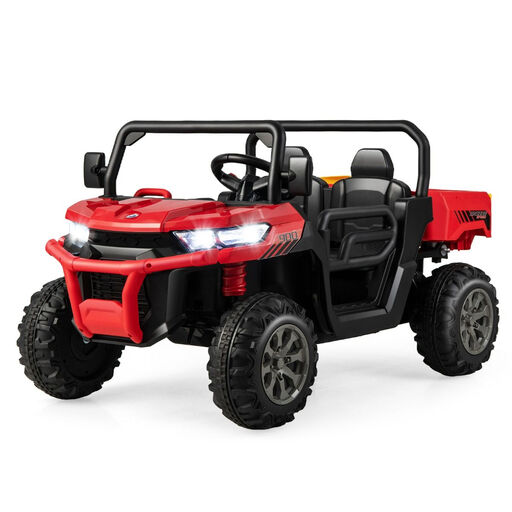
Why this product suits the profile: According to the product data, this two-seater model is designed for two smaller children aged 3 to 8 and has a maximum load capacity of 50 kg.
The soft-start function, three speed options and parental remote control help address the risk of setting off too quickly. The belt, doors and suspension complement the equipment.
Two seats, 12V 7Ah battery, two motors, suspension, tipping area and separate emergency-braking function on the 2.4-GHz remote control.
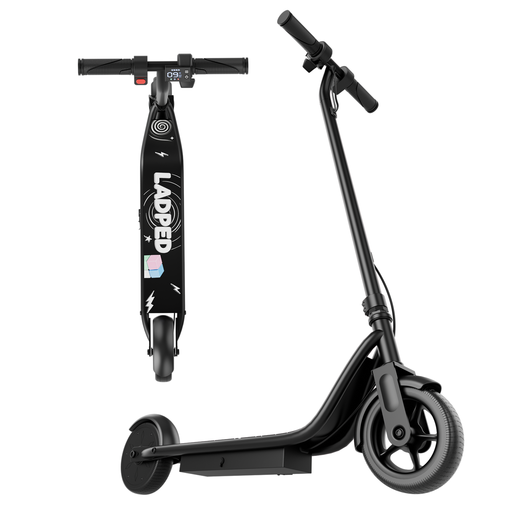
Why this product suits the profile: According to the product name, this children's electric scooter is intended for 6- to 12-year-olds. It offers a top speed of 15 km/h and a stated range of 16 km.
The stated dual braking system highlights the importance of checking the braking equipment before buying. Because of its higher speed, this model should not be treated like a slow ride-on vehicle.
250W motor, 25.2V 4.4Ah battery, 6.5-inch solid tyres, dual braking system and stated range of 16 km.
We have put together a complete, regularly updated list of products that fully meet these strict selection criteria and the safety regulations applicable in the EU.
For children aged 3 and over, slow-moving electric cars or battery-powered ride-on vehicles with parental remote control are often suitable. However, the specific age approval, child's height, load capacity and ability to limit the speed are all decisive. Initial use should take place on a flat, enclosed surface and under direct supervision.
Running time depends on battery capacity, vehicle weight, temperature, surface and riding style. Manufacturers' range figures should therefore be treated as guidelines. After each use, the battery should be charged according to the instructions and should not be stored completely discharged for extended periods.
In addition to the purchase price, the main costs are electricity for charging and, where necessary, replacement batteries, chargers or wear parts. Actual electricity consumption depends on battery voltage and capacity. To assess ongoing costs, it is sensible to compare charging time, battery size and the availability of replacement parts before buying.