
Lieferung heute & morgen

Qualitätsgarantie

Willkommens-Angebote freischalten: KOSTENLOSE Lieferung | Bis zu 80 % RABATT | Kostenlose 30-Tage-JoyPlus-Testphase
App herunterladen
Electric vehicles for children combine movement, imaginative play and outdoor fun. But children’s electric cars, electric quads and go-karts differ considerably in their recommended age range, speed, controls and space requirements. If you focus only on the design or a high voltage, you could end up with a vehicle that doesn’t suit your child or the intended terrain.
A 12 V electric vehicle for children may offer more power and longer running times than a 6 V model. That doesn’t mean it’s right for every child, though. You should also consider age, height, weight, speed and controls. A slower vehicle with simple controls may be more suitable for younger children.
A children’s vehicle with a remote control gives parents an extra way to intervene. However, it’s important to check which functions it actually has. Look for details of speed settings, stop or emergency braking functions, range and battery type. A remote control is no substitute for supervision and doesn’t mean the vehicle can be used on every surface.
A ride-on electric vehicle needs enough space to turn, brake and park. Narrow paths, steps and uneven lawns can be a problem, depending on the wheel size and suspension. Before buying, check the overall dimensions, ground clearance, tyres and recommended surfaces.
The manufacturer’s age guidance is a useful starting point. You should also compare the seat width, the position of the pedal and steering wheel, and the maximum weight limit. A model for a child aged 3 and over may differ considerably from a children’s vehicle for ages 8 and over.
For two-seaters, the maximum weight capacity is especially important. For example, the black two-seater in our selection has a stated weight limit of up to 50 kg and is recommended for children aged 3 to 8 years. Two children should only ride together if the manufacturer explicitly says that they can.
Voltage describes the battery’s electrical potential, not the vehicle’s actual performance. So always check the combination of:
A 12 V model with two motors may be designed for tarmac, concrete or suitable firm outdoor surfaces. That doesn’t automatically mean it’s suitable for steep paths, wet ground or rough terrain.
Look for a seat belt, lockable doors, smooth start, easy-to-reach controls and clear instructions for use. For a children’s bumper car, speed, body shape and how it behaves in a collision are also important.
Before buying, check the CE marking, warning notices, the responsible person in the EU and guidance on supervised use. Requirements vary depending on the type of children’s vehicle. The manufacturer’s information should clearly state the model’s intended age range, weight limit and use.
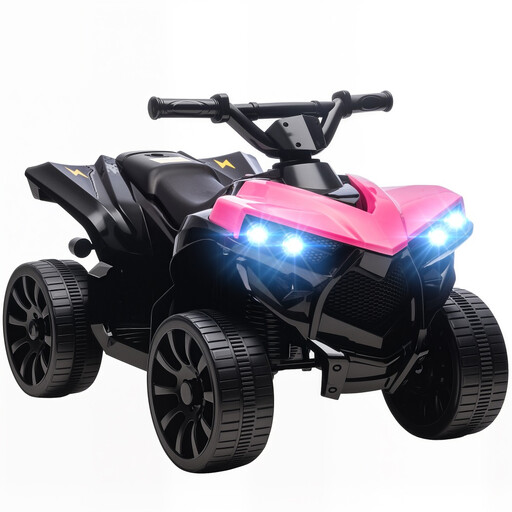
Why this product suits this need: According to the product details, this compact 6 V quad is designed for children aged 18 to 56 months and measures 70 × 42 × 45 cm. It’s therefore suitable for first rides on appropriate, easy-to-supervise surfaces.
The lower voltage and compact dimensions help you avoid choosing a vehicle that’s too large or too fast for younger children. You should still check the child’s age and height, as well as the surface.
Compact design, 6 V drive and quad styling for supervised leisure use.
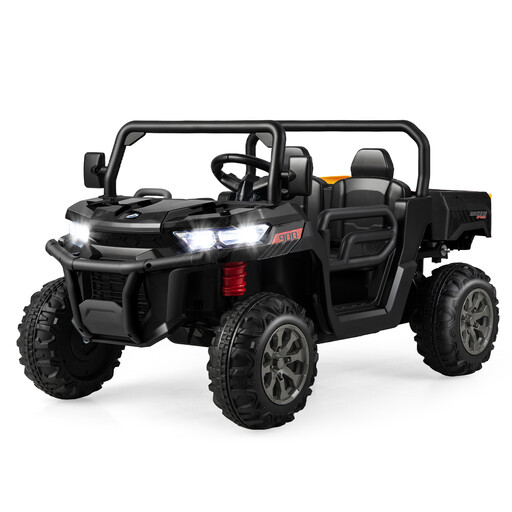
Why this product suits this need: According to the product details, this two-seater electric car for children has two motors, a 2.4 GHz remote control, three speed settings and a speed range of 3 to 8 km/h.
The remote control, soft start, seat belt and stated weight capacity of 50 kg address key considerations for families with two children.
Two seats, 12 V battery, suspension, seat belt and control via foot pedal or remote.
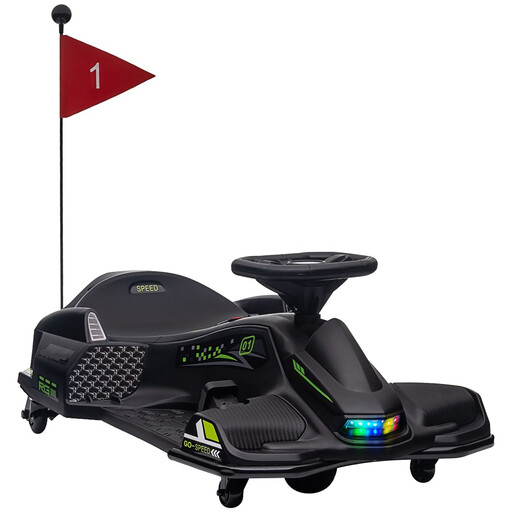
Why this product suits this need: According to the product details, this electric go-kart is designed for children aged 8 to 12. It offers adjustable speed and a drift mode for suitable outdoor surfaces.
The clear age guidance and adjustable speed make it easier to choose than a vehicle with no defined usage limits. The drift mode requires extra space and supervision.
12 V system, adjustable speed and a dedicated drift mode for older children.
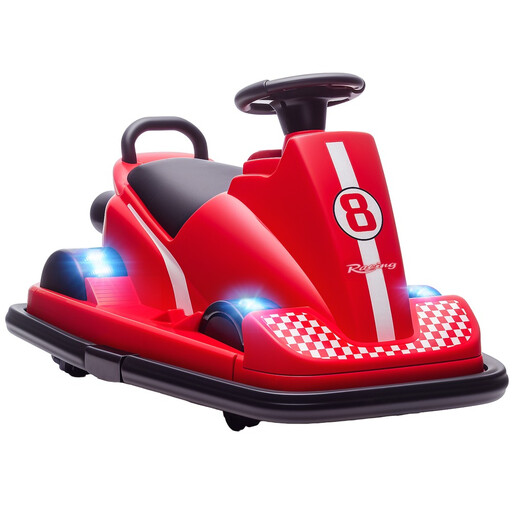
Why this product suits this need: This children’s bumper car is described as having a 6 V battery, a stated top speed of 2.5 km/h, 360-degree rotation and a music function.
Its stated low speed makes it more suitable for limited, easy-to-supervise spaces than for longer journeys. According to the product details, the soft start reduces sudden acceleration.
Top speed of 2.5 km/h, 360-degree rotation, music, horn and soft start.
We’ve put together a complete, regularly updated list of products that meet these strict selection criteria and the safety regulations in force in the EU.
Check the charge level before every ride. Only charge the battery with the supplied charger and follow the stated charging time. For example, the 12 V two-seater has a stated charging time of 8 to 12 hours. Actual running time depends on factors including weight, surface, temperature and riding style.
Store the vehicle in a dry place and protect the battery and electronics from water. Regularly check the tyres, cables, seat belt, screws and charging port. Spare parts and a replaceable battery can help extend the vehicle’s useful life, so check whether these components are available before buying.
A children’s vehicle for ages 3 and over should have a suitable seating position, limited speed and easy-to-reach controls. A model with a remote control can give parents extra control. The manufacturer’s specific age guidance, your child’s weight and supervised use should always remain the deciding factors.
There’s no single answer. Battery life depends on the battery capacity, motors, load, surface and temperature. Charging time and battery voltage are useful for comparing models, but they don’t tell you how long the vehicle will actually run. Charge the battery according to the manufacturer’s instructions and avoid letting it run completely flat unless the manual says otherwise.
A children’s electric quad is generally intended as a toy and leisure vehicle. It isn’t automatically permitted on public roads, pavements or cycle paths. Only use the vehicle on suitable private or authorised surfaces, and follow local rules and the manufacturer’s guidance.