
Lieferung heute & morgen

Qualitätsgarantie

Willkommens-Angebote freischalten: KOSTENLOSE Lieferung | Bis zu 80 % RABATT | Kostenlose 30-Tage-JoyPlus-Testphase
App herunterladen
An electric vehicle for children can provide hours of varied entertainment in the garden, on paved paths or indoors. The range extends from the kids' electric motorbike and the electric cross bike for children to the children's electric quad bike and remote-controlled off-road car. However, product descriptions often sound more impressive than the technical specifications actually are.
Before buying, parents should therefore not only focus on speed, LED lighting or music. What really matters are the right dimensions, controllable power, battery details and the intended environment.
A high km/h figure says little about whether a child can operate the vehicle safely. For younger children, multiple speed levels, a limitable top speed and an easily reachable brake are usually more relevant than maximum power.
With a battery-powered children's vehicle, you should also check whether the speed levels are actually listed in the technical specifications. A purely promotional claim without concrete values makes comparison difficult.
Range depends on factors including weight, terrain, inclines, temperature and driving style. Figures like "up to" are therefore not a guaranteed usage duration. With a battery-operated children's vehicle, parents should pay attention to battery voltage, capacity, charging time and a realistic range estimate.
For remote-controlled vehicles, it is also important to know whether spare batteries are available and how long the charging process takes. A vehicle that needs a long charge after a short play session may not suit frequent use.
Large tyres and four-wheel drive help on grass, gravel or small bumps. However, they do not replace sufficient ground clearance, suspension or suitable brakes. With an off-road capable children's vehicle, the product data should therefore specify tyre size, drive system, suspension and maximum weight.
The term "waterproof" should also be examined critically. Protection ratings such as IP65 or IP67 refer to defined test conditions. They do not automatically permit driving through deep water or use in heavy rain without further restrictions.
The age recommendation is only an initial guideline. You should compare:
A children's vehicle for boys and girls should not be chosen solely by colour or model name. With motorbikes and cross bikes, a suitable seating position is particularly important so that the child can keep both hands safely on the handlebars.
Motor power is usually given in watts. It describes the electrical rated power, but is not the sole measure of acceleration or off-road capability. Torque, gearing, tyres and total weight also influence handling.
For younger users, switchable speed levels and a parental limiter are sensible. With a kids' electric motorbike, you should also check whether disc or hydraulic brakes, an emergency cut-off switch and handlebar protection are specified.
Lithium batteries offer a high energy density for their size. Specifications such as 36 V and 5 Ah allow for better assessment than vague phrases like "long-lasting battery". Also important are:
For RC models, the radio frequency, range, charging connector and number of included batteries also matter. A 4WD RC car with a 2.4 GHz remote control can be suitable for use in a group with multiple vehicles, provided the product description explicitly states this.
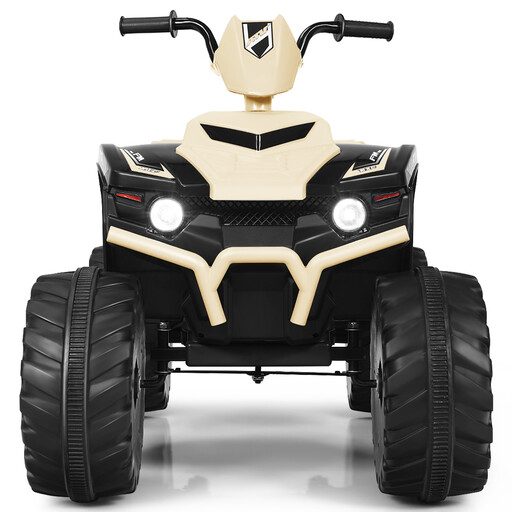
Why this product fits the profile: This children's electric quad bike is ideal for families looking for a simple 12-volt vehicle with comfort features for the garden or yard.
The 12 V specification provides clear technical orientation and avoids an imprecise description of the drive power.
LED lighting, music function and a stated size of 104 × 67 × 74 cm.
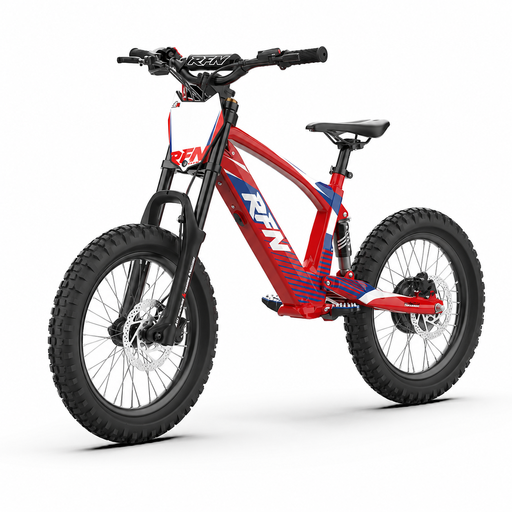
Why this product fits the profile: This electric cross bike for children combines 18-inch tyres with a 500 W motor and three stated speed levels.
The data specifies 15, 22 and 30 km/h, plus hydraulic brakes and a 36 V battery with 5 Ah.
Front suspension, hydraulic brakes, LED display and stated IP65/IP66 protection ratings for individual components.
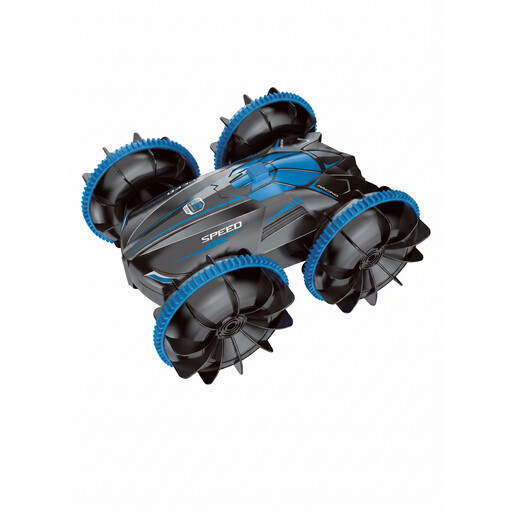
Why this product fits the profile: This remote-controlled off-road car is ideal for children who want to try stunts, water driving and different surfaces.
4WD drive, rounded ABS body and two control modes are concretely described, rather than just being advertised as "off-road".
360-degree spins, driving on both sides, hand-held remote control and gesture control via a watch.
We have put together a complete, regularly updated list of products that fully meet these strict selection criteria and the safety regulations in force in the EU.
An electric vehicle should only be used on a suitable, clear area. Public roads, cycle paths and pavements are not intended for many children's vehicles. Before each use, a quick check of the following is recommended:
With a children's vehicle that has a remote control, adults should first test the range and response. An RC stunt car for children is not automatically suitable for swimming pools; water operation should only be carried out if the product description explicitly states this.
This depends on the model, seat height, weight, speed and controls. A 12 V quad bike or a children's vehicle with a remote control can be easier for younger children to manage than a powerful motorbike. The manufacturer's specifications and physical fit are decisive. The first ride should always take place under direct supervision.
A fixed time cannot be given in general terms. Terrain, load, temperature and speed level all influence the running time. With the models listed, for example, you will find range values of 15 km or 18 km, or a running time of up to 80 minutes. These values serve as a guide and are not identical for every usage situation.
The electricity costs for charging are usually modest compared to the purchase price. Additional costs may arise for spare batteries, tyres, chargers or wear parts. Before buying, it is therefore worth checking the charging time, battery replacement, spare parts availability and recommended storage.