
Lieferung heute & morgen

Qualitätsgarantie

Willkommens-Angebote freischalten: KOSTENLOSE Lieferung | Bis zu 80 % RABATT | Kostenlose 30-Tage-JoyPlus-Testphase
App herunterladen
Electric vehicles for children range from slow-moving electric ride-on cars to foldable electric scooters for children. For parents and grandparents, however, the choice is not always straightforward: specifications for speed, range and age may seem clear at first glance, but they reveal little about how suitable a vehicle really is for everyday use.
The key factor is not the longest list of features, but the right combination of age, height, weight, riding environment and safety features. Checking these points before you buy reduces the risk of making the wrong choice.
The range of a battery-powered vehicle for children depends on factors including load, surface, riding speed, temperature and gradients. A model with a high stated range may deliver very different results on grass or a slight slope compared with level tarmac.
When choosing an electric scooter for children, you should also consider the charging time. A longer charging break can be inconvenient if the vehicle is used regularly on outings or in the garden.
An electric scooter for children capable of 15 or 16 km/h requires more reaction speed than a slow electric ride-on car. For younger children, gentle acceleration, several riding modes and an easily accessible brake are therefore more important than a high top speed.
The manufacturer's age recommendation is also only a starting point. Height, motor skills and experience should be taken into account as well.
Music, a USB port, lighting or an app can make the vehicle more enjoyable to use. However, they do not replace a suitable helmet or adult supervision. If you choose an electric vehicle with a remote control, you should also check whether the remote actually provides a stop function, speed selection and a stable connection.
The seating position or handlebar height must suit the child. On a children's vehicle with a safety belt, the belt should fit snugly without digging in. A vehicle that is too large makes it harder to operate, while a model that is too small can quickly become uncomfortable.
Check the following before placing your order:
A two-seater children's vehicle is practical for siblings, but requires more space and should not be used beyond its stated load limit.
The voltage rating describes the system voltage, not the power alone. A 12 V children's vehicle is often suitable for slower rides in private surroundings. Motor power, drive system and surface also affect the actual riding performance.
Pay attention to:
The battery should only be charged with the specified charger. Damaged cables, unusual heat or a swollen battery are reasons to stop using the vehicle.
For an electric off-road vehicle for children, wide wheels and, where applicable, suspension are useful on uneven private ground. On a scooter, however, the braking system, deck, tyres and handlebars are particularly important. Puncture-proof solid rubber tyres reduce maintenance, but may be less comfortable than pneumatic tyres on uneven paths.
Important: many children's electric scooters are not approved for use on public roads. This also applies when they are technically capable of travelling fast enough. Before using one away from private property, check the applicable German regulations. The manufacturer's information, CE marking, instruction manual and warning notices should be read before buying and before the first ride.
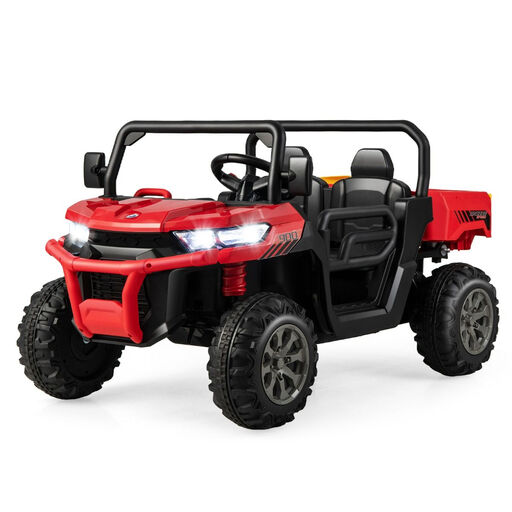
Why this product suits the profile: This 12 V vehicle is designed for children aged 3 to 8 and offers two seats with a maximum load capacity of 50 kg.
The 2.4 GHz remote control offers three speed levels and an emergency braking function. Soft start reduces sudden acceleration.
Two seats, safety belt, suspension, 3–8 km/h and 12 V battery. The remote control allows parents to stay in control.
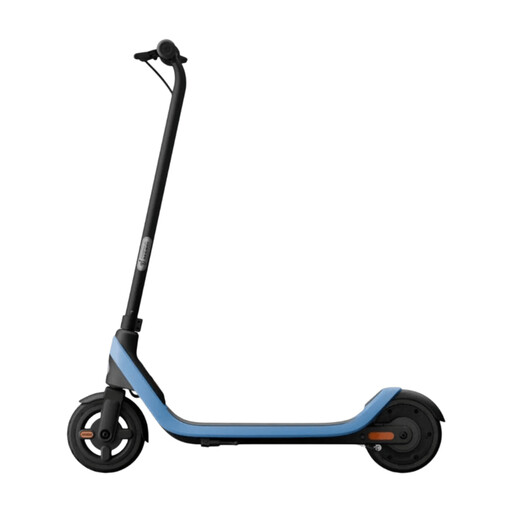
Why this product suits the profile: This scooter is designed for children aged 6 to 10 with a height of 115 to 145 cm and offers three riding modes.
Standard, Power Assist and Sport modes allow usage to be adjusted in stages. The drum brake and 7-inch solid rubber tyres are clearly specified.
Top speed of 16 km/h, range of up to 14 km, folding mechanism, 50 kg load capacity and IPX4 splash protection.
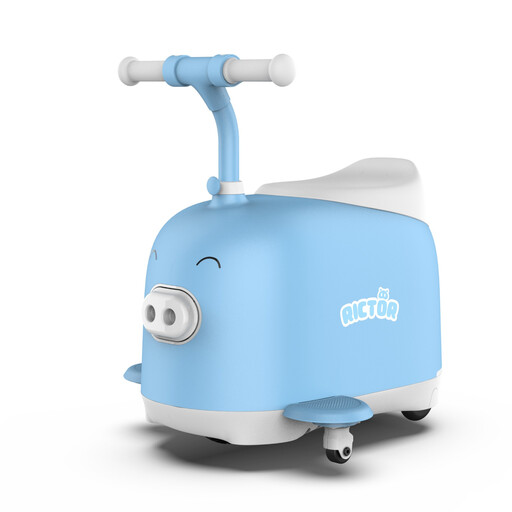
Why this product suits the profile: This foldable children's vehicle is designed for 5- to 12-year-olds and is ideal for families with limited storage space.
The five-wheel design, low centre of gravity and three adjustable speeds support stability and controlled riding.
120 W motor, 24 V 4.5 Ah battery, stated range of 15–20 km, solid rubber tyres, storage space and app control for parents.
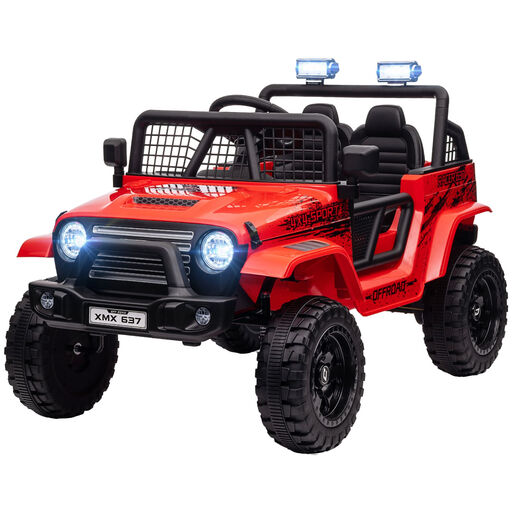
Why this product suits the profile: This electric off-road vehicle for children is designed for 3- to 7-year-olds and combines four-wheel drive with remote control.
The 12 V dual drive system is designed for private paths and outdoor areas. Remote control, lighting and safety belt round off the features.
Two driven wheels, seat belt, lights and music, plus parental control via remote control.
We have put together a complete, regularly updated list of products that fully meet these strict selection criteria and the safety regulations applicable in the EU.
This depends on the type of vehicle and the manufacturer's specifications. Slow electric ride-on cars with remote control are often offered for younger children, while children's electric scooters generally require the rider to be able to stand and brake safely. Age, height and riding ability should be assessed together.
The usage time per charge depends on the battery, weight, riding mode, surface and temperature. To maximise its service life, the battery should be charged according to the manufacturer's instructions, stored in a dry place and not left completely discharged for extended periods.
Not automatically. Many models are explicitly not approved for use on public roads. Before use, check the product information and the applicable German traffic regulations. Non-approved models should only be ridden on suitable private ground.