
Lieferung heute & morgen

Qualitätsgarantie

Willkommens-Angebote freischalten: KOSTENLOSE Lieferung | Bis zu 80 % RABATT | Kostenlose 30-Tage-JoyPlus-Testphase
App herunterladen
An electric mobility vehicle can make short trips to the supermarket, the pharmacy, or to see friends much easier. However, the choice isn't just about motor power or range. What really matters is the vehicle class, seating position, turning circle, battery, charging options, and the legal requirements here in the UK.
When looking at offers for electric vehicles for seniors, three common pitfalls often crop up:
With a 3-wheel electric mobility scooter or 4-wheel electric mobility scooter, you first need to establish whether it's a type-approved vehicle. According to the product documentation, the Chunlai CL-06Z and CL-30ZR-60 models are listed as EU type-approved electric mobility vehicles under Regulation (EU) No 168/2013.
Requirements can change. Before your first trip, check the current regulations with your insurer, the Driver and Vehicle Licensing Agency (DVLA), or another relevant official body. Also, you must not modify the vehicle's motor, controller, lighting, brakes, or speed limiter in any way that deviates from its approved configuration.
Four wheels offer a wider base, but usually need more space to turn. A three-wheeled model can be more compact and manoeuvrable, but requires a more careful driving style when cornering. Pay attention to:
A senior vehicle with reverse gear is especially handy when manoeuvring in front of your house or in a garage. A digital display for speed, battery level and mileage makes it easier to keep track while driving.
An electric mobility scooter with a lithium battery can be practical thanks to its lighter weight and removable design, which allows you to charge it indoors. Before you buy, check:
With an e-bike with fat tyres, you should also bear in mind that wide tyres can offer better grip on loose ground, but take up more space and, depending on tyre pressure, affect the effort required. The Engwe L20 Boost is a bicycle with a 250 W motor and a stated assistance up to 25 km/h. It is therefore not the same as an L2e or L6e electric mobility vehicle.
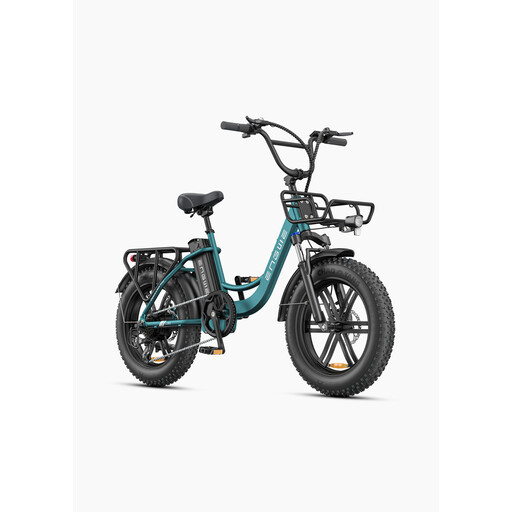
Why this product fits the profile: This e-bike is suitable for people who want to pedal independently and are looking for a bicycle with wide tyres for short everyday trips. The 250 W motor provides assistance up to 25 km/h; a range of up to 120 km is stated.
The technical specifications clearly state the motor power, battery capacity, tyre size and number of gears. However, the range figure should still be understood as a maximum value, not an everyday result.
20-inch fat tyres, 7-speed gears, LCD display and 48 V battery.
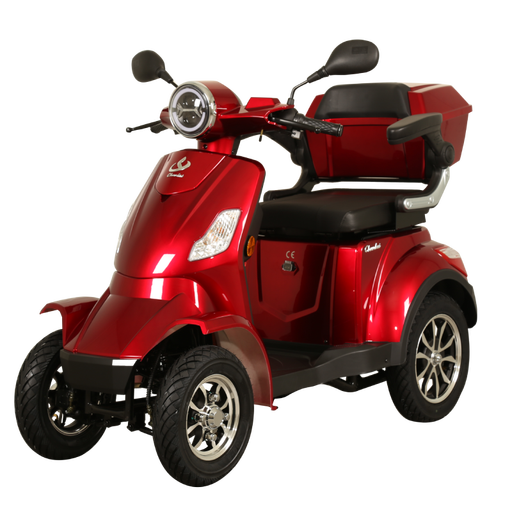
Why this product fits the profile: This four-wheeled model is designed for people who prefer a wide base, an upright seating position, and clear documentation for road use.
The product documentation states the L6e-A class, 25 km/h, the 60 V 20 Ah lithium battery, and the requirements for CoC, insurance and driving licence.
Four wheels, suspension, reverse function, armrests and removable lithium battery.
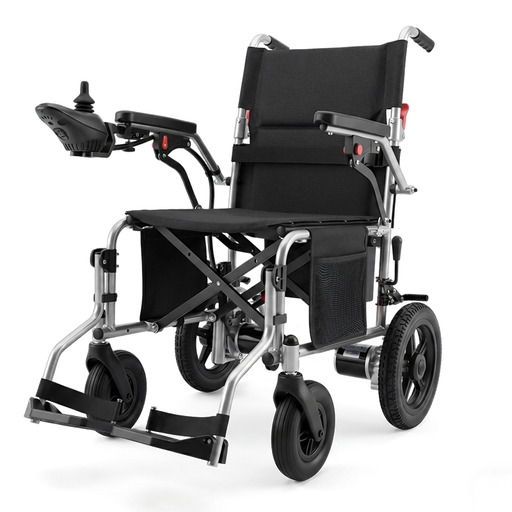
Why this product fits the profile: This foldable electric wheelchair is aimed at people who need a seated mobility solution with a compact folded size for transport and storage. The stated top speed is 6 km/h.
The folded size of approximately 690 × 315 × 755 mm and the net weight of approximately 23.45 kg provide concrete comparison values. The product information includes different motor descriptions; you should check the data sheet and manual before buying.
Foldable design, dual-motor drive according to the product description, and compact dimensions.
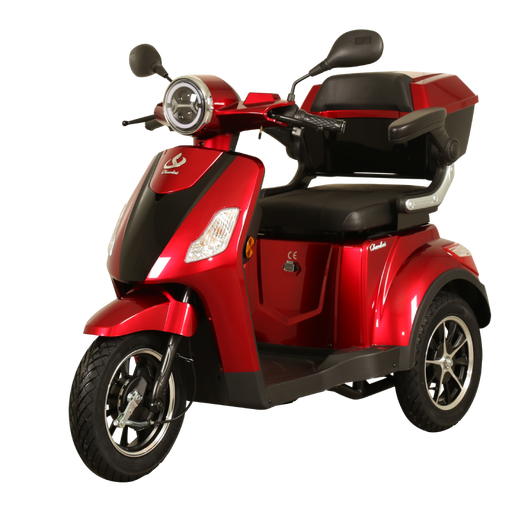
Why this product fits the profile: This L2e-P model is designed for short trips and combines three driving modes, reverse gear, and a lithium battery with a stated top speed of 25 km/h.
The L2e-P classification makes it clear that CoC, number plate, motor vehicle liability insurance, AM driving licence and a helmet are relevant for road use.
Three driving modes, 1,000 W motor according to product data, reverse function and digital display.
We've put together a complete, regularly updated list of products that fully meet these strict selection criteria and the safety regulations in force in the EU.
For people who can pedal independently, an e-bike with wide tyres could be a good fit. If you need a seated solution with a higher base, you should compare a three- or four-wheeled electric mobility scooter. If your ability to walk is limited, an electric wheelchair could also be an option. The deciding factors are the step-through, seating comfort, storage space, and the planned route.
The lifespan depends on factors such as charging cycles, temperature, charge level, and storage. Lithium batteries should be charged with the designated charger and protected from extreme heat or frost. A specific range can only be assessed under your actual usage conditions.
No, you cannot assume a blanket exemption from a driving licence based on the speed alone. For the L2e-P and L6e-A models mentioned, the product documentation states that a valid driving licence, motor vehicle liability insurance, and a number plate are required. In addition, the CoC data must match the vehicle, and the applicable helmet and traffic regulations must be followed.