
Lieferung heute & morgen

Qualitätsgarantie

Willkommens-Angebote freischalten: KOSTENLOSE Lieferung | Bis zu 80 % RABATT | Kostenlose 30-Tage-JoyPlus-Testphase
App herunterladen
An electric water gun can make reloading and pumping much easier during a water fight. At the same time, unclear range specifications, unsuitable batteries or a tank that is too small can quickly lead to a disappointing purchase. Whether you are heading to the garden, pool, beach or out with the family, it is therefore worth looking at the technical specifications rather than relying on marketing claims alone.
The stated range usually describes a favourable ideal result. Wind, water level, battery condition and the way the water blaster is held all affect the actual stream. A long-range water gun is therefore not automatically suitable for every environment. In a small garden, a shorter, more controlled stream may be more practical than a model designed to shoot particularly far.
An automatic water gun, or a water gun with rapid fire, uses more water and energy during continuous use. The key factors are therefore not only firing speed and firing mode, but also tank size, refilling method and battery capacity. If you play frequently, check whether a spare battery is supported and how long charging takes.
An electric water blaster with a battery must not be treated like a completely waterproof device. Before buying, read the instructions, charging information and details about the water supply. With an electric water gun with battery, charging must only take place in a dry location. After playing, the device should be emptied and dried according to the manufacturer's instructions.
Pay attention to the power supply:
A battery indicator or LED display can make it easier to plan recharging. However, it does not replace checking the charging and care instructions.
With a water gun, the time between two play sessions matters. Models with a large opening are easier to fill from a bucket or tap. An automatic refill function can be useful if the water supply is connected as described in the instructions. For example, the SpyraThree water blaster is stated to fill automatically in less than ten seconds. This should be understood as manufacturer information and may vary depending on the water source.
Also check for:
A heavy device may be unsuitable for smaller children, even if the stated age range is otherwise appropriate.
The stated age range is a binding selection guide and should not be judged solely by height or build. For children, warnings relating to eyes, face, small parts and batteries must be observed. The CE marking, details of the responsible manufacturer or importer, and clear instructions for use should also be part of your buying checks.
The following rules apply to water fights regardless of the model:
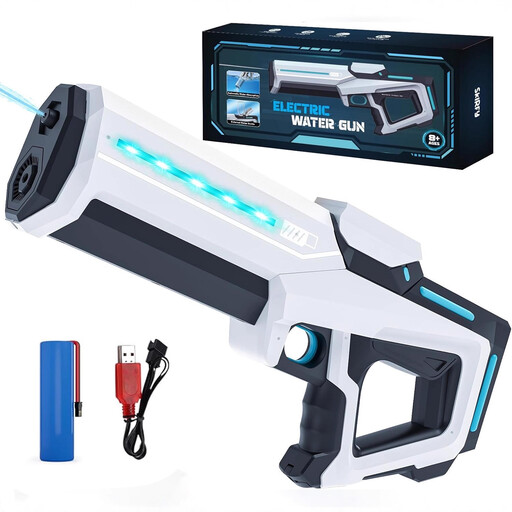
Why this product suits the profile: The Light version is aimed at shoppers looking for an electric water blaster with a rapid-fire function for occasional games in the garden or by the pool.
The Rapid-Fire name clearly indicates the intended firing mode. Nevertheless, check the battery or power requirements and the precise range in the product specifications before buying.
Electric rapid-fire mechanism and a bright, distinctive white design.

Why this product suits the profile: According to the product description, this model is designed for teenagers and adults aged 14 and over, with several settings for organised water fights.
According to the supplier, an LED display shows the water level and battery status. This makes it easier to judge when recharging or refilling is needed.
USB-C lithium-ion battery, three play modes and a supplier-stated range of up to 15 metres; suitable for ages 14 and over.
Why this product suits the profile: This battery-powered water blaster is designed for frequent outdoor games in the garden, around the pool or at the beach, and is recommended for ages six and over.
The product information specifies battery operation followed by emptying, rinsing and drying. This helps you plan the required care realistically before buying.
Motorised firing mechanism, ergonomic design and battery operation; according to the product information, batteries are not included.
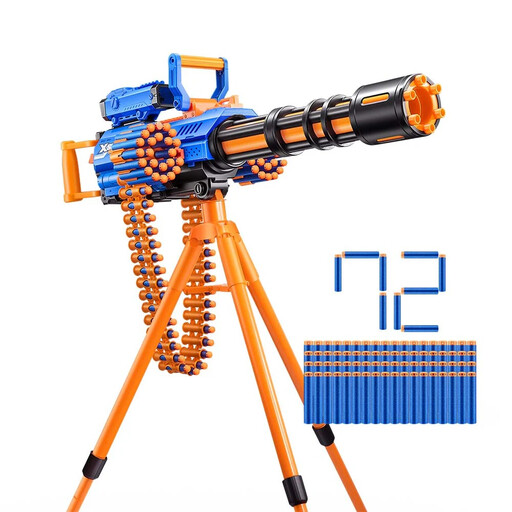
Not every blaster is designed for water. A Nerf blaster or XSHOT blaster with foam darts is suitable for dry outdoor and indoor games, but must not be filled with water. Models such as the Nerf Elite 2.0 Eaglepoint RD-8 use an 8-dart rotating drum magazine and fire foam darts. According to the product information, the XSHOT Excel Turbo Fire has a 20-dart rotating drum and a range of up to 27 metres.
For a classic water fight, therefore, search specifically for “Water Blaster”, a water tank and water operation. If you want to enjoy both types of play, you can choose an outdoor toy gun and a separate water blaster. The same basic rules apply to foam darts: do not aim at the face or eyes, use suitable original ammunition and keep the play area clear.
We have put together a complete, regularly updated list of products that fully meet these strict selection criteria and the safety regulations applicable in the EU.
Only charge the device with the specified cable and in a dry location. With USB-C models, the charging port should be dry before connecting the cable. Refer to the relevant instructions for use for the exact charging time, indicators and maximum battery usage.
This depends on the firing mode, breaks, temperature and model. Claims such as several thousand shots or several hours of playtime are usually the supplier's maximum figures. For longer water fights, a fully charged spare battery or a short charging break may be useful, provided the manufacturer supports this.
For battery models, the main running cost is the electricity used for charging. Battery-powered devices require regular replacement batteries, depending on usage. You should also consider possible costs for spare batteries, compatible chargers or accessories specified by the manufacturer. The lowest running costs do not automatically result from the purchase price, but from the power supply, maintenance and availability of replacement parts.