
Lieferung heute & morgen

Qualitätsgarantie

Willkommens-Angebote freischalten: KOSTENLOSE Lieferung | Bis zu 80 % RABATT | Kostenlose 30-Tage-JoyPlus-Testphase
App herunterladen
An electric air pump can save you a lot of time when camping, at home or by the water. However, models vary widely in pressure, airflow, power supply and connection options. A pump that fills an airbed quickly isn’t automatically suitable for a bicycle tyre or a SUP board.
Typical mispurchases arise from three misconceptions:
Airflow is often specified in litres per minute (l/min). A higher figure is helpful for large-volume items such as airbeds, dinghies or inflatable furniture. An electric air pump for airbeds typically offers high airflow and comparatively low pressure.
For tyres you need a precisely adjustable pressure, shown in bar or PSI. A compact tyre inflator with a digital display is suitable for topping up bicycle, motorbike or car tyres. For completely flat car tyres, however, a small device can take considerably longer.
SUP boards require a SUP air pump with a higher final pressure. Two-stage models combine fast airflow for the initial fill with a high-pressure stage to reach the target pressure.
A pump with multiple nozzles covers more valve types. Airbeds, balls, dinghies and toys often need different adapters. Check whether a hose and sealing rings are included.
An auto shut-off stops the process at a preset pressure. This is especially useful for tyres and SUP boards, but it doesn’t replace checking the correct target value. For large inflatables without a defined tyre pressure, monitor firmness and avoid overfilling.
With electrical devices, overheat protection, unobstructed air vents and adequate pauses are also important. According to the product description, the INTEX QuickFill AC Electric Pump has an integrated thermal cut-out. Cables, plugs and the pump must not come into contact with water or other liquids.
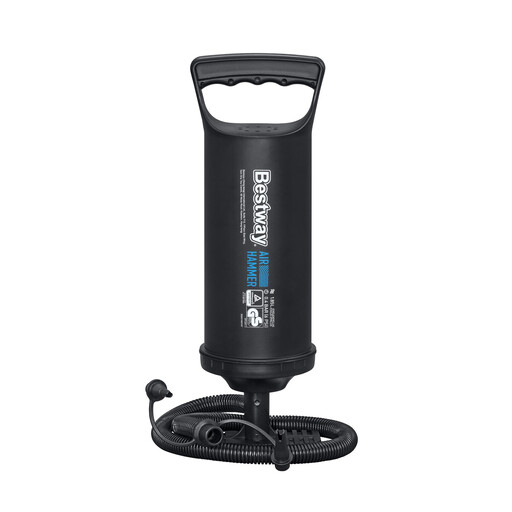
Why this product suits the profile: This manual air pump needs neither a socket nor a battery and is suitable for occasional use with airbeds, dinghies, tyres or toys.
No dependence on charge level or a power supply. The double-action mechanism pushes air on both the upstroke and the downstroke.
1.85 l displacement per cycle, bi-directional airflow and three universal valve adapters.
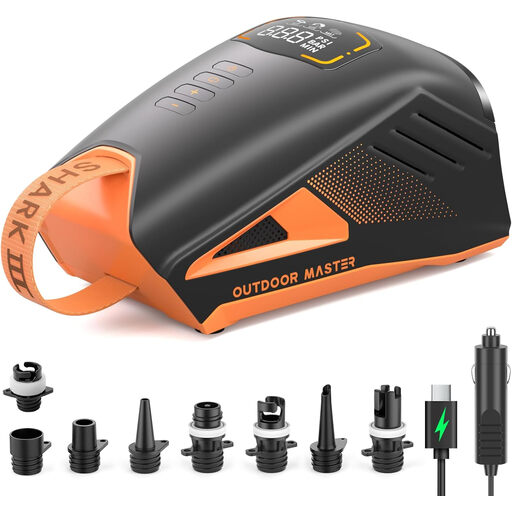
Why this product suits the profile: For SUP users who regularly prepare multiple boards while staying independent of a socket.
The stated maximum pressure of 20 PSI and digital pressure setting clearly show its suitability for high-pressure applications.
74 Wh battery, Type-C and 12 V/15.8 V DC input, digital pressure monitoring, plus inflate and deflate functions.
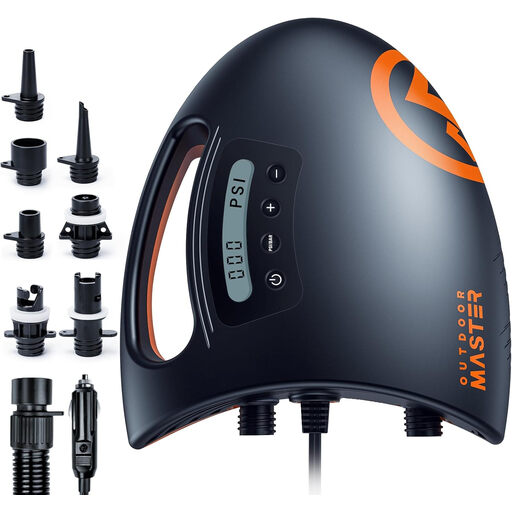
Why this product suits the profile: This 12 V model is aimed at watersports enthusiasts who prepare inflatable SUP boards or boats at the vehicle.
The separate power stages prevent low airflow being mistaken for a SUP pump feature; the target pressure can be set digitally.
350 l/min in the first stage, 70 l/min in the high-pressure stage, 20 PSI maximum pressure and an active cooling system.
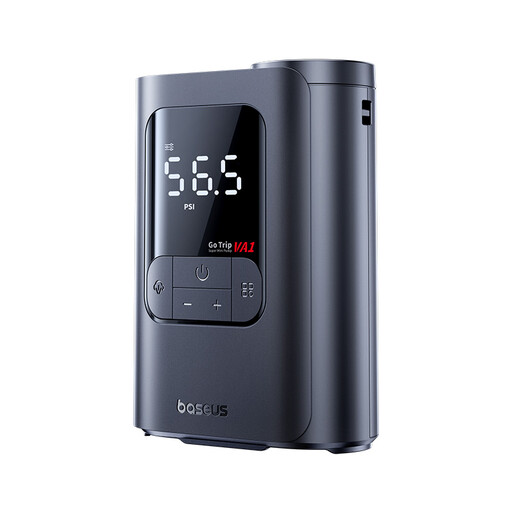
Why this product suits the profile: This cordless air pump is designed for top-ups on car, motorbike and bicycle tyres, as well as balls and smaller inflatables.
According to the product information, the typical pressure range intended for car tyres is 2.0 to 3.5 bar. The device is expressly not intended for heavy lorry tyres.
2,500 mAh battery, five inflation modes, three nozzles, USB-C charging input and stated pressure accuracy of ±0.05 bar.
We’ve compiled a complete, continually updated list of products that fully meet these strict selection criteria and the safety regulations in force in the EU.
For airbeds, a pump with high airflow and suitably large nozzles makes sense. A 220–240 V pump is suitable for indoor use, while a cordless or battery pump offers more flexibility when camping. Also check whether the model can deflate as well.
A compact tyre inflator can top up car tyres or correct the pressure. For a completely flat tyre, the time required depends on tyre size, battery level and device performance. The device’s permissible pressure range must suit the vehicle. Mini pumps are generally not designed for large commercial vehicle tyres.
Service life depends on build quality, frequency of use, storage and the operating time per session. Overheating, blocked air vents, moisture and continuous operation without breaks can stress the electronics and motor. With a rechargeable model, the battery’s capacity is also a long-term factor.