
Lieferung heute & morgen

Qualitätsgarantie

Willkommens-Angebote freischalten: KOSTENLOSE Lieferung | Bis zu 80 % RABATT | Kostenlose 30-Tage-JoyPlus-Testphase
App herunterladen
Electrical kitchen appliances should save space, simplify food preparation and be suitable for regular use. In practice, however, unclear power ratings, containers that are too small or hard-to-reach components often lead to disappointing purchases. This is particularly true of multi-function cookers, countertop blenders, rice cookers and microwaves, where it is worth taking a close look at the technical specifications rather than relying on eye-catching marketing claims.
Depending on the model, a multi-function cooker may be suitable for cooking, steaming, braising or keeping food warm. However, that does not automatically mean every function will fit equally well into your daily routine. A 1.6-litre appliance is more suitable for one person or two small portions, while families may benefit from a larger electric pot or rice cooker.
It is therefore important to check the actual capacity, the accessories supplied and the intended cooking methods. A steamer with several tiers, for example, can hold several ingredients at once, but requires more storage space than a compact pot.
The wattage primarily indicates the appliance’s electrical energy consumption or potential heating or motor power. On its own, it says little about whether an appliance is suitable for the intended purpose. A 600-watt hand blender may be perfectly adequate for soups and purées, while a food chopper should also be assessed in terms of blade design, operating time and the ingredients it can safely process.
With a 2,000-watt induction hob, only induction-compatible pots and pans can be used. Aluminium or ceramic cookware without a magnetic base will generally not work properly.
Permanently installed heating elements, hard-to-reach corners or non-removable blades can make everyday cleaning more difficult. Only wooden, plastic or silicone utensils should be used with non-stick pots. Sharp metal objects can damage the coating.
For blenders and food choppers, correctly locking the lid, unplugging the appliance before cleaning and keeping a safe distance from the blades are essential safety measures. Appliances with overheating or boil-dry protection provide additional safeguards, but do not replace supervision while the appliance is operating.
For kitchen appliances designed for small kitchens, external dimensions and storage space are crucial. Compare the product dimensions with the available worktop space, and allow additional room for the lid, cable and accessories.
As a rough guide:
The stated capacity does not always correspond to the recommended filling level. With liquids and foods that foam, the maximum fill line should be observed.
Depending on the model, an 860-watt rice cooker may also be designed for porridge, soup or keeping food warm. An electric pot with two heat settings has a simpler design, but is often easier to operate. With a slow cooker, low and consistent temperatures are more important than particularly high peak power.
Look out for:
With a countertop blender, the container size, blade material and permitted operating time are also important alongside motor power. A food chopper should only be used for the foods listed in the instructions. Some models are specifically not suitable for ice cubes, bones, frozen ingredients or dry spices.
Glass containers allow you to monitor the contents directly, but may be heavier. Plastic is generally lighter, but should be suitable for the intended food contact. For a kettle or teapot, a wide filling opening, removable filter and easily accessible heating surface are useful for cleaning and maintenance.
For use in Germany, you should check the information on 220–240 volts, mains frequency, plug type, user manual and the responsible person in the EU. The CE mark is a mandatory conformity marking for many product groups in the European Economic Area; however, it is not an independent quality seal. If you are unsure, check the manufacturer and importer details on the product page.

Why this product suits the profile: The 1.6-litre pot is designed for individual portions and takes up relatively little worktop space with its 600-watt power rating. It is suitable for noodles, soups, braising and simple one-pot dishes in student accommodation or small kitchens.
The capacity and usage limits are clearly stated. Automatic switch-off and boil-dry protection address common risks when heating liquids.
1.6-litre capacity, one-button operation, non-stick coating and compact design.

Why this product suits the profile: This portable induction hob offers ten power levels, six preset functions and a slim design. It is suitable for households that want to cook flexibly and free up their worktop again after use.
Its suitability for magnetic cookware is explicitly stated. Boil-dry protection, child lock and clearly defined power levels make choosing and operating the appliance easier.
2,000 watts, ten power levels, touch controls and a glass surface for easy exterior cleaning.
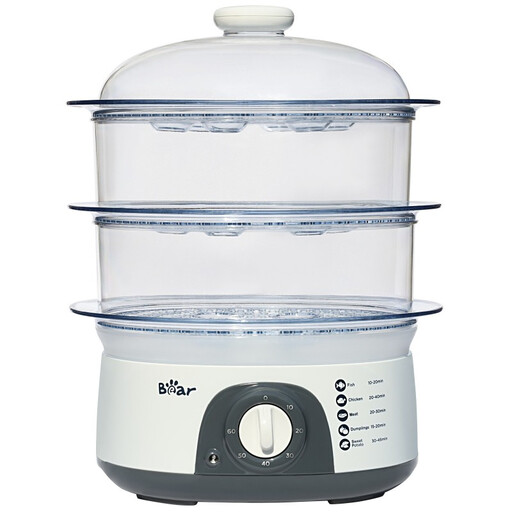
Why this product suits the profile: Three stackable tiers and a total capacity of 10 litres are designed for preparing several ingredients at the same time. This suits families or users who regularly steam vegetables, side dishes and other foods.
Removable parts make cleaning easier. The 60-minute timer and visible tiers help you monitor cooking without constantly removing the cover.
10-litre capacity, three tiers, 60-minute timer and removable components.
We have put together a complete, regularly updated list of products that fully meet these strict selection criteria and the safety regulations applicable in the EU.
Compact kitchen appliances with a capacity of around 1 to 1.7 litres are practical for students. A small electric pot, hand blender, kettle or compact microwave can cover many everyday needs. Before buying, check the available space, noise level, ease of cleaning and whether the appliance is permitted in your accommodation.
Consumption depends on the appliance’s power rating and operating time. An appliance rated at 2,000 watts theoretically uses around 0.5 kWh when operated for 15 minutes. A 2,200-watt kettle may still have a relatively low individual consumption if it is only used for short periods. To calculate running costs, therefore: multiply the wattage by the operating time and apply your own electricity tariff.
Follow the instructions, do not exceed the maximum fill level and allow motorised appliances to cool down at the specified intervals. Coated pots should not be used with metal utensils. Heating elements, plugs and motor units must not be immersed in water. Regular descaling of kettles and thorough but gentle cleaning help ensure safe use over the long term.