
Lieferung heute & morgen

Qualitätsgarantie

Willkommens-Angebote freischalten: KOSTENLOSE Lieferung | Bis zu 80 % RABATT | Kostenlose 30-Tage-JoyPlus-Testphase
App herunterladen
Freshly ground beans do not automatically require expensive equipment. What matters is whether the electric coffee grinder suits your brewing method, daily requirements and cleaning routine. However, there are clear differences between a compact coffee bean grinder with blade cutters and a coffee grinder with conical burrs when it comes to operation, grind size and dosing.
If you only look at wattage or big promises such as “particularly quiet”, you can easily overlook important details. Three common buying misconceptions are:
An electric coffee grinder with burrs crushes beans between two grinding surfaces. Conical burrs, such as those found in a coffee grinder with conical burrs, work with a conical inner and outer surface. Disc burrs use two flat grinding discs. Both designs generally offer a defined grind-size setting.
Blade grinders, on the other hand, cut or break the beans inside a chamber. Fineness is often controlled by the running time. This may be sufficient for everyday filter coffee, but makes it more difficult to achieve a repeatable setting for espresso or pour-over. Models with stainless-steel burrs or stainless-steel blades should also be cleared of coffee residue while dry after every use.
Espresso usually requires a fine grind, while a coffee grinder for French press should produce coarse particles. Pour-over typically falls within the medium to medium-fine range. The precise setting also depends on the beans, roast, dose and brewing time.
Pay attention to the actual adjustment method:
A coffee grinder with adjustable grind size should also be designed so that the selected setting cannot shift accidentally.
For a small household, 50 to 75 grams of beans may be sufficient. Households, offices or anyone making several cups one after another will generally benefit more from a capacity of 200 to 240 grams. A coffee grinder with dosing for 2 to 12 cups is practical if you regularly use a similar quantity.
Removable burrs, bean hoppers or collection containers are important. Coffee grounds tend to build up around the outlet and in narrow channels. You should therefore check:
The motor housing must never be immersed in water. Unplug the appliance before opening it, cleaning it or removing any burr components.
The following models meet a range of requirements. The details are based on the respective product information and technical specifications.
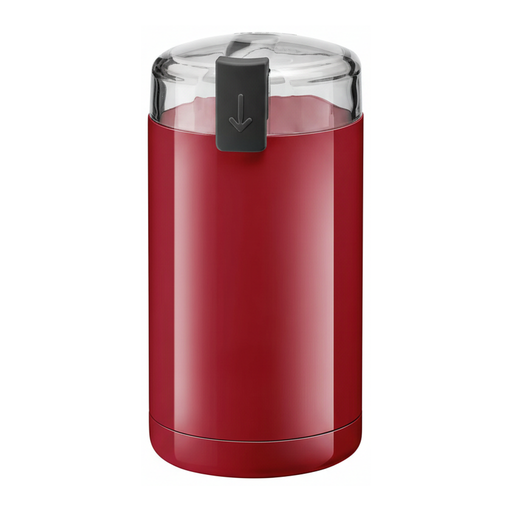
Why this product suits this profile: With 180 watts, a 75-g capacity and stainless-steel blades, this compact appliance is suitable for occasional portions in the home.
The safety function only allows operation when the lid is fitted correctly. Grind size is controlled by the grinding time, rather than by seemingly numerous and unclear settings.
Compact dimensions of 9 × 9 × 17 cm, 75-g capacity and a simple button-operated design.
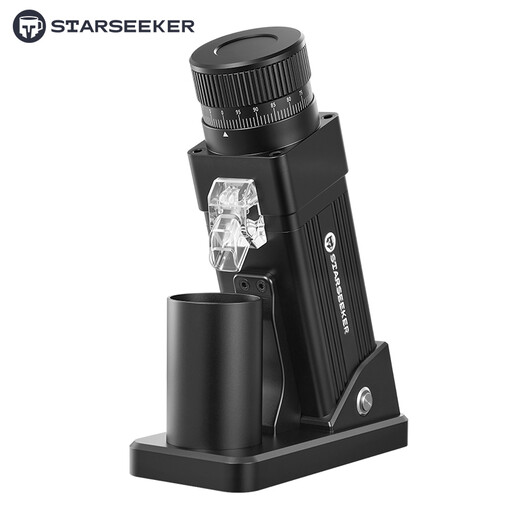
Why this product suits this profile: The 55-mm titanium-alloy conical burrs and stepless fine adjustment are designed for users who want to fine-tune espresso and pour-over brewing.
The stepless adjustment provides continuous fine-tuning instead of coarse jumps. The removable grounds inlet makes cleaning easier.
55-mm conical burrs, metal housing and fine adjustment designed to 0.01 mm according to the product description.
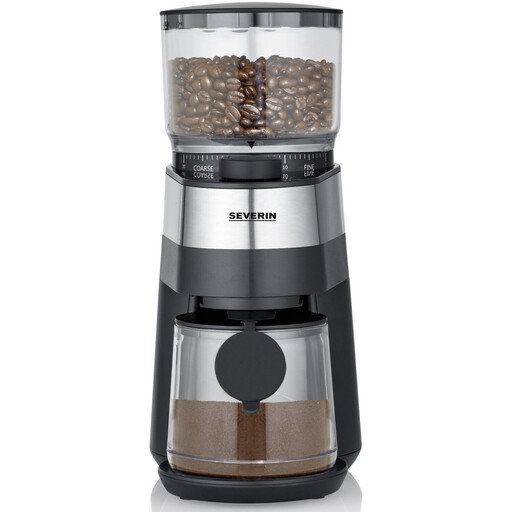
Why this product suits this profile: With 30 grind settings, a 240-g bean hopper and dosing for 2 to 12 cups, this model is suitable for households or offices with changing brewing methods.
The 30-step adjustment is easier to understand than timer-only control. The removable container with an aroma seal reduces the grounds’ exposure to the surrounding air.
Flat stainless-steel disc burrs, a 240-g bean hopper and quantity adjustment for 2 to 12 cups.
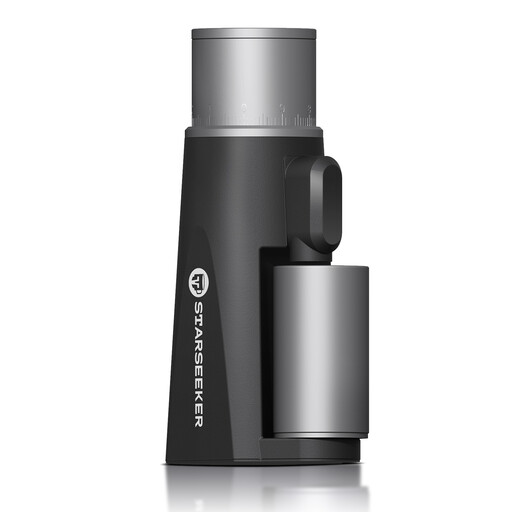
Why this product suits this profile: This cordless model is designed for home working, travelling, camping and small mobile coffee stations.
The product information explicitly states that static charge may occur in dry air. If necessary, users can take this into account by preparing the beans appropriately.
2600-mAh battery, USB-C charging port, 38-mm conical burrs and stepless adjustment according to the product description.
We have put together a complete, regularly updated list of products that fully meet these strict selection criteria and the safety regulations applicable in the EU.
For espresso, a finely adjustable burr grinder is a sensible choice. Models with conical or disc burrs and multiple or stepless settings allow more targeted adjustment than simple blade grinders. The outlet should also be suitable for use with a portafilter. The correct setting depends on the beans, roast and espresso machine.
Its lifespan depends on usage, cleaning, the type of beans and whether cooling times are observed. Only use the appliance for dry coffee beans, remove residue regularly and avoid overfilling it. If the burrs become blocked, switch the appliance off first, unplug it and then follow the instructions.
Grinding usually takes only a short time, so household electricity consumption per portion is generally low. Motor power, usage time and frequency are the main factors affecting running costs. However, wattage alone does not provide a reliable indication of energy efficiency or grinding performance.