
Lieferung heute & morgen

Qualitätsgarantie

Willkommens-Angebote freischalten: KOSTENLOSE Lieferung | Bis zu 80 % RABATT | Kostenlose 30-Tage-JoyPlus-Testphase
App herunterladen
An electric fan heater can quickly warm individual rooms and be used flexibly. At the same time, unclear power ratings, missing safety features or consistently high electricity consumption can easily lead to an unsuitable purchase. This guide explains what households, tenants and homeowners in Germany should look out for.
A 2,000-watt fan heater can warm a room quickly, but at full power it also uses 2 kWh per hour of operation. Assuming an electricity rate of 35 cents per kWh, that would be around 70 cents per hour. The actual amount depends on your electricity tariff and how long the heater runs.
An energy-saving fan heater does not automatically produce heat using less energy. Electric heaters fundamentally convert electricity directly into heat. However, savings can be achieved through thermostat control, adjustable power levels, a timer and an Eco mode, as the appliance does not run continuously at full power.
The noise level of a fan heater depends on the fan, its construction and the selected setting. A specific figure in dB is more meaningful than general descriptions such as ‘whisper-quiet’. Models producing around 25 to 42 dB on a low setting may be worth considering for bedrooms or offices. Higher heat settings may still be more audible.
A fan heater should only be used in the bathroom if the instructions and technical specifications explicitly allow it. The IP rating describes protection against the ingress of solid foreign objects and water. Distances from showers, baths and taps, as well as a suitable socket, remain essential. An appliance must never be placed in water or operated with wet hands.
For small rooms, such as a well-insulated office or bedroom, 1,000 to 1,500 watts may be sufficient. For larger or less well-insulated rooms, appliances with up to 2,000 watts may be suitable. The manufacturer’s room-size recommendations should be treated as a guide, as insulation, ceiling height, outdoor temperature and window area all affect heating requirements.
Look for several power settings, such as 750, 1,500 and 2,000 watts. This allows you to adjust the heat output to suit the situation. A PTC fan heater or ceramic fan heater uses a ceramic heating element with a fan. The term describes the heating technology, but it is not in itself proof of lower electricity consumption.
A fan heater with thermostat switches the heating on or off depending on the selected temperature. Useful features include temperature ranges such as 5 to 35 °C, a display and a switch-off time. A 12- or 24-hour timer can prevent the appliance from running for longer than necessary.
For a fan heater with remote control, check whether all important functions are also available directly on the control panel. A remote control adds convenience, but it does not replace an automatic safety cut-off.
A fan heater is not the right control solution for existing radiators or underfloor heating. In these cases, a smart thermostat and app-controlled heating system may be suitable. Before buying, check the type of heating system, valve type, Wi-Fi requirements and installation location.
The following are particularly important:
A portable fan heater should be placed on a level, dry and stable surface. After use, it is advisable to switch it off and unplug it. Repairs and modifications to the appliance should be carried out by qualified professionals.
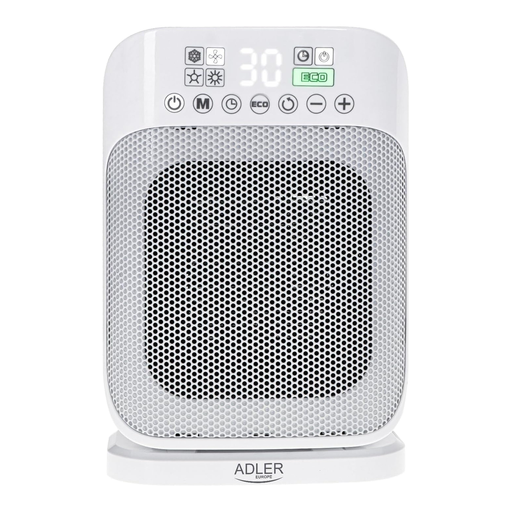
Why this product suits this profile: This 1,500-watt appliance offers an adjustable temperature from 10 to 35 °C, a remote control and 45° oscillation for individual rooms such as offices or bedrooms.
The power setting and thermostat are clearly specified. This makes it easier to control the appliance than a model without transparent temperature regulation.
1,500 watts, LED display, remote control, adjustable temperature and automatic 45° oscillation.

Why this product suits this profile: This appliance combines PTC ceramic technology, a 5 to 35 °C thermostat range, 70° oscillation, a remote control and a stated noise range of 25 to 42 dB.
The temperature, noise level, room size of 15 to 25 m² and safety features are listed separately, making them easy to compare.
2,000 watts, 12-hour timer, 70° oscillation, Eco function, plus overheating and tip-over protection.
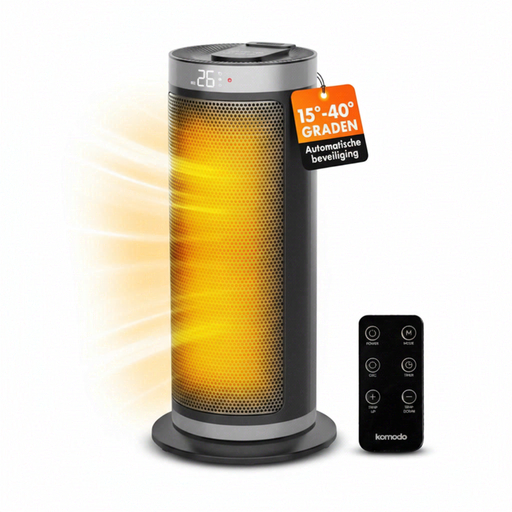
Why this product suits this profile: Three power settings, a thermostat from 15 to 40 °C, a remote control and 90° oscillation are available for use in different rooms.
The variable power output reduces the need to operate constantly at 2,000 watts. For use in the bathroom, follow the manufacturer’s instructions and observe the required safety clearances.
750/1,500/2,000 watts, Eco mode, 90° oscillation, LED display and stated IP66 rating.
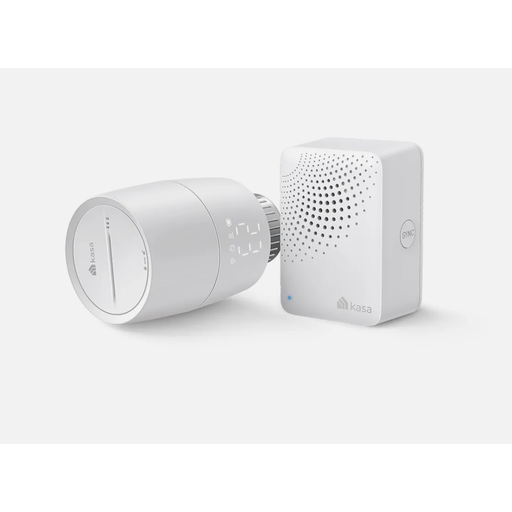
Why this product suits this profile: This set is designed for households with radiators that want to use app control, schedules and voice control through Apple Home, Google Home or Amazon Alexa.
The kit specifies the hub, wireless standard, temperature range and compatible valve adapters. This allows you to check whether it is suitable before installation.
Temperature range of 5 to 30 °C, Matter support, schedules, open-window detection with compatible sensors and up to 32 thermostats per hub.
We have put together a complete, regularly updated list of products that fully meet these strict selection criteria and the safety regulations applicable in the EU.
An appliance rated at 2,000 watts uses 2 kWh per hour at full power. The cost is calculated by multiplying consumption by your personal electricity rate. A thermostat, timer and Eco mode can reduce the running time or power setting, but they do not change consumption while the appliance is operating at full load.
The manufacturer’s decibel rating is the most important value for comparison. Models producing around 25 to 42 dB may be suitable for bedrooms or home offices; the noise level can vary depending on the heat setting, distance and room acoustics.
This depends on the operating instructions and the safety features provided. Even with overheating and tip-over protection, a fan heater should not be covered, used near flammable materials or left running unattended. When you are away for longer periods, switching it off and unplugging it is the lower-risk option.