
Lieferung heute & morgen

Qualitätsgarantie

Willkommens-Angebote freischalten: KOSTENLOSE Lieferung | Bis zu 80 % RABATT | Kostenlose 30-Tage-JoyPlus-Testphase
App herunterladen
An electric heater can be used flexibly: as supplementary warmth in the bedroom, as an electric fan heater in the office, as an electric bathroom radiator or as a patio heater for outdoor areas. However, choosing the right model is not simply a question of wattage. If you focus only on high power output or a remote control, you can easily overlook running costs, protection ratings and the appliance’s actual intended use.
A 2,000-watt appliance can heat a room quickly, but it also consumes a corresponding amount of electrical energy during continuous operation. The basic calculation is:
Power in kW × operating time in hours = consumption in kWh
A 2,000-watt heater uses 2 kWh when operated for one hour. The exact cost depends on your electricity tariff. Features such as a heater with a timer, an adjustable thermostat or an Eco mode can limit operating time, but they cannot replace good room planning and insulation.
Claims such as ‘for up to 35 m²’ are only meaningful under certain conditions. Ceiling height, insulation standards, window area, outdoor temperature and the desired target temperature all affect heat requirements. An infrared heater primarily warms the surfaces and areas of people it is directed towards, while a fan heater circulates the room air. The two systems therefore cannot be compared directly.
A heater for the living room is not automatically suitable for the bathroom or patio. For damp rooms, the IP protection rating is crucial. IP44, for example, protects against solid foreign objects larger than 1 mm and water splashes from various directions. For outdoor areas, a higher protection rating such as IP65 may be relevant. Nevertheless, no appliance should be submerged or used with a damaged cable.
For small areas used occasionally, an electric fan heater with several heat settings can be a practical choice. A lower setting reduces the immediate power consumption. A ceramic fan heater with a PTC heating element often offers several power modes in a compact design. Important features include:
A remote control makes the appliance easier to use, but does not automatically reduce electricity consumption. Only the combination of a thermostat, timer and appropriate heat setting allows for more controlled use.
A smart thermostat or Wi-Fi thermostat can automate heating times and allow control via an app. Before buying, check whether the appliance is compatible with your existing heating system. For permanently connected components, such as an in-wall thermostat for underfloor heating, installation must be carried out by a qualified electrician.
With radiators fitted with a standard valve, replacing the thermostat head is often easier. Even so, the thread, adapters and connection to the smart home system must be compatible. Heating control via an app is particularly useful if you want to manage schedules, periods when you are away or several rooms.
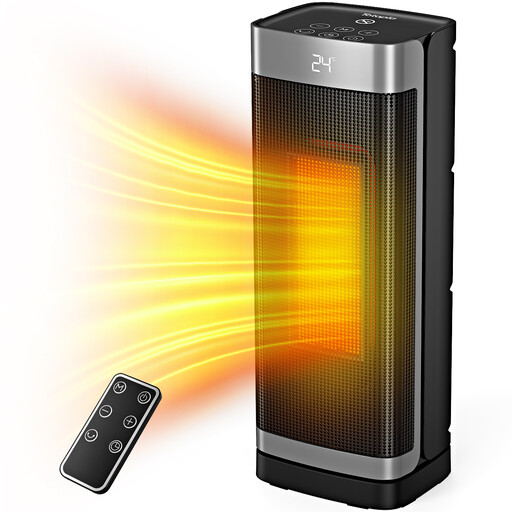
Why this product suits the profile: This compact freestanding heater is designed for bedrooms, home offices and individual living areas. Two heat settings of 1,500 and 2,000 watts allow for easy adjustment.
The 12-hour timer, adjustable thermostat, and overheating and tip-over protection address the most common operating and safety risks.
LED display, remote control, oscillation and two power settings.
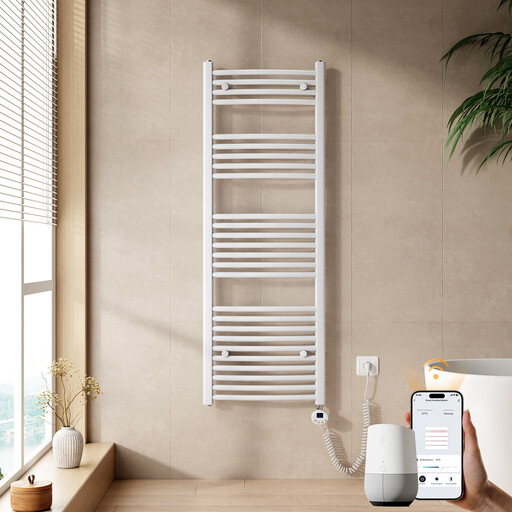
Why this product suits the profile: Measuring 1,400 × 500 mm, this heated towel rail is specified for bathrooms of up to around 7 m². It combines towel warming with supplementary room heating.
The specified IP44 protection rating, thermostat and timer make the intended area of use clearer than a blanket room-size claim.
App and voice control, weekly schedules, child lock and overheating protection.
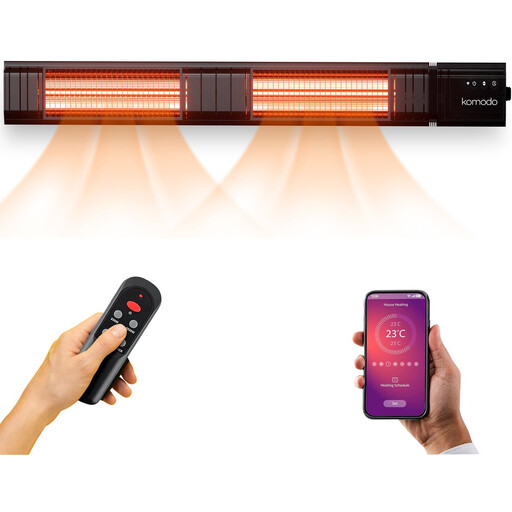
Why this product suits the profile: This infrared patio heater is designed to provide targeted warmth indoors and outdoors. It offers nine heat settings and a 180-degree oscillation function.
The IP65 protection rating is clearly stated. However, minimum clearances, earthing and the high 3,000-watt power requirement must still be taken into account.
Nine heat settings, app and remote control, LED display and 24-hour timer.
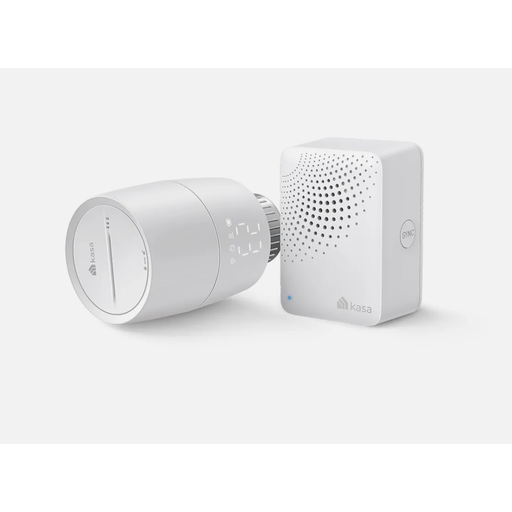
Why this product suits the profile: This set is designed for households that want to manage radiators via an app, voice control and schedules. The hub supports up to 32 thermostats.
Matter compatibility and the supplied adapters make integration easier. Even so, check your existing radiator valve before buying.
Temperature range from 5 to 30 °C, open-window detection and battery life of over one year according to the product details.
We have put together a complete, regularly updated list of products that fully meet these strict selection criteria and the safety regulations applicable in the EU.
Consumption depends on the power output and operating time. A 1,500-watt appliance uses 3 kWh when operated for two hours. A thermostat, timer and low heat setting can reduce operating time. For energy-efficient heating, only heat the room that actually needs to be warmed.
That depends on the appliance and its protection rating. An electric bathroom radiator specifically designed for bathroom use and carrying a suitable IP rating may be suitable for the intended area. Portable fan heaters must not be operated near water. Installation and safety clearances must be observed at all times.
Service life depends on build quality, frequency of use, dust exposure and maintenance. Air inlets should be cleaned regularly. Appliances must not be covered, operated with a damaged cable or left unattended while running. With permanently installed thermostats and radiators, the electrical installation should be checked regularly for visible damage.