
Lieferung heute & morgen

Qualitätsgarantie

Willkommens-Angebote freischalten: KOSTENLOSE Lieferung | Bis zu 80 % RABATT | Kostenlose 30-Tage-JoyPlus-Testphase
App herunterladen
An electric heater can warm rooms quickly and flexibly – for example, when the central heating is not yet on, a home office is only used occasionally or you need extra warmth in the bathroom. The choice ranges from compact fan heaters and convector heaters to mobile oil-filled radiators and permanently wall-mounted electric radiators.
However, anyone who focuses only on wattage or a low price can overlook important differences. Three common buying misconceptions particularly often lead to the wrong choice:
Electrical power is measured in watts. An appliance rated at 2000 W theoretically uses 2 kWh per hour of operation at full power. Costs can be estimated using this formula:
Power in kW × operating time in hours × electricity price per kWh
A 1500-W fan heater therefore uses 1.5 kWh when running at full power for one hour. In practice, a thermostat can switch the appliance off temporarily once the set temperature has been reached. For bedrooms, small offices or individual seating areas, 1200 to 1500 W may be sufficient. Larger or poorly insulated rooms often require higher output. However, actual suitability also depends on ceiling height, insulation, window area and outdoor temperature.
Look for tip-over protection and overheat protection, clear operating instructions, and information about voltage and frequency. Appliances designed for 220–240 V and 50 Hz are standard in German households. A heater should be placed on a stable, level and heat-resistant surface. Air outlets must not be covered; curtains, furniture, paper and textiles should be kept at least as far away as specified by the manufacturer.
The bathroom requires particular care: an ordinary fan heater is not automatically suitable for damp environments. Check the protection rating and the manufacturer’s explicit approval. An electric heated towel rail may only be used near water if the product documentation permits it. Towels must not block air outlets or be dried on an appliance that is not designed for this purpose.
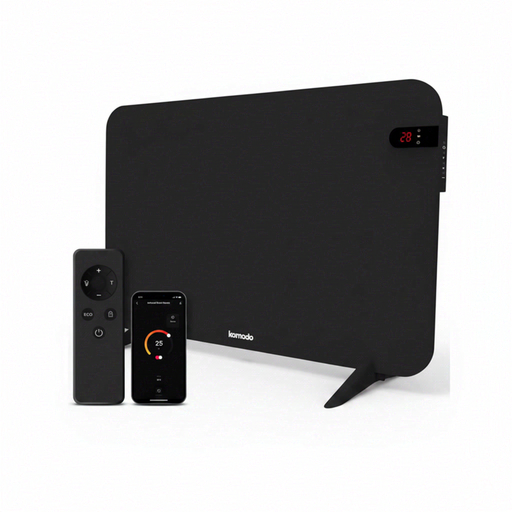
Why this product suits this profile: The simple design is ideal for shoppers looking for an uncomplicated additional heater for a personal area and who are happy to forgo extensive comfort features.
Before buying, check the output, thermostat and safety information on the specific product page instead of relying solely on general advertising claims.
Compact, portable design and straightforward use as an additional source of heat.
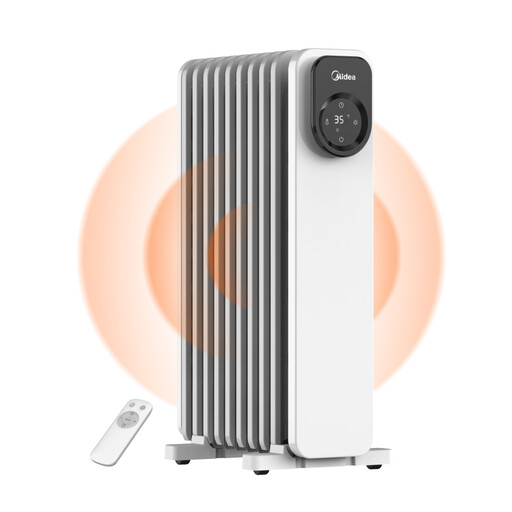
Why this product suits this profile: This portable oil-filled radiator is designed for living rooms, bedrooms or home offices where steady supplementary warmth and quiet operation matter more than immediate warm air.
The product details specify 2000 W, thermostat control, four modes, and tip-over and overheat protection. According to the description, it is intended only for well-insulated rooms or occasional use.
9 fins, LED touchscreen, remote control and a timer of up to 12 hours according to the product description.
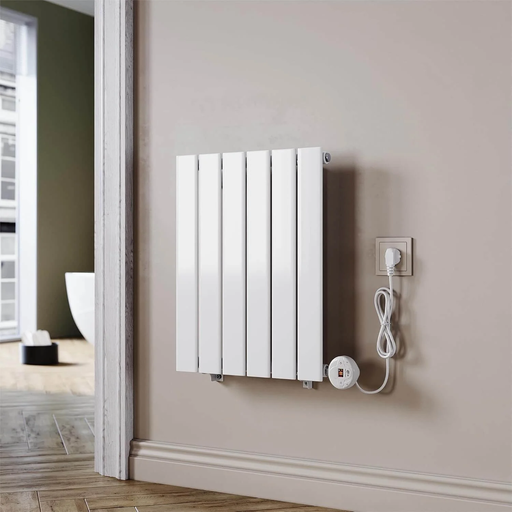
Why this product suits this profile: The slim panel is designed for wall mounting and, according to the product description, can be used as a towel warmer or general indoor heater.
The programmable thermostat control and timer function help you plan heating times precisely. Before installation, check whether the intended room and proximity to water are permitted according to the instructions.
SPCC material, programmable thermostat and timer function; dimensions according to the product description: 71 × 66,5 × 11 cm.
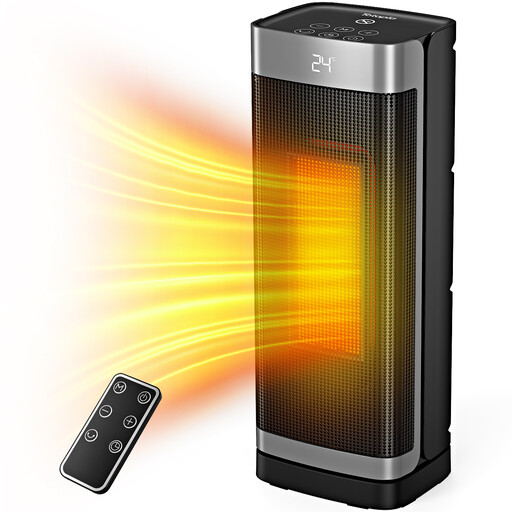
Why this product suits this profile: This ceramic heater offers several power settings and remote-control operation for bedrooms, living rooms or offices.
The product description lists two heat settings, a 12-hour timer, adjustable temperature, and tip-over and overheat protection. The appliance is expressly not intended for damp rooms.
2000-W output, LED display, oscillation and remote control according to the manufacturer’s specifications.
We have put together a complete, regularly updated list of products that fully meet these strict selection criteria and the safety regulations applicable in the EU.
Consumption depends on the output and running time. A 2000-W heater uses 2 kWh when operating at full power for one hour. A thermostat can reduce the actual running time once the desired room temperature has been reached. For a personal calculation, multiply the power in kilowatts by the operating hours and your current electricity price.
Fan heaters or ceramic fan heaters are suitable if you need to warm the room quickly. If you prefer quieter heat distribution, you can choose a convector or oil-filled radiator. Important features include a switch-off timer, a thermostat and sufficient clearance from bedding, curtains and furniture. The appliance should never be placed on a bed, sofa or soft textiles.
Not every heater is approved for bathroom use. Check the protection rating, the manufacturer’s information and the intended installation area. An ordinary portable fan heater must not be used in damp areas or places directly exposed to water. When installing an electric heated towel rail, follow the instructions precisely regarding installation, earthing and use.