
Lieferung heute & morgen

Qualitätsgarantie

Willkommens-Angebote freischalten: KOSTENLOSE Lieferung | Bis zu 80 % RABATT | Kostenlose 30-Tage-JoyPlus-Testphase
App herunterladen
An electric heater can be a practical mobile supplementary heater for the bedroom, living room, office or smaller rooms. It does not require a permanent heating connection and can usually be operated directly from a power socket. However, electric heaters vary considerably in heating performance, noise levels, ease of use and safety features.
Anyone who focuses only on a high wattage or low price can easily overlook important details. Three common buying patterns particularly often lead to the wrong decision:
An electric fan heater with an output of 1,500 to 2,000 W is often suitable for small to medium-sized areas. However, the manufacturer’s room-size specification should be treated as a guide. A poorly insulated room needs more heating power than a well-insulated home office with little external wall area.
The following questions are important when making your choice:
A convector heater works through natural air circulation and usually does not require a fan. This can make it quieter during operation, although it distributes heat differently from a fan heater. Ceramic appliances with PTC heating elements typically release heat through an airflow and respond quickly when you change the settings.
The term energy-saving heater is not a defined technical standard. What matters is the power consumption and the actual operating time. The simple calculation is:
Power in kW × operating time in hours = electricity consumption in kWh
A heater with an output of 1,500 W uses 1.5 kWh when operated at full power for one hour. An ECO mode or thermostat can reduce the operating time or heating level once the desired room temperature has been reached. However, this does not mean that converting electricity into heat fundamentally requires less than one kilowatt-hour per kilowatt-hour of power.
An electric heater with a thermostat is particularly useful if you do not want to adjust the temperature manually all the time. Check whether the temperature can be set in clear, easy-to-read increments and whether the appliance can switch between different heating levels.
Look for clearly described safety features such as:
A heater should be placed on a level, dry and stable surface. It must not be covered and should not be used to dry clothes. The power socket must be suitable for the appliance’s power consumption. For high-powered appliances, it is advisable to connect them directly to a suitable wall socket; depending on their design, extension leads and multi-socket adapters may be unsuitable.
A quiet fan heater is worth considering for bedrooms and offices. However, decibel figures should always be considered in relation to the selected operating level. A fan-assisted appliance may be considerably quieter at a low setting than at maximum heat.
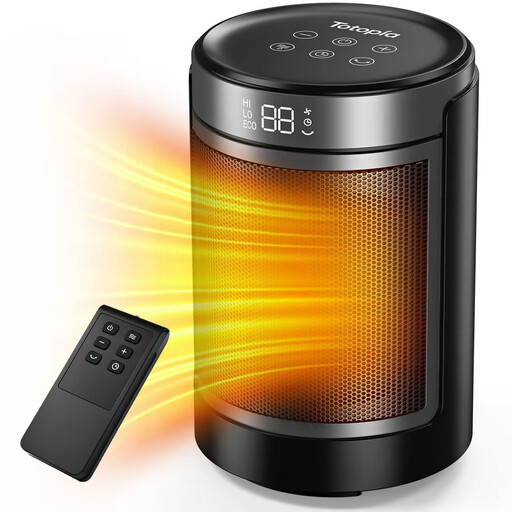
Why this product suits this profile: This compact appliance offers four operating modes, including fan-only, 750 W, 1,500 W and ECO. The LED display, remote control and 1- to 12-hour timer make everyday use easier in the bedroom, study or office.
The multiple heating levels mean you do not always have to heat at full power. Overheating and tip-over protection are explicitly specified.
PTC ceramic heating element, oscillation, remote control and 12-hour timer.
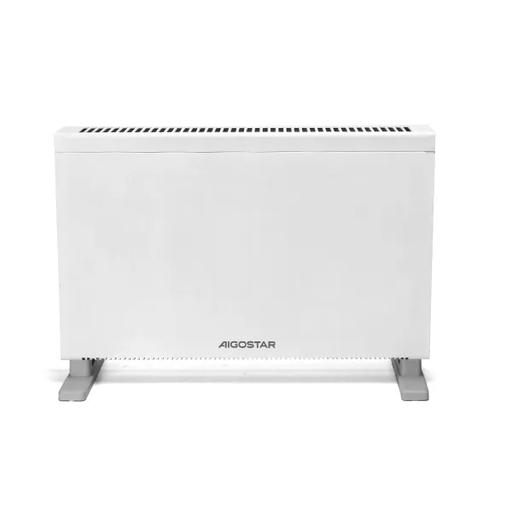
Why this product suits this profile: According to the product description, this convector heater is designed for around 20 to 25 m² and features LED touch controls, a remote control and a temperature setting from 5 to 35 °C.
The specified room size and two power levels provide a clearer basis for choosing than wattage alone.
Natural convection, 24-hour timer, plus overheating and tip-over protection.
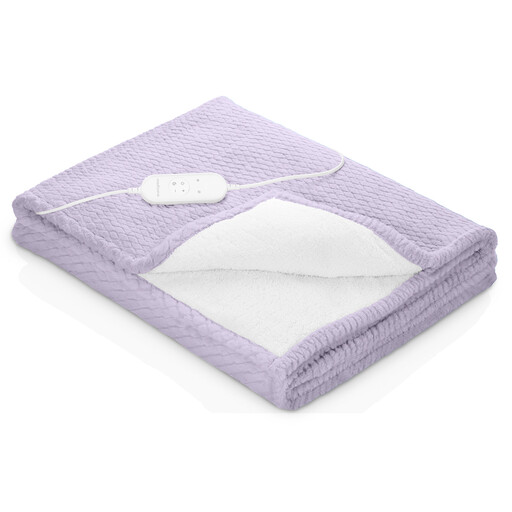
Why this product suits this profile: As an electric heated underblanket, this model warms your bed or sofa directly instead of heating the entire room. Nine temperature levels, 120 W of power and automatic shut-off after 120 minutes are designed for personal comfort.
The lower power consumption is designed for targeted warmth. Overheating protection and automatic shut-off limit the intended usage period.
Nine temperature levels, detachable controller, machine washable at 30 °C and 2.4 m cable.

Why this product suits this profile: This ceramic fan heater offers four heating modes, oscillation, a remote control, an ECO function and a thermostat from 5 to 35 °C. According to the product information, operating noise ranges from 38 to 50 dB depending on the setting.
The stated noise range makes it easier to assess suitability for bedrooms and workspaces. A tilt switch and overheating protection are listed as safety features.
24-hour timer, child lock, oscillation and adjustable target temperature.
We have put together a complete, regularly updated list of products that fully meet these strict selection criteria and the safety regulations applicable in the EU.
This depends on its power output and operating time. An appliance rated at 1,500 W uses 1.5 kWh when operated at full power for one hour. A thermostat, ECO mode and lower heating levels can reduce the amount of time it runs at full power. To calculate the cost, multiply the consumption in kWh by your current electricity tariff.
A quiet fan heater, a convector heater with a timer or an electric heated underblanket may be suitable for the bedroom. Look for noise information, automatic shut-off, overheating protection and stable positioning. The appliance should not be left running unattended for long periods and must never be covered.
Its lifespan depends on build quality, frequency of use, exposure to dust and proper operation. A general figure in years would therefore be unreliable. Check the warranty terms, spare-part or customer-service information, and store the appliance in a dry, dust-free place once it has cooled completely.