
Lieferung heute & morgen

Qualitätsgarantie

Willkommens-Angebote freischalten: KOSTENLOSE Lieferung | Bis zu 80 % RABATT | Kostenlose 30-Tage-JoyPlus-Testphase
App herunterladen
An electric heater is quick to set up, doesn’t need a boiler and makes a flexible supplementary heat source for rented homes, home offices or smaller rooms. But unclear power ratings and overblown promises can often lead to the wrong purchase. It’s not just wattage and price that matter: room size, heating technology, thermostat, noise levels and safety features are important too.
A 2,000-watt heater can warm a room faster than a 1,200-watt model. However, it also uses more electricity when running at full power. You can estimate the running costs as follows:
Power in kilowatts × hours of use × electricity price = electricity costs
A 2,000-watt fan heater is equivalent to 2 kW. If it runs at full power for an hour, it will theoretically use 2 kWh. A thermostat or ECO mode can reduce the running time and power setting, but it won’t eliminate electricity use altogether.
An electric fan heater distributes warmth quickly, but its fan makes an audible noise. If you’re buying one for a bedroom or home office, look for a specific dB rating. Figures in product descriptions aren’t always measured under the same conditions, so treat them as a guide.
A convector heater usually works through natural air circulation, without fan noise. However, it may take longer to distribute the heat. An electric oil-filled radiator also warms up gradually, stores heat in its casing and continues to give off warmth for a while after it’s switched off.
Overheat protection and tip-over protection are important features, but they don’t eliminate every risk. The heater must be placed on a flat, dry and stable surface. Keep curtains, furniture, bedding and other flammable materials at a safe distance, as set out in the instructions. Many product descriptions specify a clearance of at least one metre.
Never cover a heater or use it to dry clothes. For bathrooms or damp rooms, choose only a model with a protection rating specifically intended for that environment. A CE marking indicates that the manufacturer declares the product complies with EU requirements, but it isn’t a general quality rating.
The right power level depends on the room’s volume, insulation, outside temperature and how quickly you want it to warm up. Manufacturers’ recommended room sizes are therefore only a guide. A 1,200- or 1,500-watt heater may be enough for a small personal space. In a larger, less well-insulated room, an electric heater with 1,800 or 2,000 watts may be more practical.
Look for multiple heat settings. A heater with a low and a high setting is easier to match to your actual needs than a model that only runs at full power.
An electric heater with a thermostat measures the room temperature and adjusts the heat output according to your chosen setting. It’s more useful day to day than a simple on/off switch. A timer lets you set the heater to switch off automatically, for example after a few hours in your home office or bedroom.
A fan heater with remote control can be convenient if the heater isn’t right next to where you’re sitting. Check whether the remote actually controls all the key functions: heat setting, temperature, timer and, where applicable, oscillation.
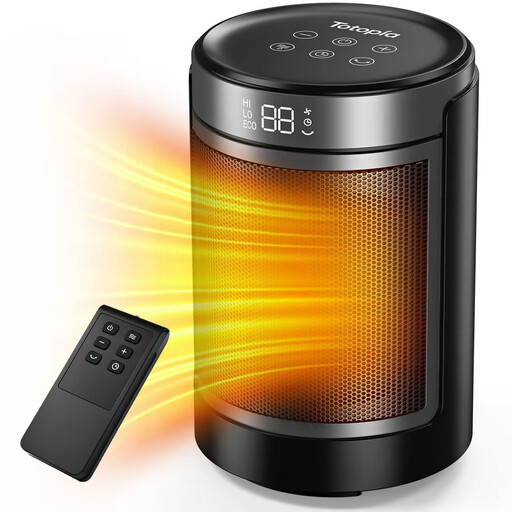
Why it suits this need: Four operating modes, including 750 watts, 1,500 watts, ECO and fan-only, make it a flexible choice for smaller rooms.
The two heat settings and timer of up to 12 hours help avoid running it continuously at full power. Tip-over and overheat protection are listed.
PTC ceramic technology, LED display, remote control, oscillation and a 1–12-hour timer.

Why it suits this need: For anyone looking for temperature control, a low stated noise level and multiple safety features in a compact heater.
The product details state a noise level of 25–42 dB, a thermostat range of 5–35 °C, child lock, and tip-over and overheat protection.
2000 watts, 70° oscillation, temperature settings from 5–35 °C, a 12-hour timer and eight listed safety features.
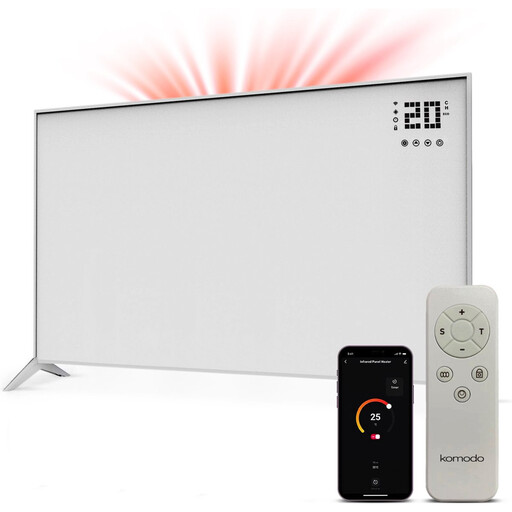
Why it suits this need: An option for rooms up to 20 m², according to the product details, if you want wall mounting, app control or the flexibility to use it freestanding.
The thermostat, timer, ECO mode and automatic shut-off allow you to control it according to your needs. An IP24 rating is explicitly listed; you should still follow the installation instructions.
800 watts, wall or freestanding installation, Wi-Fi app, LED display, child lock and overheat protection.
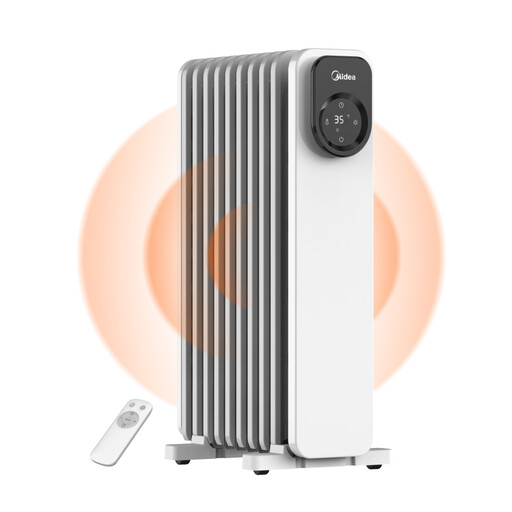
Why it suits this need: This oil-filled radiator is a good choice if you want a portable supplementary heater without constant fan noise.
Thermostat control and four operating modes can help regulate how it runs. The product details specifically recommend it for well-insulated rooms or occasional use.
2000 watts, nine fins, remote control, LED touchscreen, and tip-over and overheat protection.
We’ve put together a complete, regularly updated list of products that meet these strict selection criteria and fully comply with the safety regulations in force in the EU.
Consumption depends on the rated power and how long the heater actually runs. A 1,500-watt heater running at full power for one hour will use 1.5 kWh. A thermostat, timer and ECO mode can reduce the running time or heat setting. To estimate the cost accurately, compare the energy used with your current unit rate per kilowatt-hour.
A quiet fan heater, convector heater or electric oil-filled radiator could all be suitable options for a bedroom. If you choose a fan heater, check its stated noise level and look for a timer and overheat protection. Don’t place it right next to a bed, curtains or other fabrics, and don’t leave it running unattended.
Its lifespan depends on the type of heater, how long it’s used, how much dust it’s exposed to and whether it’s operated correctly. Clean the air vents as instructed by the manufacturer, don’t move the heater while it’s hot, and regularly check the cable and plug. If you notice a burning smell, smoke, damage to the casing or unusual noises, switch the heater off, unplug it and stop using it.