
Lieferung heute & morgen

Qualitätsgarantie

Willkommens-Angebote freischalten: KOSTENLOSE Lieferung | Bis zu 80 % RABATT | Kostenlose 30-Tage-JoyPlus-Testphase
App herunterladen
An electric kettle can make preparing tea, coffee or instant meals part of your daily routine. However, eye-catching wattages, design claims and seemingly practical extra features do not automatically mean you have found the right choice. Capacity, materials, controls, safety features and your household’s actual needs are what really matter.
A 2200-watt kettle can heat water quickly under suitable conditions. However, the actual time also depends on the amount of water added, its starting temperature, the heating technology and the mains voltage. A 2200-watt appliance is therefore not automatically the most sensible choice for every household. If you usually heat just one cup, a larger model may use more water and energy than necessary.
A 1.7-litre kettle is suitable for several cups and family households. Singles and couples often need less capacity. A mini kettle with a capacity of 0.8 or 1.0 litres can take up less space and makes it easier to measure smaller amounts. The MIN marking remains important: if too little water is added, the boil-dry protection may activate or the appliance may interrupt the heating process.
A stainless steel kettle is not necessarily made from stainless steel throughout all parts that can be touched or come into contact with water. Some models combine stainless steel with plastic, glass or silicone seals. For a BPA-free kettle, the product description should clearly state which plastic parts this specification applies to. If you want to reduce contact between plastic and water, you can also browse the selection of stainless steel kettles without plastic.
As a general guide:
As well as capacity, consider the footprint, cable length and the position of the base. A cordless kettle is technically usually a water container that can be lifted off a separate 360-degree base. This makes pouring easier, but it does not mean that the appliance works without a mains connection.
Glass lets you see the water level at a glance. With a glass kettle, the container should be specified as heat-resistant safety glass or borosilicate glass. Stainless steel is robust and, in many models, remains relatively resistant to the demands of everyday use. A smooth inner surface with as few seams as possible can make cleaning easier.
A kettle with a limescale filter holds back limescale particles when you pour. However, the filter does not replace regular descaling. In areas with hard water, the interior should be cleaned more frequently. The filter, lid and spout should all be easy to rinse without significant effort.
Useful standard features include:
A kettle with temperature control is particularly useful for different types of tea, preparing coffee or making hot drinks at a moderate temperature. The available settings should suit the way you intend to use the appliance. A keep-warm function can be practical when several cups are needed at different times. However, it keeps the water at temperature for a set period and can increase electricity consumption.
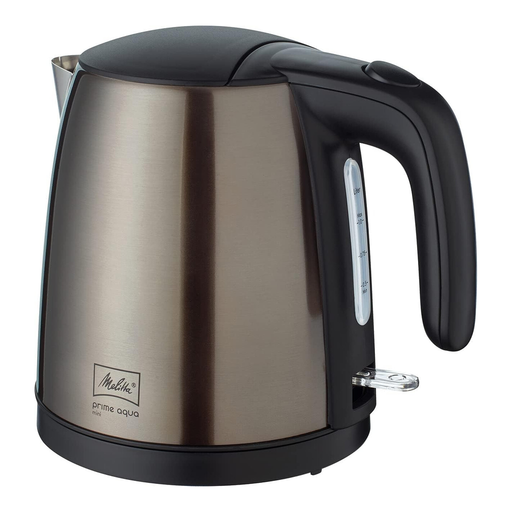
Why this product suits the profile: Its 1.0-litre capacity and 2200 watts combine compact dimensions with a high stated power rating for smaller households.
The smaller capacity helps prevent unnecessary overfilling when preparing individual cups. The removable limescale filter is easy to access for regular maintenance.
1.0 litre, 2200 watts, 360-degree base and BPA-free plastic parts according to the product specifications.
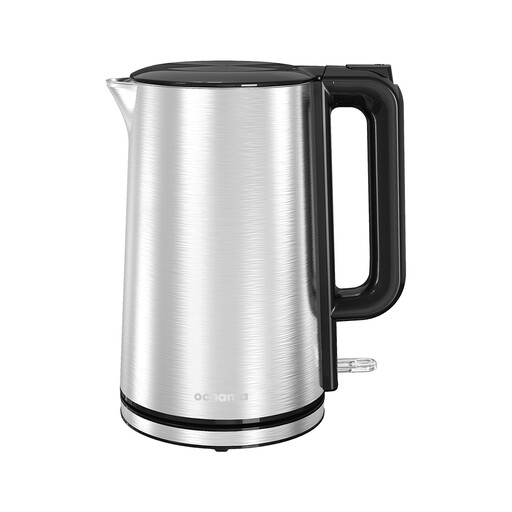
Why this product suits the profile: The double-wall stainless steel construction and near-seamless inner container appeal to buyers who value ease of use and cleaning.
The product description specifies a separate container, automatic shut-off and protection against boiling dry. This reduces reliance on design claims alone.
1.7 litres, 2100 watts, double-wall stainless steel and cable storage in the base.
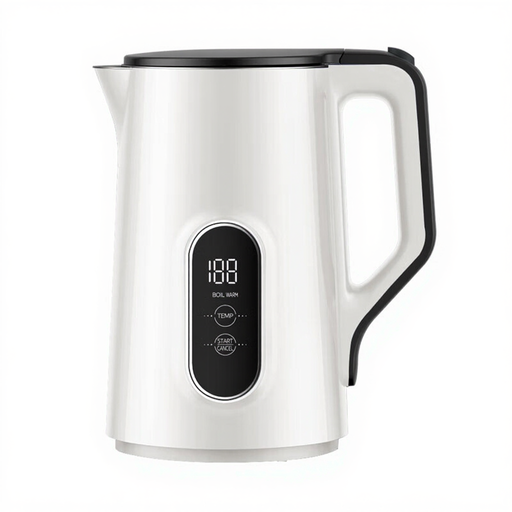
Why this product suits the profile: Six selectable temperatures from 45 to 100 °C and a keep-warm function of up to 60 minutes make it suitable for users who prepare different hot drinks.
The temperature settings are specified clearly rather than being described simply as “intelligent”. Automatic shut-off and boil-dry protection are also listed.
2200 watts, 1.5 litres, six temperature settings, keep-warm function and limescale filter according to the product description.
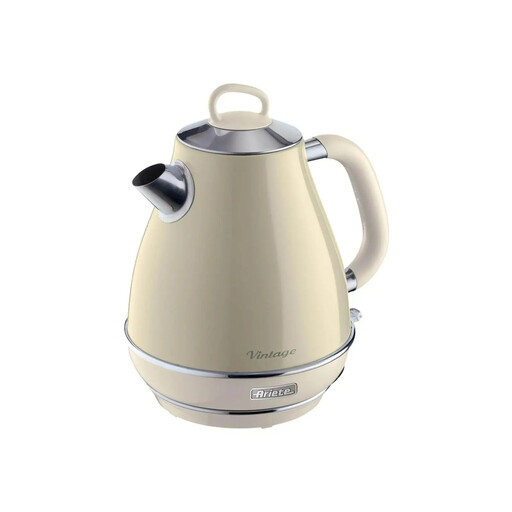
Why this product suits the profile: The retro styling and visible water-level indicator combine decorative design with clear, straightforward controls.
As well as the retro kettle design, the product explicitly lists automatic shut-off, a 360-degree base and an anti-limescale system.
1.7-litre capacity, 2000 watts, visible water-level indicator and cordless 360-degree base.
We have put together a complete, regularly updated list of products that fully meet these strict selection criteria and the safety regulations applicable in the EU.
Fresh water should not be left in the container unnecessarily for long periods. After use, empty the kettle and wipe it with a soft cloth if necessary. For descaling, use a suitable descaling product or a method approved by the manufacturer. The kettle, base, cable and plug must not be immersed in water.
Before switching the appliance on, check that the container is positioned correctly on the base. Do not exceed the MAX marking, as boiling water or steam may escape. If the cable, housing or switch is damaged or faulty, stop using the appliance.
For many households, models between 1800 and 2200 watts are suitable. A fast-boiling kettle with a higher power rating can heat larger quantities quickly, but it requires a suitable socket. For individual cups, capacity and accurate measuring are often more important than the maximum wattage.
This depends on the hardness of your water and how often you use the kettle. If your tap water contains a lot of limescale, you may need to descale the appliance more frequently. A removable limescale filter makes maintenance easier, but it cannot prevent deposits inside the kettle completely.
It can be a useful feature for tea drinkers and anyone who does not always want to heat water to boiling point. If you only need boiling water for coffee or instant meals, a model without temperature selection will often be sufficient. The key is to ensure that the temperature settings and keep-warm duration are clearly stated in the product specifications.