
Lieferung heute & morgen

Qualitätsgarantie

Willkommens-Angebote freischalten: KOSTENLOSE Lieferung | Bis zu 80 % RABATT | Kostenlose 30-Tage-JoyPlus-Testphase
App herunterladen
An electric milk frother should make cappuccinos, lattes and cold coffee specialities quickly and effortlessly. In practice, however, appliances differ considerably in capacity, temperature control, cleaning and operation. If you only look at wattage or product images, you could end up buying a model that is too small for everyday use, difficult to clean or unsuitable for the type of milk foam you want.
This buying guide from the Joybuy Product Recommendation Officer explains which specifications really matter and which models suit different usage profiles.
Many manufacturers only state the container’s total volume. However, the maximum fill level for milk foam is often lower because the milk expands as it is frothed. For example, a device with a capacity of 250 ml may only hold 100 to 150 ml of milk for foaming. That is enough for one cappuccino, but possibly not for several drinks in succession.
So always look for separate specifications for milk foam capacity and capacity for hot milk.
An automatic milk frother with an integrated heating system takes care of stirring and heating, but it still needs to be cleaned after every use. Milk residue can stick to the base or the stirring attachment. A non-stick coating makes wiping the appliance clean easier, but it does not eliminate the need for cleaning.
Removable stirring attachments and dishwasher-safe parts are practical features. Check carefully whether only the lid and whisk, or the entire container too, can go in the dishwasher. The electrical base station must never be immersed in water.
A high wattage alone says little about the consistency of the milk foam. The stirring attachment, temperature control, fill level and type of milk product used are also important factors. On espresso machines with a milk frother, a specification such as 15 or 19 bar primarily describes the pump system for coffee extraction, not automatically the quality of the milk foam.
When choosing a model, you should therefore give greater weight to its functions, operation and cleaning options than to a single large number on the specification sheet.
A milk frother for hot and cold milk foam is suitable for classic cappuccinos as well as iced coffee and desserts. A separate cold function prevents the milk from being heated unnecessarily. If you only prepare hot drinks, a simpler model with a heating and stirring function may be sufficient.
For a one-person household, a foam capacity of around 100 to 150 ml is often enough. Two cappuccinos or larger latte glasses require more room. Clearly visible Min. and Max. markings are important to prevent the appliance from being overfilled or operated without enough liquid.
An electric milk frother with a non-stick coating can usually be wiped clean more easily than one with an uncoated interior. Also look for:
On some appliances, the lid, stirring attachment and container are dishwasher-safe. According to the product specifications, however, you should still follow the relevant manufacturer’s instructions.
The following appliances meet different requirements, from a compact standalone frother to a coffee machine with an integrated frothing function.
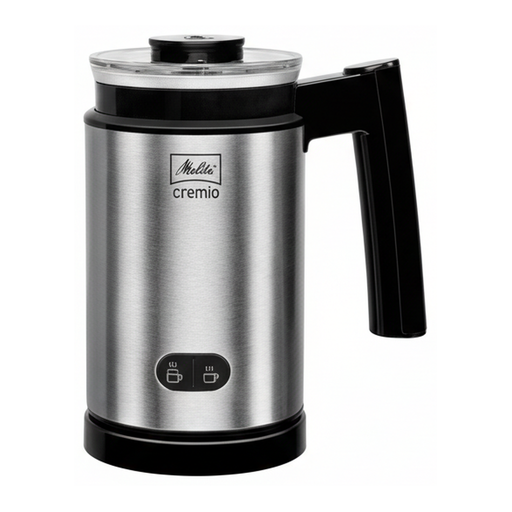
Why this product suits the profile: This appliance offers one-touch operation for hot and cold milk foam, as well as a 250 ml capacity for hot milk. It is ideal for everyday use by beginners who do not want a separate steam wand.
The product specifications distinguish between 100–150 ml of milk foam and 100–250 ml of hot milk. The non-stick container and dishwasher-safe stirring attachment make cleaning easier.
450 W power, a 360° base station, automatic switch-off and GS safety certification according to the product description.

Why this product suits the profile: The combination of a conical burr grinder, touchscreen and automatic microfoam frothing is designed for households that want to combine coffee preparation and milk frothing in one appliance.
The milk temperature and milk foam texture can be adjusted. Automatic cleaning of the milk-frothing system supports regular maintenance, but does not replace cleaning as instructed.
2-litre water tank, five preset recipes and memory slots for up to eight individual settings according to the product data.
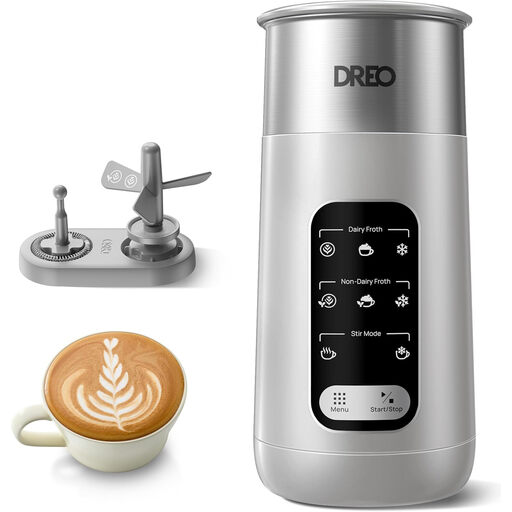
Why this product suits the profile: With a 270 ml capacity, eight programmes and adjustable temperature and foam quantity, this appliance is designed for different types of milk, cold drinks and latte art preparation.
Min. and Max. markings help you fill the container correctly. According to the product specifications, the jug, lid and attachments are suitable for the top rack of the dishwasher.
Separate attachments for microfoam or a more substantial foam, plus automatic switch-off once the programme has finished.
A standalone electric milk frother makes sense if you already have an espresso machine or bean-to-cup coffee machine. It usually takes up less space and can be used independently of coffee preparation.
An espresso machine with a milk frother and steam wand offers greater manual control, but requires practice and additional cleaning. A bean-to-cup coffee machine with a milk frother combines the grinder, coffee dispensing and milk system in one appliance. In return, purchasing, maintenance and cleaning are generally more involved. With capsule machines such as the Nespresso CitiZ & Milk, the integrated Aeroccino prepares hot or cold milk foam; at the same time, you are tied to compatible capsules.
The right choice therefore depends on the complete process: how many drinks you prepare each day, how much space you have available and whether you want to create your milk foam manually or at the touch of a button.
We have put together a complete, regularly updated list of products that fully meet these strict selection criteria and the safety regulations applicable in the EU.
Follow the Min. and Max. markings on the appliance. The permitted quantity for milk foam is often considerably lower than the total capacity because the milk expands as it is frothed. Overfilling can cause the contents to spill over.
Its lifespan depends on how often it is used, how well it is cleaned and how the coating is treated. Do not use metal utensils in the container, do not allow milk residue to dry on and clean removable parts after every use. Cables, plugs and the base station should be kept dry.
Running costs depend on the appliance’s power rating and operating time. A 450 W appliance that runs for a few minutes per drink usually uses a limited amount of electricity in everyday use. For an exact estimate, multiply the power in kilowatts by the operating time in hours and your tariff’s electricity price. Milk, capsules and cleaning products are not included.