
Lieferung heute & morgen

Qualitätsgarantie

Willkommens-Angebote freischalten: KOSTENLOSE Lieferung | Bis zu 80 % RABATT | Kostenlose 30-Tage-JoyPlus-Testphase
App herunterladen
An electric multi-cooker can complement a saucepan, hot pot and, in some cases, other kitchen appliances. In small flats, student accommodation, the office or when camping, however, it is not just the number of functions that matters. The key question is whether the capacity, power, controls and cleaning requirements suit your everyday needs.
A pot with a capacity of 2 litres cannot always be filled to the brim when preparing soup, pasta or boiling liquids. Depending on the design and the manufacturer's instructions, liquids should often only be added to around two thirds of the capacity. A 1.6-litre model may be sufficient for one person, while families are more likely to need an electric cooking pot with a capacity of 5 to 6 litres.
A multi-function cooker with just “low” and “high” settings is suitable for ramen, pasta, soups or simple one-pot dishes. For slow braising, gentle heating and more precise frying, continuously variable control is more practical. You should therefore check whether specific temperature ranges are provided or whether the appliance only offers preset power levels.
A non-stick cooking pot can make it easier to remove food and clean the appliance. However, the coating requires suitable wooden or silicone utensils. Metal cutlery, abrasive cleaners and hard brushes can damage the surface. In addition, only the removable pot or accessories are dishwasher-safe on many appliances – the electrical main housing must not come into contact with water.
For single people, students and small office kitchens, 1.6 to 2.4 litres is often sufficient. An appliance with a footprint of around 27 × 22 cm is easier to store than a large family cooker. For 4 to 6 people, 5 to 6 litres is more practical, although this also increases the space required. A hot pot for 1 to 6 people should therefore be chosen based not only on its maximum litre capacity, but also on your usual portion sizes.
The wattage indicates the appliance's electrical heating power, but it is not the only measure of quality. 600 watts is suitable for small portions and simple dishes. 1,000 to 1,500 watts provide more capacity for boiling water, hot pot meals or larger quantities. An electric hot plate with 1,500 or 2,000 watts can serve as an additional cooking zone, but requires a suitable, stable socket and sufficient clearance from flammable objects.
If you are looking for a pressure cooker or pressure-cooking functions, look for clearly specified safety mechanisms and easy-to-understand operating instructions. A standard electric hot pot is not automatically suitable for pressure cooking.
Depending on the model, useful features include overheating or boil-dry protection, automatic shut-off, a lockable lid on pressure-cooking appliances and a detachable power cable. During operation, the pot, lid and steam become extremely hot. The appliance should be placed on a level, heat-resistant surface and should not be left unattended. With high-powered appliances, avoid multi-socket adaptors and unsuitable extension leads if the operating instructions advise against them.

Why this product suits this profile: This 1.6-litre mini multi-cooker is designed for individuals, students and small portions. With 600 watts, one-knob control and compact dimensions, it is suitable for preparing ramen, pasta, eggs and soups in student accommodation or the office.
The small capacity prevents a single-person household from using unnecessary space and energy on a large appliance. Automatic shut-off and boil-dry protection are specified.
1.6 litres, 600 watts, non-stick coating and a portable format for small meals.
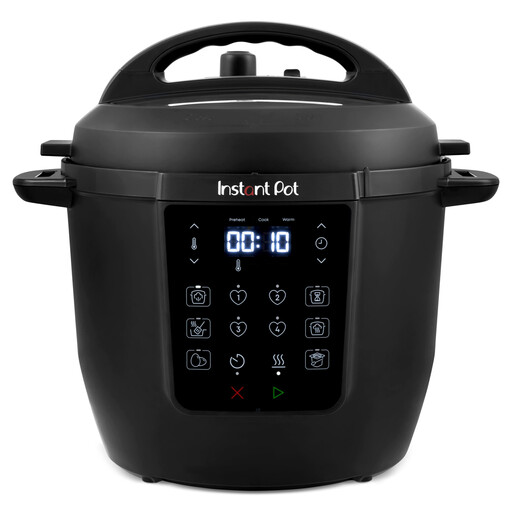
Why this product suits this profile: This 5.7-litre appliance is aimed at families and buyers who want to combine several cooking methods in one appliance. Its listed functions include pressure cooking, slow cooking, steaming, sautéing and keeping food warm.
The cooking methods are clearly named rather than being promoted with vague claims of versatility. According to the product description, safety functions and a stainless steel inner pot are included in the delivery or equipment.
5.7 litres, several cooking programmes, steaming and pressure cooking in one appliance.
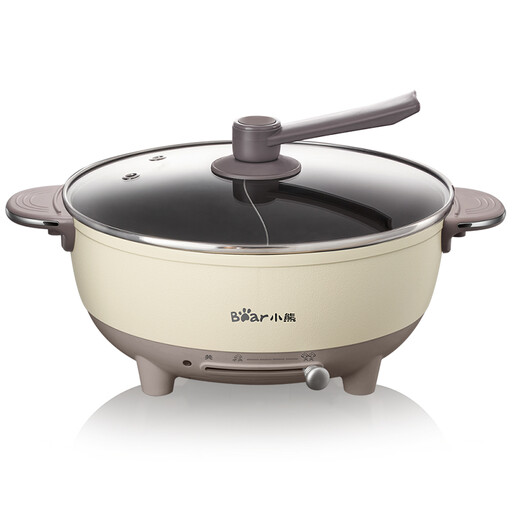
Why this product suits this profile: This 6-litre electric hot pot has two separate compartments. This allows you to prepare two flavours at the same time, for example when sharing a meal with different ingredients or broths.
The separate cooking zones solve a practical hot pot problem: ingredients and broths do not have to share the same compartment. Continuously variable control from 0 to 210 °C and boil-dry protection are specified.
6 litres, two separate compartments, 1,500 watts and continuously variable temperature control.
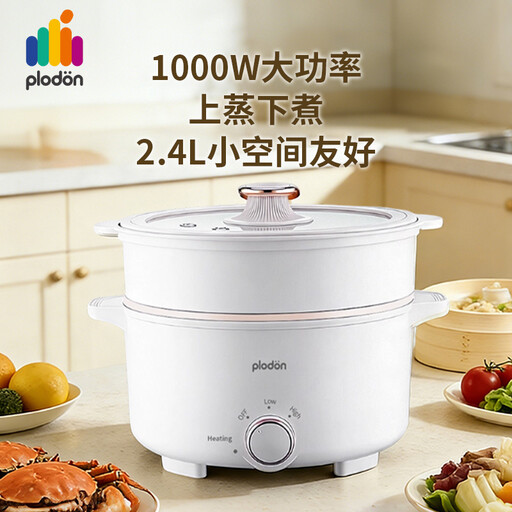
Why this product suits this profile: This 2.4-litre electric cooking pot is suitable for couples, small households and rented flats. A removable steaming insert allows you to steam and cook at the same time, for example vegetables, noodles or side dishes.
The moderate size reduces unnecessary space requirements. Two power levels are clearly specified, while the removable steamer makes separate preparation and cleaning easier.
2.4 litres, 1,000 watts, non-stick interior and separate steaming insert.
We have put together a complete, regularly updated list of products that fully meet these strict selection criteria and the safety regulations applicable in the EU.
Not every cooking task requires an electric multi-cooker:
For one person, 1.6 to 2 litres is often enough. Couples can manage with around 2 to 3 litres. For families or several people, 5 to 6 litres is more practical. You should consider the usable fill level, not just the advertised total capacity.
Its lifespan depends on how it is used, cleaned, coated and stored correctly. Metal cutlery, overheating and aggressive cleaning products can damage the pot. After every use, disconnect the appliance from the mains and allow it to cool down completely. Clean the electrical housing only with a damp cloth.
Running costs depend on the power rating, operating time and electricity tariff. A 1,000-watt appliance theoretically uses 1 kWh when operating at full power for one hour; in practice, the heating element does not always run continuously at full power, depending on the temperature control. For an accurate estimate, multiply the wattage shown on the rating plate by the appliance's daily usage time.