
Lieferung heute & morgen

Qualitätsgarantie

Willkommens-Angebote freischalten: KOSTENLOSE Lieferung | Bis zu 80 % RABATT | Kostenlose 30-Tage-JoyPlus-Testphase
App herunterladen
An electric oven is one of those appliances where advertising claims and practical benefits often differ. Terms such as “multifunction”, “self-cleaning” and “fan-assisted cooking” sound convincing, but on their own they say little about whether the appliance is right for your household. The key factors are oven capacity, installation dimensions, cleaning requirements, energy consumption and how often you plan to use the appliance.
A multifunction oven may offer different heating methods, such as conventional top and bottom heat, fan-assisted cooking, grilling, pizza or defrosting. If you mainly bake cakes, prepare casseroles and occasionally cook a roast, you may not need every available programme. Check that the functions suit the way you cook and that they are described clearly.
An oven with pyrolytic cleaning heats the oven cavity to a very high temperature. Residues are reduced to ash, which can be wiped away once the oven has cooled. Depending on the model, accessories, heavy soiling and delicate parts may need to be removed beforehand. Pyrolytic cleaning reduces the amount of manual cleaning required, but it does not eliminate all maintenance.
An oven with self-cleaning may also use a hydrolytic or steam-assisted system. Water is heated to loosen dirt and residue. This method usually requires the oven to be wiped out manually afterwards and should not be confused with pyrolytic cleaning.
The energy efficiency rating provides a useful guide. However, the consumption figures per cycle are also important when calculating running costs. Ovens with fan-assisted cooking often list separate figures for conventional cooking and fan-assisted cooking, for example. Compare these figures with how you expect to use the appliance and with your electricity tariff.
A built-in oven measuring 60 cm wide requires a suitable kitchen cabinet aperture. Typical appliance dimensions are approximately 59.5 cm high and 59.4 cm wide, although the required aperture may vary depending on the model. Before buying, you should therefore check the following measurements:
A freestanding electric cooker combines an oven and hob. It does not require a cabinet aperture, but it does need a suitable, level position and an appropriate power connection. Installation should be carried out by a qualified professional in accordance with local requirements.
A 71-litre oven is suitable for families, several baking trays or larger roasts. Capacity is not the only important factor: you should also consider the number of shelf positions and the usable interior width. For smaller households or occasional use, a mini oven with an 18-litre capacity may be sufficient. It takes up less space, but offers less room for large dishes and multiple shelves.
An oven with fan-assisted cooking distributes heat using a fan. Depending on the dish, this can allow you to use several shelves at once. A pizza function may provide intense bottom heat or a particular combination of heating methods. With an AirFry oven, check whether a suitable perforated tray is included and which temperature ranges are available.
Automatic programmes are only useful if you select the food type, weight and preparation method correctly. Functions such as rapid preheating, a child lock, a residual heat indicator and a door that locks during pyrolytic cleaning may be more relevant in everyday use than a long list of programmes.
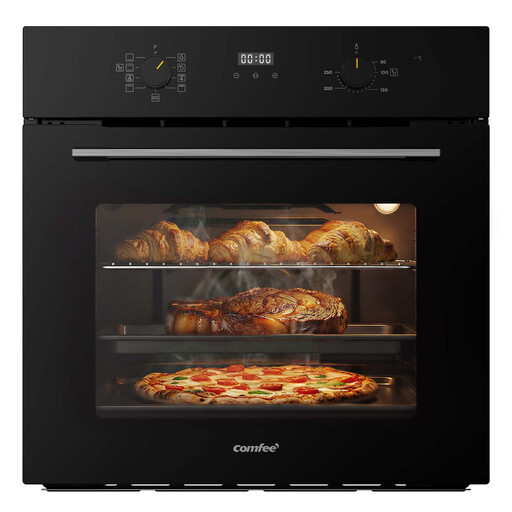
Why this product suits the profile: This built-in oven combines a 70-litre capacity with ten functions, an LED display, timer and AquaClean steam cleaning. It is suitable for households looking for everyday versatility without especially complicated controls.
The cleaning method is specified as AquaClean steam cleaning, making it clearly distinct from pyrolytic cleaning. The A energy efficiency rating and ECO mode are also stated.
70-litre capacity, ten heating functions, pizza function, fan-assisted cooking and timer.
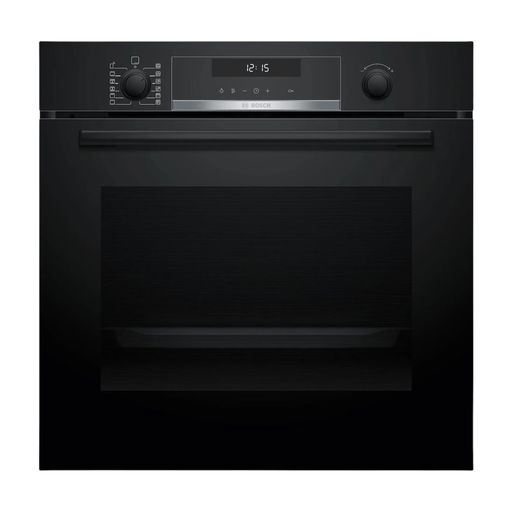
Why this product suits the profile: This 71-litre electric oven offers pyrolytic cleaning, nine heating methods, AirFry, automatic programmes and Home-Connect connectivity. It is a good fit for users who want to make targeted use of a wide range of functions and digital control options.
The pyrolytic cleaning function is described together with automatic door locking and safety features. Consumption figures of 0.94 kWh for conventional cooking and 0.69 kWh for fan-assisted cooking allow for an objective comparison.
71 litres, A+, 30 automatic programmes, AirFry and 3D fan-assisted cooking.
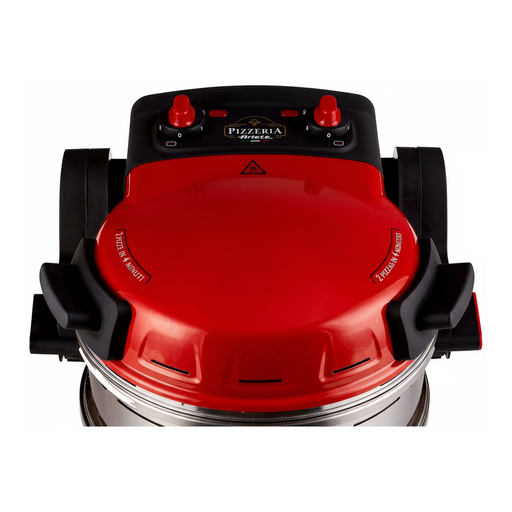
Why this product suits the profile: This compact pizza oven is designed for pizzas up to 32 cm in diameter and reaches temperatures of up to 400 °C according to the product specifications. Two thermostats and two fireproof plates make it suitable for households that prepare pizza frequently.
The intended use and maximum pizza diameter are clearly stated. This appliance is not a full replacement for a large built-in oven and should only be placed on a heat-resistant surface with adequate ventilation.
Up to 400 °C, five cooking settings, two pizzas at once and 2,300 watts of connected load.
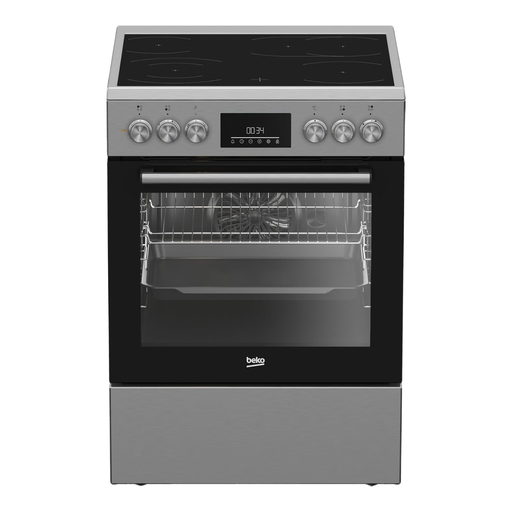
Why this product suits the profile: This 60 cm-wide cooker combines a 72-litre oven with a four-zone ceramic hob. It is suitable for kitchens where an oven and cooking surfaces are needed in a single appliance.
The SteamShine function is specified as steam cleaning, not pyrolytic cleaning. Eight heating methods, the interior dimensions and the A energy efficiency rating are all stated clearly.
72-litre capacity, four-zone ceramic hob, eight heating functions and removable door.
We have put together a complete, regularly updated list of products that fully meet these strict selection criteria and the safety regulations applicable in the EU.
For everyday family cooking, a capacity of 70 to 78 litres and at least several shelf positions are useful. Keen home cooks should also look for a suitable temperature range, pizza function, AirFry tray, telescopic runners and automatic programmes. If space is limited, you can choose a mini oven, but you should consider the maximum dish size and the heat released into the surrounding area.
When it comes to cleaning functions, pyrolytic cleaning uses more energy, but can reduce heavy residues. Steam or AquaClean systems are more practical for light soiling, although they usually require more work afterwards. Accessories should only be used in accordance with the operating instructions.
Consumption depends on the heating method, temperature, cooking time and whether the oven is preheated. The stated kWh figures per cycle provide a useful basis for comparison. Fan-assisted cooking may allow a lower temperature setting for some dishes, but this does not mean that it will always use less energy for every recipe.
Its service life depends on how often it is used, how well it is maintained, the quality of the installation and the availability of spare parts. Regularly removing larger residues, keeping ventilation openings clear and using trays and cleaning programmes correctly can reduce the strain on the appliance. A fixed service life cannot be determined from the product description.
Before buying, check the cabinet aperture, door opening, ventilation and electrical connection. A built-in oven should be connected in accordance with the installation instructions. With a freestanding electric cooker, you must also consider the supporting surface, clearances around the hob and the electrical protection.