
Lieferung heute & morgen

Qualitätsgarantie

Willkommens-Angebote freischalten: KOSTENLOSE Lieferung | Bis zu 80 % RABATT | Kostenlose 30-Tage-JoyPlus-Testphase
App herunterladen
Electric vehicles for children offer different options for play, leisure and outdoor activities, depending on their design. However, a children’s electric car, electric quad bike and children’s electric scooter differ considerably in terms of operation, speed, space requirements and safety features.
Anyone who focuses solely on eye-catching looks, high wattage or an impressive range figure can quickly overlook important details. Three common buying misconceptions are particularly widespread:
The recommended age is a useful starting point, but it does not replace checking the seat height, handlebar position, access and maximum load capacity. A child should be able to reach the intended controls securely with their feet or hands. With a two-seater, the combined weight of both children must also be taken into account.
The dimensions are also important for a children’s ride-on vehicle: will it fit through the garden gate, basement entrance or lift? And can it be transported in the boot? A large children’s electric car needs considerably more storage space than a foldable electric scooter.
For younger or inexperienced children, several speed modes are more useful than a single high top speed. Ideally, an electric vehicle for children with a remote control should feature parental controls, a stop function or controlled start-up.
With a children’s electric motorbike or electric dirt bike for children, you should also consider the braking system, seat height, tyre tread and suspension. Such models are not automatically intended for use on public paths. The intended use and location should comply with the manufacturer’s information and local regulations.
Battery capacity is usually stated in volts (V) and ampere-hours (Ah). A higher voltage alone does not necessarily mean a longer run time. In practice, the combination of battery, motor, vehicle weight and riding conditions is what matters.
Before buying a battery-powered vehicle for children, parents should check:
Electric vehicles for children should be stored in a dry place and in accordance with the manufacturer’s instructions. Chargers must be kept out of the reach of young children and should not be left unattended while charging.
The following models meet different requirements – from a controlled introduction to a vehicle for shared rides or compact storage.
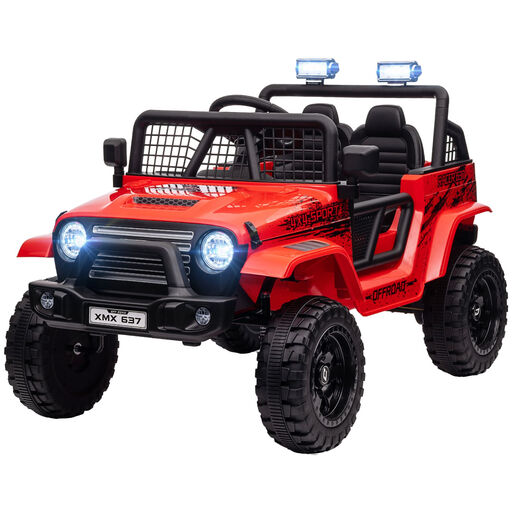
Why this product suits this profile: According to the product information, this 12-volt children’s electric car is designed for children aged 3 to 7. It combines dual drive with a remote control, lights, music and a safety belt.
The stated remote control and safety belt address the common gap between independent riding and parental control. Before buying, check the remote control’s range and functions.
12-volt system, dual drive, lights and music features, plus a seat belt according to the product information.
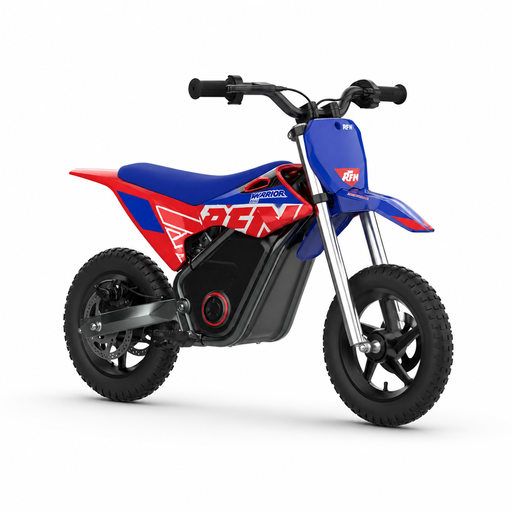
Why this product suits this profile: According to the product information, this model is intended for children aged 4 to 8 and has three speed settings of 15, 22 and 30 km/h. It is therefore particularly suited to supervised use on appropriate private land.
Three speed settings allow the vehicle to be adapted to the rider’s experience and surroundings. The specifications list an emergency stop switch, disc brakes and front and rear suspension.
36-volt battery with 5 Ah, 14-inch off-road tyres, 350-watt motor according to the specifications, and a stated range of 18 km.
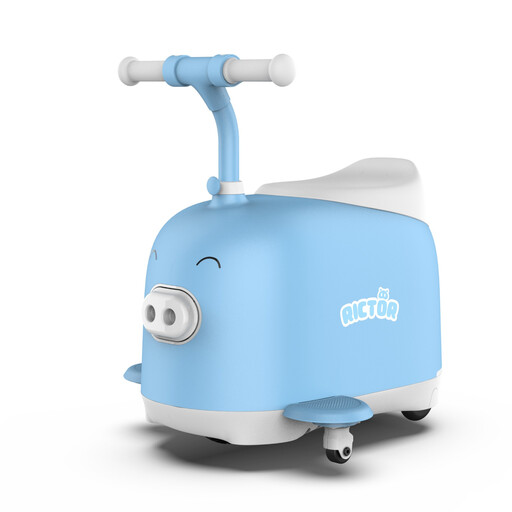
Why this product suits this profile: This foldable children’s electric scooter has five wheels, app control and three speed settings. It is an appealing option for families looking to combine compact storage, controlled use and frequent transport.
The three modes of 5, 10 and 15 km/h, together with parental app control, provide clear ways to limit the speed. The five-wheel design reduces the tendency to tip over, although it does not replace supervision.
120-watt motor, 24-volt battery with 4.5 Ah, foldable design and a stated range of 15 to 20 km according to the product information.
We have put together a complete, regularly updated list of products that fully meet these strict selection criteria and the safety regulations applicable in the EU.
An electric children’s quad bike is often operated differently from a motorbike because of its broad design. Even so, you should look for a low step-through height, easily accessible controls and a stable stance. With a two-seater model, the safety belt, seat width and maximum combined load are particularly important.
You should also consider:
This depends on the specific model, the child’s height, seat height and how the vehicle is operated. According to the product information, some children’s electric cars are designed for children aged 3 and over, while more powerful motorbikes may only be suitable for older or more experienced children. The manufacturer’s guidance should be checked against the child’s physical abilities.
Run time varies depending on the battery, speed setting, load, surface and temperature. A range quoted by the supplier is therefore not guaranteed in everyday family use. After riding, the battery should be charged according to the instructions and stored appropriately if the vehicle will not be used for an extended period.
In addition to the purchase price, the main costs are electricity for charging and possible spending on wear parts such as tyres, brake components or a replacement battery. Running costs generally remain manageable, provided the charger and battery are used correctly and checked regularly.