For quick close-ups without changing lenses, a compact camera with a documented close-up mode is worth considering. If you want tiny contacts or printed markings to fill the frame, look at a system camera with a suitable macro lens; a standard kit zoom is not automatically a 1:1 macro. For consistent results across a series, a stable setup, controllable lighting and white balance adjusted to the lighting conditions also matter.
Which approach is right for you?
Photographing tiny component details
If you want to show contacts, solder joints or printed markings much larger, check the close-up capabilities of the specific lens or camera mode, as well as the depth of field. OM Digital Solutions documents the TG-7 as capable of shooting from as close as 1 cm; Sony and Nikon specify a maximum magnification of 1:1 for certain macro lenses.
Creating consistent product images
For repeated shots against a white background, controllable lighting, a consistent composition and suitable white balance are important. Nikon explains that white balance should be adjusted when lighting conditions change; Canon describes how a tripod can help keep product shots consistent.
Buying your first camera kit
If you want to photograph entire components, find out before buying what the supplied lens can do and whether you’ll need an additional macro lens for detailed shots. Canon specifies a maximum magnification of 0.16x with autofocus, or 0.26x with manual focus, for the RF-S 18–45 mm included in the EOS R50 kit.
What should you look for when buying?
Compact camera with close-up mode
A good fit if: you want to photograph small components without changing lenses, and the close-up mode on the specific camera gives you the composition you need. The OM SYSTEM Tough TG-7 manual specifies that you can shoot from as close as 1 cm.
Bear in mind: the 1 cm figure is a shooting distance, not proof of 1:1 magnification. At very close range, you’ll need to leave room for lighting.
System camera with standard zoom
A good fit if: you mainly photograph whole components and want the flexibility to change your composition, as well as the option to use interchangeable lenses.
Bear in mind: Canon specifies a maximum magnification of 0.16x with autofocus, or 0.26x with manual focus, for the RF-S 18–45 mm in the EOS R50 kit. You may need a different lens for very small details.
System camera with macro lens
A good fit if: you want to make tiny details appear larger and tailor the lens and composition to the component. Sony specifies a maximum magnification of 1:1 for the SEL30M35, as does Nikon for the NIKKOR Z MC 50mm f/2.8.
Bear in mind: the lens must be compatible with the camera body and may not be included in a body-only deal. Check that there’s enough room around the subject for lighting and camera positioning.
| Priority |
What to check before buying |
Who is this especially important to? |
| Magnifying small details |
Check the maximum magnification, lens mount and the lens actually included. |
If I want contacts or labels to look large and clear in the image, the performance of the specific lens or mode matters. Around 36% of consumers put magnifying details first. |
| Keeping whites and colours consistent |
Consider white balance and how you can control the lighting. |
For recurring product shots, I want the background and component colours to remain consistent and predictable under steady lighting. Around 29% of consumers prioritise colour and white consistency. |
| Taking consistent shots in a series |
Check whether you can use a tripod and whether the exact model offers focus bracketing or Focus Stacking. |
If I’m photographing several components with a similar composition, a stable camera position and sufficient sharpness are important. Around 21% of consumers prioritise consistency across a series and depth of field. |
| Planning for everything included |
Check the body, included lens and any accessories you’ll need, one by one. |
As a first-time buyer, I want to know whether the kit covers the overall shots I have in mind and what else I’ll need for detailed images. Around 14% of consumers focus first on what’s in the kit and what they may need to add later. |
Common misconceptions
-
A kit zoom with close-focusing capabilities is automatically a 1:1 macro
Maximum magnification depends on the specific lens. Canon specifies a maximum magnification of less than 1:1 for the RF-S 18–45 mm in the EOS R50 kit.
Before buying, check the maximum magnification of the lens actually included. You may need a suitable additional macro lens for very small contacts.
A suitable macro lens may be an additional purchase.
-
A short shooting distance means there’s enough room for lighting
The stated focusing or shooting distance doesn’t automatically tell you how much free space there is in front of the lens for a light source.
Try out the complete setup, including camera, lens, component and lighting, with a typical subject.
-
A new camera alone will give you a consistently white background
Keeping compositions consistent and setting white balance to match your lighting are separate steps. An unstable setup or changing light can make it harder to get repeatable results.
Test your composition, lighting and white balance with the setup you plan to use. A tripod can help when taking repeated shots.
Depending on your setup, you may also need a tripod and controllable lighting.
Camera brands to consider
OM SYSTEM
The Tough TG-7 offers a documented close-up mode without the need to change lenses. OM Digital Solutions specifies that you can shoot from as close as 1 cm; the model also features Focus Stacking.
- The TG-7 manual describes close-up shots from as little as 1 cm and Focus Stacking.
- The shooting distance doesn’t prove that the magnification is 1:1. You’ll need to factor in lighting at close range.
Canon
The EOS R50 with RF-S 18–45 mm is an interchangeable-lens kit for flexible overall shots. Canon says the body supports RF and RF-S lenses.
- Canon specifies a maximum magnification of 0.16x with autofocus, or 0.26x with manual focus, for the kit zoom.
- For more powerful macro shots, you’ll need to budget separately for a suitable compatible lens.
Sony
For APS-C cameras with an E-mount, including the α6400, Sony offers the separate SEL30M35 macro lens.
- Sony specifies a maximum magnification of 1:1 for the SEL30M35.
- The macro specification applies to the lens, not the α6400 on its own. Its documented minimum focusing distance is 0.095 m, so plan your lighting setup accordingly.
Nikon
The Z50II is a DX interchangeable-lens camera. Nikon specifies a magnification ratio of 1:1 for the separate NIKKOR Z MC 50mm f/2.8.
- This macro lens offers 1:1 magnification for compatible Nikon Z cameras.
- The 1:1 specification applies to the lens, not the camera body or every Nikon kit. Check that there’s enough room for the subject and lighting.
Camera deals at Joybuy
Joybuy camera deals related to photographing components. Before choosing, check in particular that the close-up performance suits the composition you want.
 No image available
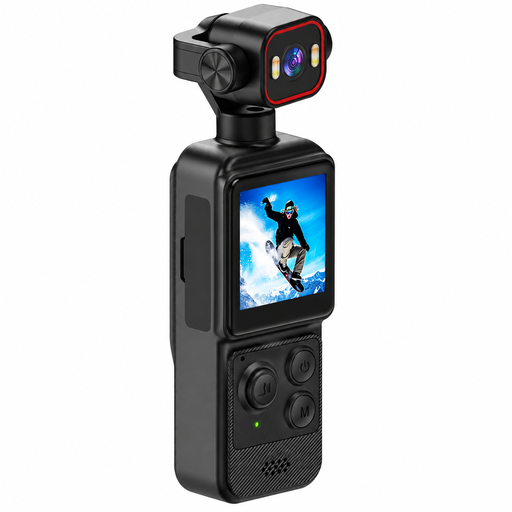
4K mini action camera with clip
For component photography, check whether the close-up range gives you the composition you want; the product name alone doesn’t specify macro magnification.
The product name lists a 1.54-inch display, a 140° wide-angle lens, app control, LED lighting and a 1200-mAh battery.
View at Joybuy
 No image available
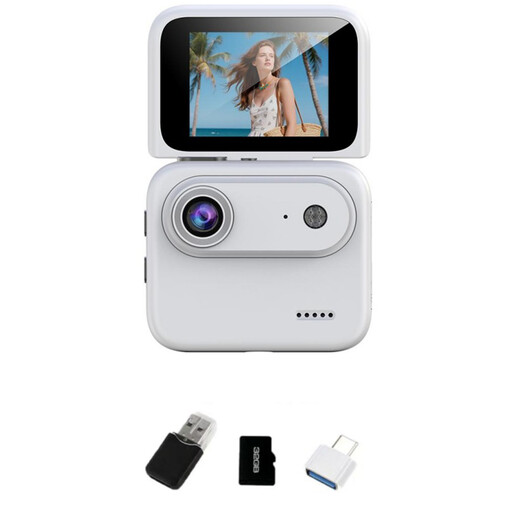
NAXSIR 4K mini action camera
If you’re considering it for component photography, check that its close-up performance suits the composition you want; the product name doesn’t give any details.
The product name lists a 32 GB TF card, a 2.0-inch flip display, a 143° wide-angle lens and a white finish.
View at Joybuy
 No image available
NAXSIR 4K Ultra HD digital camera
Before choosing a camera for tiny contacts or printed markings, check whether its close-up range can capture the composition you need.
The product name lists 64 MP photo resolution, 18x digital zoom, autofocus and a 32 GB memory card.
View at Joybuy
 No image available
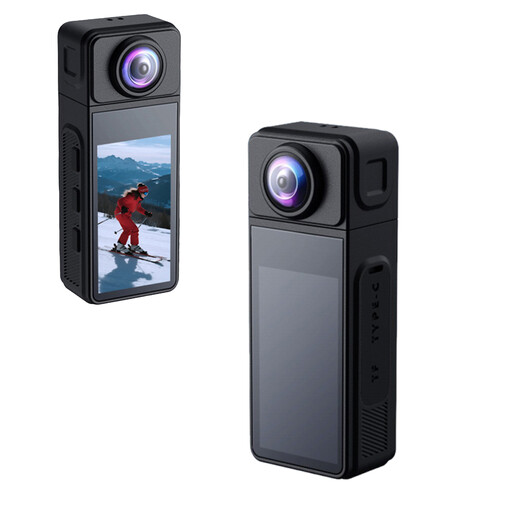
NAXSIR 2K mini action camera
For component photography, check whether the lens can give you the close-up composition you want; the product name doesn’t specify macro magnification.
The product name lists a 270° rotating wide-angle lens, a magnetic body and electronic image stabilisation.
View at Joybuy
Frequently asked questions
Does a shooting distance of 1 cm automatically mean 1:1 macro?
No. Shooting distance and maximum magnification are different specifications: the TG-7 manual says you can shoot from as close as 1 cm, while Sony explicitly specifies a maximum magnification of 1:1 for the SEL30M35. Compare the specification that matters for the composition you want.
How do I set up repeatable shots against a white background?
Set up the camera securely and keep the composition and lighting as consistent as possible. Set the white balance to suit your lighting, and adjust it if the lighting conditions change. Check whether focus bracketing or Focus Stacking is available on the specific camera model.
What extra items should I consider when comparing camera kits?
Check exactly what’s included. According to Canon, the EOS R50 kit with RF-S 18–45 mm has a limited maximum magnification. You should also consider separately whether you need a lens suited to more powerful macro shots, as well as a tripod and lighting if required.
How should I dispose of an old camera and a removable battery in Germany?
According to the German Environment Agency, electrical and electronic waste must not go in household rubbish; you can take it to a local collection point. Remove batteries where possible and take them to a separate battery collection point.


