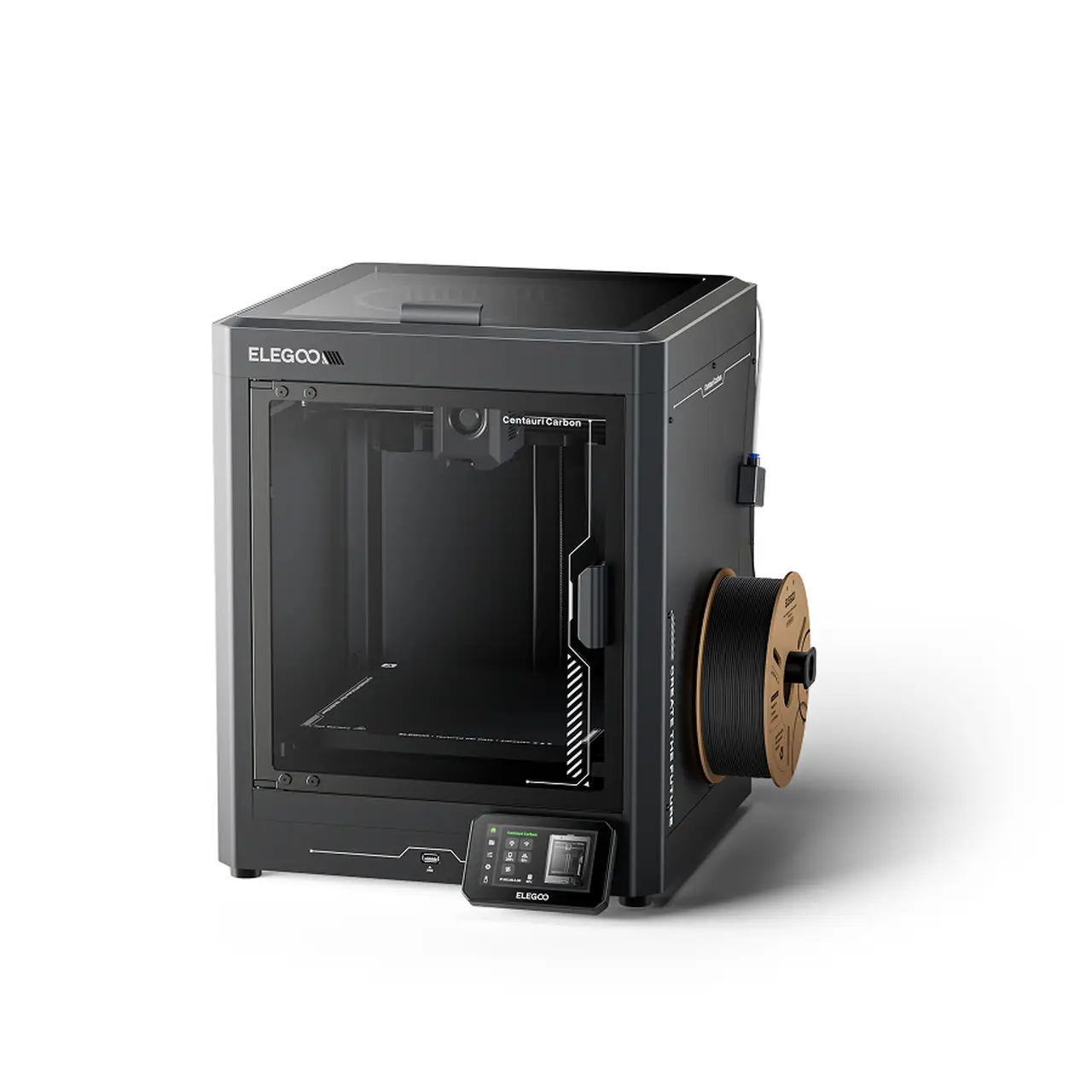
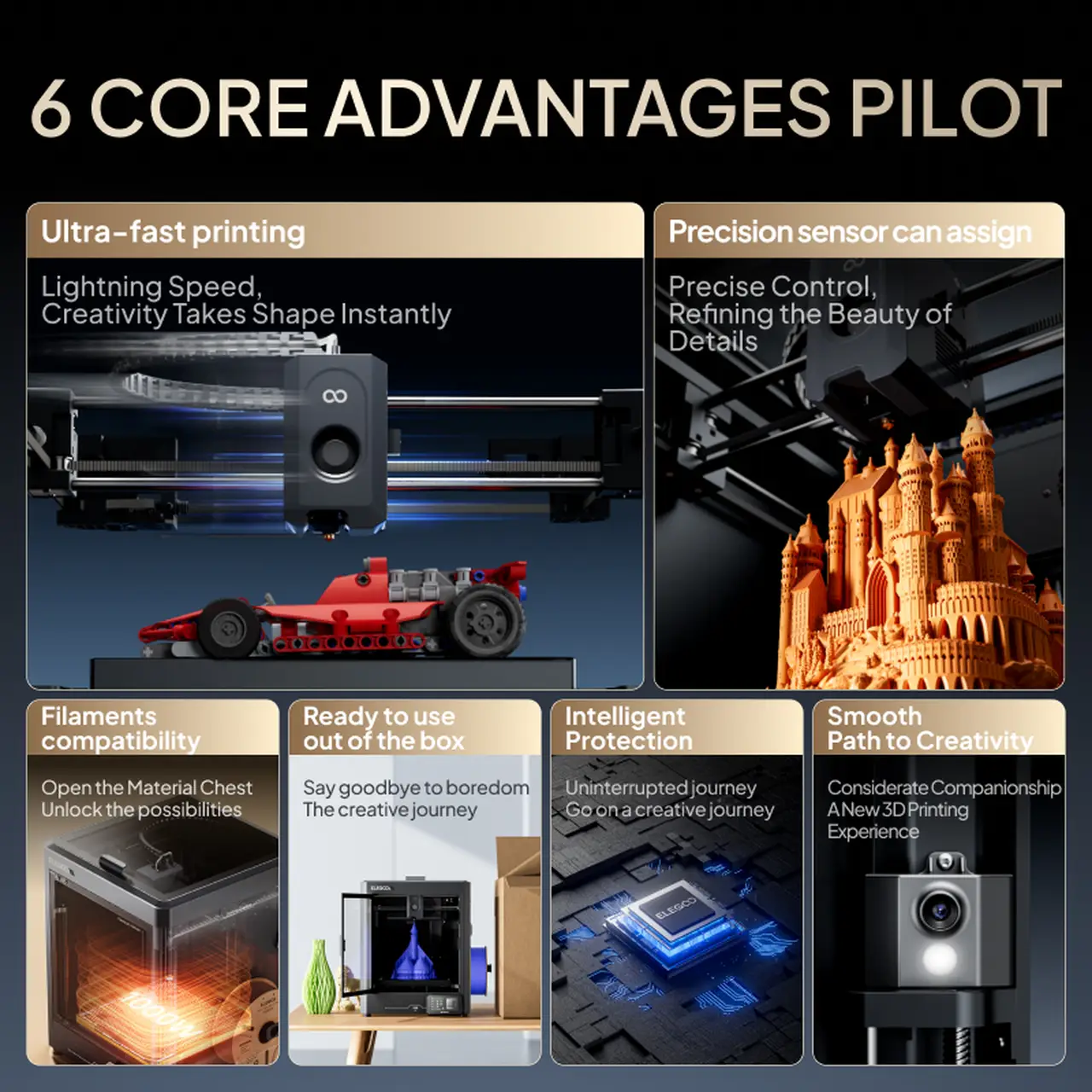
The enclosed ELEGOO Centauri Carbon combines a CoreXY system with print speeds of up to 500 mm/s, making it suited to projects where speed and precision matter. Automatic bed levelling, vibration compensation and a 256 × 256 × 256 mm build volume support a broad range of prints, from prototypes and functional parts to creative models. Its direct-drive extruder handles materials including PLA, PETG, ABS, TPU and carbon-fibre-reinforced filament, while the built-in camera and lighting help you monitor jobs—useful for makers and experienced 3D printing enthusiasts alike.
How to Choose the Right 3D Printer
Start with what you plan to print, how often you will use the machine and where it will sit. Comparing print technology, build volume and ease of use helps you choose a 3D printer that suits your projects, space and budget.
Key Features to Consider
Check these practical criteria before comparing individual models and prices in Germany.
- Print technology and materials: For functional parts, prototypes and general home use, an FDM 3D printer is often a versatile starting point and commonly uses PLA, PETG or ABS filament. Choose a resin 3D printer for fine detail, but factor in resin handling, post-processing and suitable ventilation.
- Build volume and printer size: Compare the usable build volume with the largest objects you expect to print; a larger capacity can reduce the need to split models but takes up more space. Measure your intended work area and leave room for access, filament changes and maintenance.
- Ease of use, reliability and running costs: Features such as automatic bed levelling, clear setup instructions and readily available spare parts can make printing more manageable, particularly for beginners. Check supported materials, replacement-part costs and the need for ventilation or an enclosure, as these affect ongoing cost and where you can use the printer.
Fast, Precise Printing Meets Creative Freedom
CoreXY Speed with a Stable, Calibrated Platform
Bring ambitious projects to life with the CoreXY motion system, designed for print speeds of up to 500 mm/s and acceleration of up to 20,000 mm/s². An integrated die-cast aluminium frame supports a steady printing process, while automatic bed levelling and vibration compensation help deliver precise results. Together, these features create a capable setup for makers who value efficient print jobs and carefully produced details, from early prototypes to finished creative projects.
A Direct-Drive Extruder for a Wide Choice of Filaments
Explore a broad range of materials with the direct-drive extruder, featuring a maximum nozzle temperature of 320°C and a maximum flow rate of 32 mm³/s. The printer supports PLA, PETG, ABS, ASA, TPU, PET, PC and PA, along with carbon- or glass-fibre-reinforced filaments. This material flexibility makes it easier to match a filament to your project, whether you are creating colourful everyday pieces, flexible designs or components that benefit from reinforced materials.
See Every Print Take Shape and Share the Results
Keep your print jobs in view with the built-in camera and dual LED lighting, which make it convenient to check progress inside the enclosed printer. The timelapse function gives you a simple way to capture and share the transformation from first layer to finished model. A heated bed reaching up to 110°C and a double-sided PEI build plate add practical versatility to your workflow, giving you a well-equipped foundation for a varied range of printing projects.
CoreXY 3D Printer for Makers With Varied Project Needs
Makers Who Iterate on Designs
When you are refining a design through repeated test prints,
the CoreXY system’s high printing speed helps you move through
revisions faster, while vibration compensation and automatic
bed levelling support consistent results with less manual
setup. You can spend less time waiting between design changes.
Makers Printing Larger Models
When you want to print a larger model or assembly in one
piece, the roomy build area gives you space to work, and the
double-sided PEI plate provides a printable surface on either
side. You can make bigger projects with less need to split
them into sections.
Makers Using Specialist Filaments
If your projects call for more than PLA, the direct-drive
extruder supports flexible TPU as well as PETG, ABS, ASA, PET,
PC, PA and carbon- or glass-fibre-reinforced filaments. The
high-temperature nozzle and heated bed support a broad choice
of materials, so you can select a filament to suit the part
you are making.
Makers Who Monitor and Share Prints
When you want to keep track of a print as it runs, the
built-in camera and dual LED lighting help you see its
progress, while timelapse captures the job as it takes shape.
You can check on the process and share how your print came
together.
Frequently Asked Questions
How large a model can the ELEGOO Centauri Carbon print?
The ELEGOO Centauri Carbon has a build volume of 256 × 256 × 256 mm, giving you room for prints up to 25.6 cm in each dimension. Its enclosed design and double-sided PEI build plate support a range of projects, from small prototypes to larger functional parts. Automatic bed levelling helps you get started.
What filament can I use with the ELEGOO Centauri Carbon?
The ELEGOO Centauri Carbon supports PLA, PETG, ABS, ASA, TPU, PET, PC, PA, and carbon- or glass-fibre-reinforced filaments. Its direct-drive extruder has a maximum nozzle temperature of 320°C, while the heated bed reaches 110°C. This material range gives you flexibility for models, prototypes and functional parts.
Is the ELEGOO Centauri Carbon safe to use around children?
The ELEGOO Centauri Carbon has a hot nozzle that can reach 320°C, a heated bed up to 110°C and fast-moving parts, so children should use it only with adult supervision. Keep hands clear while it is operating, and switch it off before cleaning the enclosure. This helps make print sessions safer at home.
Don't just buy, Joybuy
Discover more of your favourite brands on Joybuy with great offers.