
Lieferung heute & morgen

Qualitätsgarantie

Willkommens-Angebote freischalten: KOSTENLOSE Lieferung | Bis zu 80 % RABATT | Kostenlose 30-Tage-JoyPlus-Testphase
App herunterladen
Choosing the right dog bowl can significantly impact a dog's eating habits and well-being. Many owners, especially those with large, elderly, or fast-eating dogs, wonder how to optimize their feeding setup. An elevated dog bowl is often discussed as a solution to promote a more comfortable posture during meals and reduce rapid gulping.
This article serves as a guide. It highlights the functional aspects of various feeding stations and presents a selection of models to provide you with an informed basis for your decision.
The decision for a dog bowl should be based on your dog's individual needs. Three key criteria can help you with your selection.
An ergonomic feeding height can help reduce the strain on a dog's neck and joints. This is particularly relevant for large breeds and senior dogs with mobility issues. As a general guideline, the top edge of the bowl should be roughly level with the dog's lower chest. An adjustable-height dog bowl offers the greatest flexibility here, as it can be adapted to your dog's size or grow with them. Such a dog bowl for large dogs can be precisely set to the required height.
The material of the bowl affects hygiene, durability, and stability.
Modern feeding stations often offer more than just a holder for the bowl.
Based on functionality and use cases, we have compiled a selection of different models that meet various requirements.
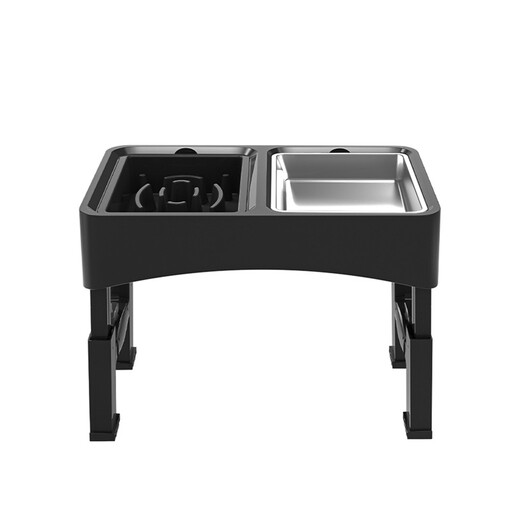
Why This Model Stands Out: This model combines multiple functions in one product. It offers a four-level height adjustment, a slow-feeder bowl, and a separate stainless steel bowl. Its foldable design also makes it space-saving and portable.
Advantages:
Who It's For: Dog owners looking for a flexible all-in-one solution for healthy feeding. Ideal for households with dogs of different sizes, for growing puppies, or for owners who specifically want to slow their dog's eating habits.
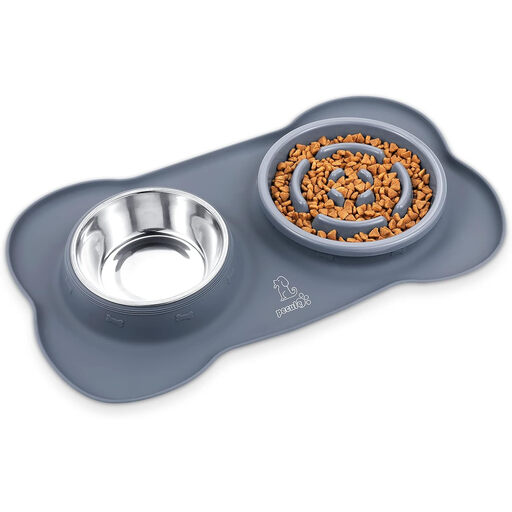
Why This Model Stands Out: This set integrates a slow-feeder bowl and a water bowl into a non-slip silicone mat. The mat catches spilled food and water, keeping the feeding area clean. Although it's not a classic elevated bowl, it addresses the problems of gulping and mess.
Advantages:
Who It's For: Owners of small dogs and cats that tend to eat quickly and make a mess. The non-slip feature makes it particularly useful on smooth floors like tile or hardwood.
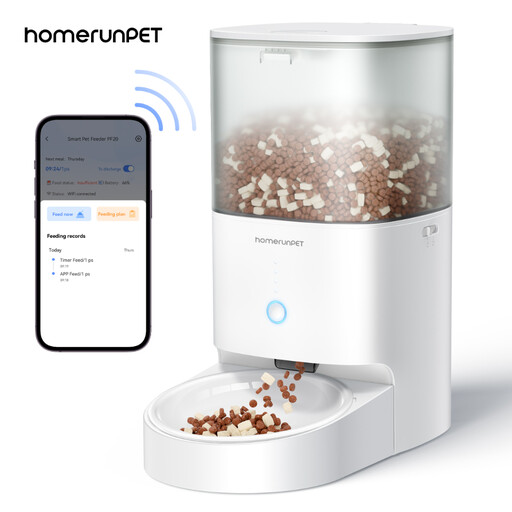
Why This Model Stands Out: This automatic feeder offers a high-tech solution for controlled and scheduled feeding. While only slightly elevated, its strength lies in automation. You can use an app to set precise feeding schedules and portion sizes.
Advantages:
Who It's For: Pet owners who are often away from home or have a very structured daily routine. The feeder ensures that the pet is fed on time and with the correct amount of food, which supports healthy feeding.
Every dog is unique, and the perfect feeding station for your dog depends on many factors. The models presented here cover common use cases, but the market offers an even wider variety.
If you are looking for other models, different materials, or specific sizes, you can find a broader selection in our adjustable dog bowl category.
A common recommendation is to measure your standing dog's withers height (shoulder height) and subtract about 15 cm (for large dogs). The top edge of the bowl should be at approximately this height. An adjustable-height dog bowl is advantageous here as it allows for precise customization.
A slow-feeder bowl is primarily designed for dogs that gulp down their food very quickly. Eating more slowly can promote better digestion. For dogs that already eat at a calm pace, such a bowl is not strictly necessary.
A stainless steel bowl is very easy to care for. For daily hygiene, rinsing with warm water and a little dish soap is sufficient. Most stainless steel bowls are also dishwasher-safe, which ensures a thorough and hygienic cleaning.