If you want to show tiny outlines or lettering at a larger size, an interchangeable-lens camera with a suitable macro lens is one option. A compact camera with macro capabilities is worth considering if you’d rather not change lenses. As well as the level of detail you need, consider how much room you’ll have to position the lighting and what’s actually included in the box. A stable setup, controlled lighting and consistent white balance can also help you take a series of similar-looking product shots, as Canon Germany explains in its product photography advice.
Which option is right for you?
Pin sellers who need fine detail
You want small designs, outlines or lettering to stand out clearly in your product photos. To achieve this, assess the specific camera and macro lens combination you’ll be using. Canon Germany points out that accurate focusing can be challenging in close-up photography.
Photographers dealing with colour and reflections
If white takes on a colour cast or the metal edges create strong reflections, you’ll need to control the white balance and position your lighting carefully. Nikon Germany explains that white balance affects colour reproduction, and that the lighting setup also influences the result.
Sellers with lots of pin designs
You photograph similar products repeatedly and want to keep the framing and background as consistent as possible. Canon Germany recommends using a stable setup, such as a tripod, to achieve consistent product framing.
What should you look for when buying?
First, consider how large you need the finest details to appear in the image. Then think about how you’ll light the subject, whether you can recreate the same setup each time, and whether you’re happy to set up a separate lens.
Compact camera with macro capabilities
A good fit if: You want to photograph individual pins without a separate interchangeable lens.
Bear in mind: A short focusing distance alone doesn’t tell you the magnification ratio or how much room you’ll have to position lighting in front of the lens.
Interchangeable-lens camera with a macro lens
A good fit if: You want to tailor the framing and close-up capabilities to a specific lens.
Bear in mind: A camera body or standard zoom lens isn’t automatically a macro setup. Check whether the right lens is included.
Try your existing camera first
A good fit if: You want to show whole pins rather than tiny surface details at first, and aren’t yet sure how much magnification you need.
Bear in mind: Lighting and a tripod can’t make up for a lack of close-focusing capability if your camera and lens combination can’t show the details large enough.
| Priority |
What to check before buying |
Who is this important to? |
| Show fine detail |
Check the magnification ratio and framing offered by the specific lens, as well as the room available to light the pin. |
If you want to show tiny outlines or lettering at a larger size, capturing detail is especially important. Around 36 % of consumers put this priority first. |
| Control colour and reflections |
Check whether you can adjust the white balance and exposure to suit your lighting, and whether there’s enough room to position the lights. |
If you want enamel and metal to look true to colour against a white background, without distracting reflections, lighting control is key. Around 29 % of consumers give this priority. |
| Take consistent shots in batches |
Check whether you can set up the camera, lighting and framing securely for repeated shots. |
If you photograph lots of similar pins, you’ll want to keep the framing and background as consistent as possible. Around 21 % of consumers prioritise a repeatable photography setup. |
| Get started easily |
Compare the exact model name and the list of items included, including the camera, lens and charging accessories. |
If you only take photos occasionally and want to keep your setup simple, it’s important to know exactly what’s included. Around 14 % of consumers prioritise an easy start. |
Common misconceptions
-
Assuming “macro” in the name tells you how much detail you can capture
A compact camera’s short focusing distance and an interchangeable-lens camera lens’s magnification ratio describe different things. The camera body alone doesn’t determine the macro magnification.
Test the specific camera and lens combination with a pin at the size you want it to appear in the image, and check that there’s still room to position the lighting.
-
Assuming a standard zoom kit is a complete macro set
The Nikon Z50II kit we checked includes a standard zoom lens, not the separately listed NIKKOR Z DX MC 35mm f/1.7 macro lens. Nikon also notes that a charger isn’t included with this kit.
Compare the full model name and list of included items before choosing a kit.
-
Assuming higher resolution will fix colour casts and reflections
Resolution alone won’t control the white balance or how the scene is lit. Both affect how white, enamel colours, shadows and reflective metal edges look in your photos.
Start with a stable setup, suitable lighting and the right white balance, then check the result with a typical pin.
A guide to relevant brands
OM SYSTEM
The Tough TG-7 is a compact camera with a Microscope mode for close-ups, so there’s no need for a separate interchangeable lens.
- OM SYSTEM states that Microscope mode can focus from 1 cm, and that the TG-7 has a resolution of 12 megapixels.
- Focusing distance isn’t the same as the magnification ratio of an interchangeable lens. Check whether there’s still room for soft lighting at your chosen camera position.
Canon
The EOS R50 can be used as an interchangeable-lens camera for pin photography with a suitable RF lens.
- Canon Germany lists a 24,2-MP APS-C sensor and a vari-angle screen for the EOS R50. According to Canon, the separately listed RF 35mm F1.8 MACRO IS STM offers a magnification ratio of 1:2.
- Macro capabilities come from the specific lens, not the camera body alone. 1:2 isn’t 1:1.
Nikon
The Z50II is a DX interchangeable-lens camera, and the NIKKOR Z DX MC 35mm f/1.7 is a suitable close-up option.
- Nikon Germany lists an actual maximum magnification ratio of 1:1,5 for its DX macro lens, with a distance of 7,2 cm between the lens and subject.
- The stated 1:1 equivalent refers to the 35mm/FX format. The Z50II standard zoom kit we checked doesn’t include the DX macro lens.
Sony
The α6400 is an APS-C interchangeable-lens camera with an E-mount; the SEL30M35 is a separately available APS-C macro lens for this system.
- Sony lists a maximum magnification of 1x and a minimum focusing distance of 0,095 m for the SEL30M35.
- The minimum focusing distance alone doesn’t tell you how much room there’ll be between the front of the lens and the pin. Also check how you’ll position the lighting and what’s included with the specific combination.
Camera deals at Joybuy
These Joybuy offers are digital cameras with general features such as autofocus or zoom. These specifications alone don’t prove that a camera is suitable for macro photography of enamel pins. Check the close-focusing capability and the usable framing for your subject.
 No image available
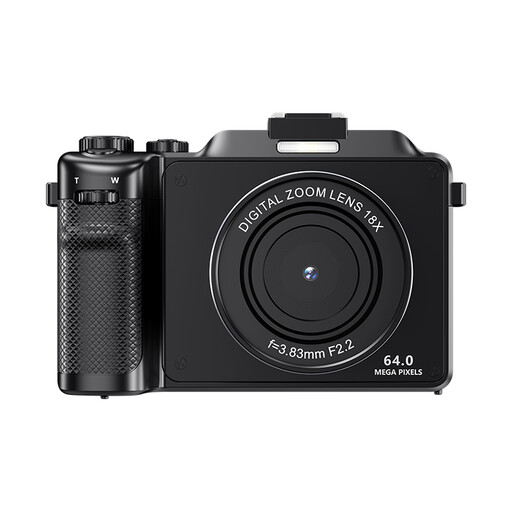
NAXSIR 4K Ultra HD digital camera
Before buying, check whether it can focus on a pin at the size you want, and whether there’s enough room to position the lighting.
64 MP photo resolution; 18x digital zoom; autofocus; 32 GB memory card.
Joybuy
 No image available
KOMERY X9 digital camera
If you’re considering it for enamel pins, check the close-focusing capability and framing with the actual subject. The zoom figure alone doesn’t tell you whether it’s suitable for macro photography.
4K; 64 MP; autofocus; 18x zoom; image stabilisation; flash; colour: black.
Joybuy
Frequently asked questions
Is a minimum focusing distance of 1 cm the same as 1:1 macro?
No. The figure quoted for the OM SYSTEM TG-7 describes a possible focusing distance in Microscope mode; 1:1, on the other hand, refers to the magnification ratio on the sensor. Check the framing with your pin and make sure there’s still room for lighting in your chosen position.
How can you create a repeatable setup against a white background?
Set up the camera securely, keep the framing consistent, and test the lighting position and white balance with a typical pin. Softboxes can soften the light and reduce harsh shadows. Then check how the enamel colours and metal edges look in the image.
Does a camera kit include a macro lens or charger?
It depends on the specific kit. Nikon Germany lists an NIKKOR Z DX 16–50mm f/3.5–6.3 VR with the Z50II kit we checked, and notes that a charger isn’t included. The separately listed DX macro lens isn’t part of this kit. Check the list of items included with the offer you’re considering.
What are my rights if I buy a faulty camera in Germany?
When you buy as a consumer from a business seller, you’re generally entitled to a statutory guarantee of at least two years from the date you receive the goods. The seller is responsible for this. Your Europe, the European Union’s information portal, distinguishes these statutory rights from a voluntary manufacturer’s warranty. These consumer rules don’t automatically apply if you’re buying as a business.


