
Lieferung heute & morgen

Qualitätsgarantie

Willkommens-Angebote freischalten: KOSTENLOSE Lieferung | Bis zu 80 % RABATT | Kostenlose 30-Tage-JoyPlus-Testphase
App herunterladen
An enameled cast iron pot with lid is suitable for braised dishes, soups, stews, roasts and, depending on the model, baking. The combination of cast iron and enamel brings together heat retention and a sealed surface. Even so, not every casserole dish is right for every household. Weight, capacity, lid design and hob compatibility all determine whether the pot remains practical for everyday use.
As a Joybuy Product Recommendation Officer, I therefore focus on reliable product data rather than design promises alone when making my selection. Here are three common buying misconceptions you should know before ordering.
A 24 cm cast iron pot can have noticeably different internal dimensions and capacities depending on its shape. Tall, narrow pots are better suited to soups and braised dishes. Shallower casserole dishes provide more surface area for searing. For two to three portions, a 22 cm cast iron pot with around 2.6 to 2.9 litres may be sufficient. Families or those cooking for guests will often benefit from a 26 cm cast iron pot with a capacity of around 5 litres.
A pot for induction requires a magnetic base or a suitable cast iron body. For oven use, the maximum temperature and lid knob specifications are also relevant. Some models have a limit of 230 or 240 °C, while others are approved for temperatures of up to 250 or 260 °C. These figures should always come from the relevant product description.
Enamel is a glass-like surface and can be damaged by impacts, metal utensils or sudden temperature changes. It does not require the traditional seasoning process used for untreated cast iron, but it is not indestructible. A hot pot should never be placed straight into cold water or set down on a cold stone worktop.
An enameled casserole dish consists of a cast iron body with enamel on the inside and, often, the outside too. Cast iron distributes heat comparatively evenly and retains it for longer. This is useful for slow cooking and keeping food warm. Enamel makes cleaning easier and, on fully coated surfaces, prevents food from coming into direct contact with the metal.
Look for a clear material description such as “enameled cast iron”. A product made from enameled stoneware or ceramic may look similar, but it is not a cast iron pot and is generally not suitable for direct heat on the hob.
A tightly fitting lid reduces moisture loss during slow cooking. Some models feature dimples or a special condensation structure on the underside of the lid. This allows condensed water to drip back onto the food. This design is particularly useful for braised dishes, roasts and stews, but it does not replace proper temperature control.
Also check whether the lid knob can withstand the stated oven temperature. With an oven-safe pot, both the pot and lid must be approved for the desired temperature.
The actual weight is also an important consideration. A large cast iron pot can become heavy once the lid and contents are included. Ergonomic side handles are therefore important for safely moving the pot from the hob to the oven and onto the table.
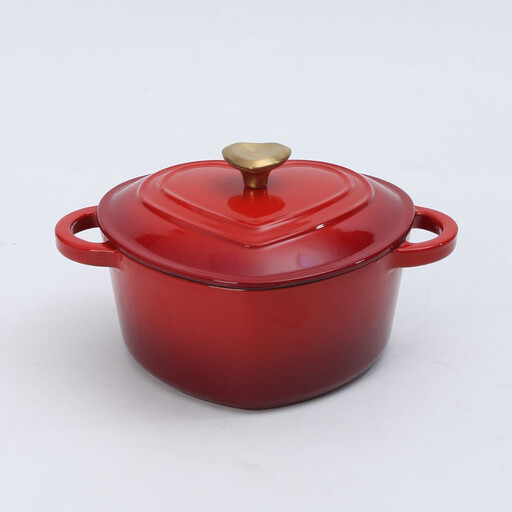
Why this product suits the profile: The 19 cm pot is compact and designed for smaller quantities. Its heart-shaped design also makes it an appealing gift idea or serving piece for the table.
The diameter, material and capacity are clearly stated as 19 cm, cast iron and an enamel coating. Compatibility with hobs, induction and ovens is also specified.
Compact shape, enameled surface and a supplied lid; suitable for hobs, induction and ovens according to the product details.
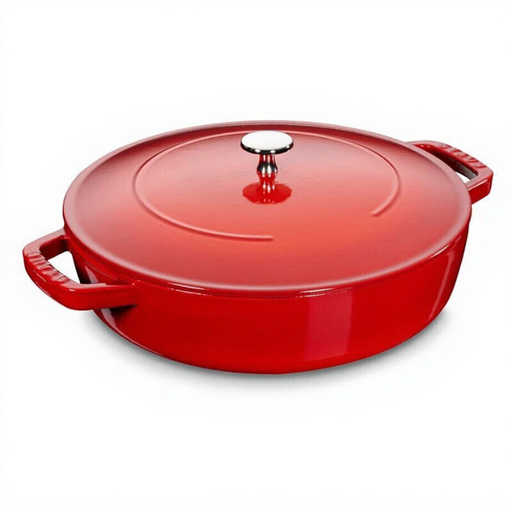
Why this product suits the profile: The medium size is suitable for regular slow cooking, searing and serving. The lid with Chistera structure is designed to return condensed water to the dish.
The 2,4-litre capacity and oven suitability up to 250 °C are clearly stated. This makes it easier to compare the model with the quantities required for your recipes.
Enameled cast iron, induction compatibility and a lid with a special condensation structure; dishwasher-safe according to the product details.
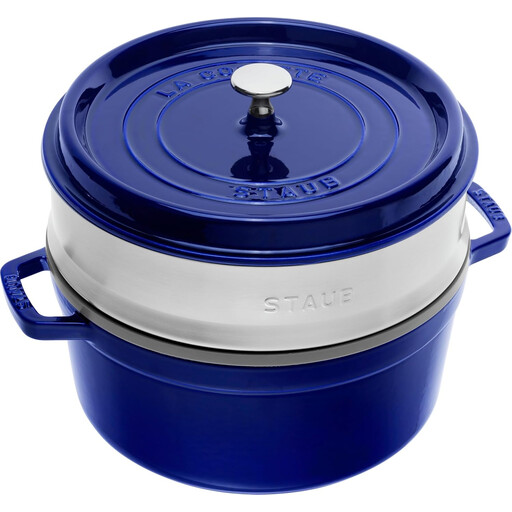
Why this product suits the profile: The large capacity is designed for families, guests and several cooking methods. The insert allows you to steam food while braising or cooking underneath.
The product details specify 5,2 litres, induction compatibility, oven use up to 250 °C and the included stainless steel steamer insert. This gives it a clearer purpose than a purely decorative pot.
A combination of braising pan, lid and 304 stainless steel steamer insert; suitable for all common hob types, including induction.
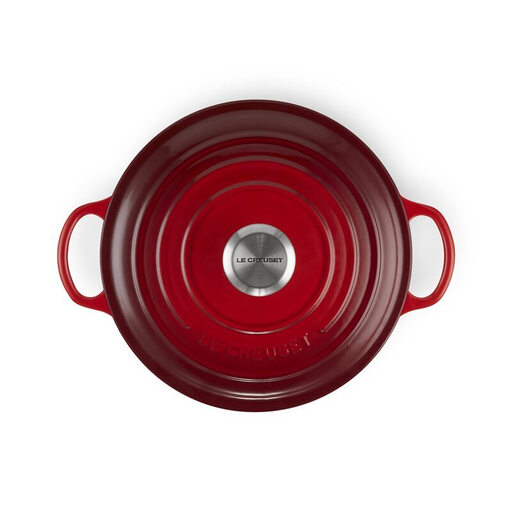
Why this product suits the profile: According to the product description, the round Marmite shape with curved inner walls makes stirring easier. The model can go from the hob to the table and is compatible with several hob types.
The 3,1-litre capacity is explicitly stated. This allows you to check before buying whether the pot is large enough for soups, stews or several portions.
3,1-litre capacity, enameled cast iron and compatibility with electric, gas and induction hobs according to the product details.
We have put together a complete, regularly updated list of products that fully meet these strict selection criteria and the safety regulations applicable in the EU.
To keep an enameled cast iron pot in use for as long as possible, a few important habits are worth following:
Even if a model is labelled dishwasher-safe, frequent washing can alter the appearance of the surface. Hand washing is the gentler option for the material with many enameled pots.
Many enameled cast iron models are suitable for induction hobs. The manufacturer’s explicit statement is decisive. The pot should also match the size of the induction zone and be lifted rather than slid when moved, to prevent scratching the hob.
A 24 cm cast iron pot with around 2,4 to 3,1 litres is often sufficient for several everyday portions. Anyone who regularly cooks for four to six people or entertains guests could consider a 26 cm cast iron pot with approximately 5 litres. More compact models are sufficient for individual portions and small side dishes.
Its service life depends on the quality of the workmanship and how it is handled. Cast iron itself is robust, while enamel can be damaged by drops, sudden temperature changes or unsuitable cleaning utensils. Gentle cleaning, gradual heating and dry storage all help preserve the cooking pot for braising over the long term.