
Lieferung heute & morgen

Qualitätsgarantie

Willkommens-Angebote freischalten: KOSTENLOSE Lieferung | Bis zu 80 % RABATT | Kostenlose 30-Tage-JoyPlus-Testphase
App herunterladen
A high-quality wooden cutting board is more than just a kitchen tool; it's a foundation for daily meal preparation and can also be an aesthetic element in your kitchen. However, the selection can be overwhelming. Many products look good at first glance but only reveal their weaknesses with use. To ensure your next purchase is a durable and functional asset, we'll show you which pitfalls to watch out for and which features truly matter.
Before exploring the benefits of different models, it's wise to understand the most common reasons for a bad purchase. These three points often lead to disappointment and unnecessary expense:
To avoid these pitfalls, focus on a few objective core parameters. These will help you find a product that meets your practical needs.
The choice of wood is fundamental. Hardwoods like walnut, beech, oak, or acacia offer a good balance of durability and gentleness on knives. They are dense enough to resist deep cuts immediately but forgiving enough to protect high-quality knife blades.
The right size depends on your available space and cooking habits. A small wooden kitchen board (approx. 30x20 cm) is sufficient for chopping herbs or an onion. For preparing entire meals, a large cutting board (from 40x30 cm) is more practical.
Look for these functional details:
Based on these objective criteria, we have identified some products from our range that offer a suitable solution for different user profiles.

Why This Fits Their Persona: This set offers the right size for every task—from a small board for snacks to a large one for the main meal. It's ideal for anyone who wants flexibility and a complete starter kit without having to buy multiple individual products.
The set avoids the "one-size-fits-all" pitfall by offering three different sizes. Each board is also equipped with an integrated juice groove and inset handles, thereby avoiding impractical design flaws.
Three sizes in one set for maximum versatility. The carbonised bamboo material is designed for durability. Integrated juice grooves and handles on every board.
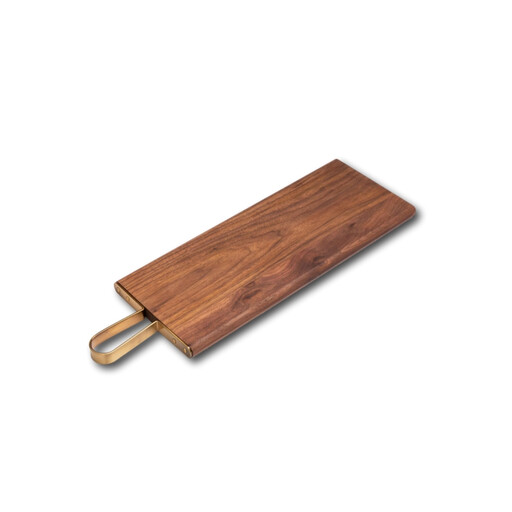
Why This Fits Their Persona: For users seeking a functional kitchen board that doubles as a stylish serving platter for cheese, cold cuts, or antipasti. The elegant look of the walnut wood and the unique handle design make it an eye-catcher on any table.
This board intentionally uses a high-quality wood (walnut) instead of a generic material. The long, double handle is not just a design element but a thoughtful functional detail that makes handling easier.
Crafted from solid walnut wood with an attractive grain. The elongated shape and distinctive handle make it ideal for serving. Sturdy construction with a 20 mm thickness.

Why This Fits Their Persona: Anyone who cooks regularly and processes large quantities of ingredients needs one thing above all: space. This large cutting board provides a generous work surface for complex recipes, carving roasts, or rolling out dough.
This board specifically addresses the need for a large work surface and integrates a crucial functional detail with its juice groove. The bamboo material is described as being gentle on knives, thus avoiding the pitfall of overly hard materials.
Generous dimensions of 45 x 30 cm. Integrated juice groove for clean work. The board is reversible, allowing for hygienic separation of different foods.
We've compiled a complete, up-to-date list of products that fully meet these strict selection criteria and rigorous safety standards.
Proper care is straightforward but crucial. Clean the wooden cutting board by hand after each use with warm water and a mild dish soap. Rinse it thoroughly and dry it immediately with a cloth. Store it upright so that air can circulate on all sides. Important: Never put a wooden board in the dishwasher, as the heat and moisture will lead to cracks and warping. Oil the board regularly (about every 4-6 weeks) with a food-safe mineral oil or special wood conditioning oil to protect it from drying out.
In general, dense hardwoods with a fine grain are best. These include maple, beech, oak, cherry, and walnut. These woods are robust enough to withstand daily use but also forgiving enough to preserve the sharpness of your knives. Bamboo is also a popular choice as it is very hard and moisture-resistant.
Yes, it is safe to do so with proper handling. Wood has natural antibacterial properties. The key is hygiene: clean the board thoroughly with hot water and dish soap immediately after contact with raw meat. Many users dedicate a separate board for this purpose or use the reversible feature of their board, reserving one side for raw meat and fish and the other for vegetables and bread.