
Lieferung heute & morgen

Qualitätsgarantie

Willkommens-Angebote freischalten: KOSTENLOSE Lieferung | Bis zu 80 % RABATT | Kostenlose 30-Tage-JoyPlus-Testphase
App herunterladen
A good wooden cutting board is a cornerstone of any kitchen. It protects your knife blades, provides a stable work surface, and can even double as a stylish serving platter. However, the market is flooded with products whose quality only becomes apparent after a few weeks of use—often through warping, cracking, or rapid wear. Before you make a decision, it's crucial to understand the most common pitfalls that can lead to a bad purchase.
The 3 most common pitfalls when buying a wooden cutting board:
To make an informed choice, you should focus on objective criteria rather than marketing claims. The following three aspects are crucial for the longevity and functionality of your kitchen board.
The choice of material has the biggest impact on your cutting board's performance.
Good cutting boards offer thoughtful details that make daily kitchen tasks easier.
Instead of making a one-size-fits-all recommendation, we have selected products for different user profiles. Each of these models addresses the aforementioned criteria in its own way.
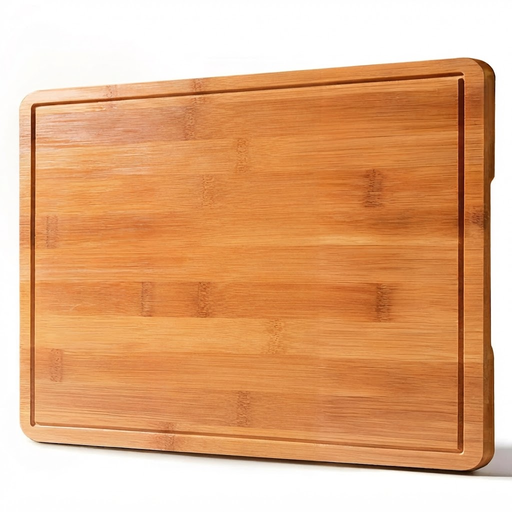
Why it's a good fit: Ideal for daily use in family kitchens that need a durable, low-maintenance, and affordable board that can withstand regular use.
According to the manufacturer, the carbonisation of the bamboo increases durability and reduces moisture absorption. This counteracts the typical warping and cracking found in cheaper boards.
Features an integrated juice groove and practical handles—functional details that are not a given in this price range.

Why it's a good fit: For cooks who value a large, stable work surface, brand quality, and an attractive design that is also suitable for serving bread or cheese.
Bamboo is naturally dimensionally stable. The craftsmanship from an established brand like WMF minimises the risk of material and construction defects that lead to rapid wear.
The reversible design allows for hygienic separation of foods. The deep juice groove makes it a fully-fledged carving board for roasts.
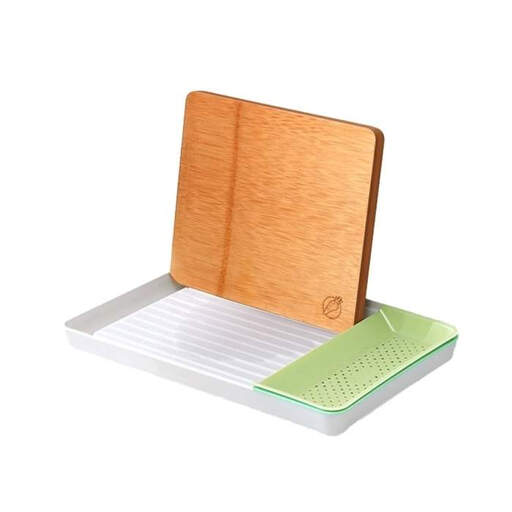
Why it's a good fit: Perfect for anyone who values an organised workflow while cooking and wants to neatly separate ingredients and waste (mise en place).
This integrated system solves the practical problem of a disorganised workspace. Instead of using multiple bowls and plates, the integrated trays structure the workflow.
The set includes a bamboo cutting board, two collection trays, and a draining tray. This enables an efficient and clean workflow from preparation to disposal.
We have compiled a complete, up-to-date list of products that fully meet these strict selection criteria and all applicable safety regulations.
The frequency depends on usage. As a rule of thumb, treat a wooden board every 4 to 6 weeks with a food-grade mineral oil or a special wood conditioning oil. Apply the oil generously, let it soak in for a few hours, and then wipe off any excess. This saturates the wood, prevents moisture from penetrating, and helps prevent cracks.
Traditional hardwoods like beech, maple, or oak, especially in an end-grain construction, are generally considered gentler on knife blades than the significantly harder bamboo. The wood fibres give way slightly under the pressure of the blade. For most home cooks, however, the difference is often minimal in practice. For very high-quality and delicate Japanese knives, a classic wooden board may be the better choice.
Never clean your wooden board in the dishwasher, as the heat and moisture will cause the wood to warp and crack. Instead, wash it by hand with warm water and a small amount of mild dish soap. Rinse it thoroughly and dry it immediately with a cloth. It's best to store it upright so that air can circulate on all sides, allowing the board to dry completely. For occasional disinfection, you can wipe the surface with vinegar or scrub it with coarse salt and half a lemon.