
Lieferung heute & morgen

Qualitätsgarantie

Willkommens-Angebote freischalten: KOSTENLOSE Lieferung | Bis zu 80 % RABATT | Kostenlose 30-Tage-JoyPlus-Testphase
App herunterladen
By the Joybuy Product Recommendation Officer, August 30, 2026
Purchasing new home appliances is a significant investment. With energy costs on the rise, efficiency is becoming a key consideration. However, the market is flooded with marketing promises and technical specs that often confuse more than they clarify. Many buyers fall into traps that lead to unnecessary expenses and frustration. This guide will help you cut through the noise and make an informed decision that pays off in the long run.
Before we dive into the key parameters, let's look at the common pitfalls to avoid.
To make a smart purchasing decision, focus on objective and measurable criteria. These three aspects are essential for energy-efficient home appliances.
Since March 2021, a new, stricter EU energy label with a scale from A to G has been in effect. The old "plus" classes (A+++, A++, A+) have been discontinued, making comparisons more transparent.
Operating noise is a crucial comfort factor. Quiet home appliances are especially important in open-plan living areas or for overnight operation.
The appliance's size must match your household's needs. A unit that's too large wastes energy, while one that's too small leads to more frequent cycles.
Here are some product recommendations tailored to specific needs that avoid the pitfalls mentioned.
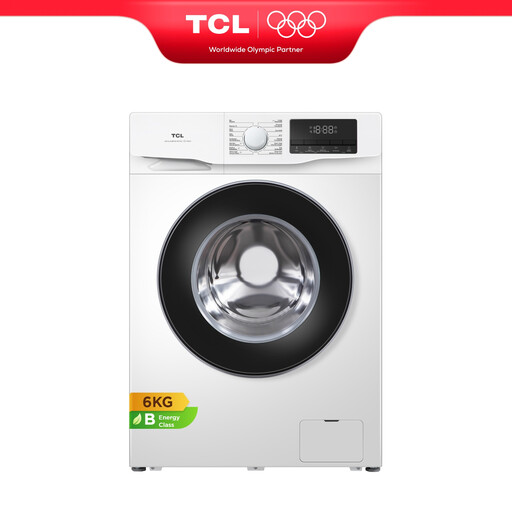
Why This Fits Their Persona: With a depth of just 45 cm, this model fits perfectly into small bathrooms or kitchen nooks without compromising on its 6 kg capacity, ideal for one- to two-person households.
The BLDC inverter motor ensures quiet operation and durability, avoiding the noise trap. Its good Energy Class B rating and automatic weight detection keep running costs low.
Extremely compact design; useful programmes like Steam Wash and Quick 15’ offer real-world value for daily use.
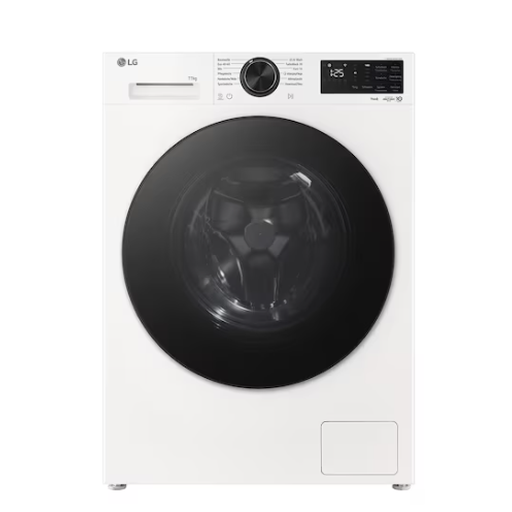
Why This Fits Their Persona: With a 9 kg capacity, this LG washing machine effortlessly handles a family's laundry load. Its Energy Class A rating and low water consumption are easy on the environment and your wallet.
AI DD technology is a truly smart feature: it detects the weight and fabric type of the laundry and adjusts the drum movements accordingly. This protects clothing and optimises consumption—a clear added value.
TurboWash 360° provides a thorough clean in a short amount of time. The Inverter Direct Drive motor is quiet (71 dB during the spin cycle) and durable.
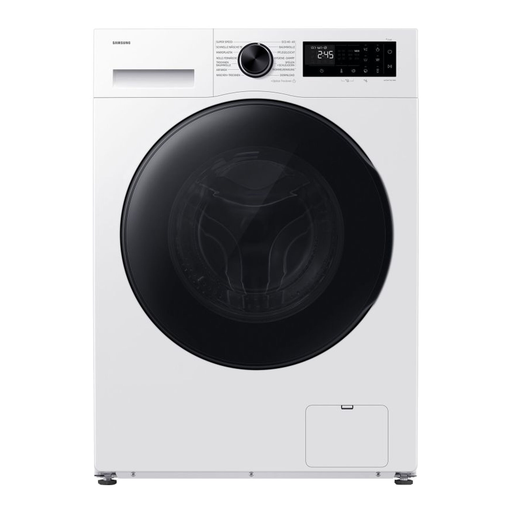
Why This Fits Their Persona: This combination appliance from Samsung unites washing and drying and is packed with smart technology. Control via the SmartThings app and compatibility with voice assistants are ideal for a connected home.
The AI Energy Mode in the app is a smart function that actively helps save energy by learning usage patterns. This is far more than a gimmick and directly addresses running costs.
The all-in-one solution saves space. The special microplastics cycle is a forward-thinking feature for environmentally conscious users.
We have compiled a complete, up-to-date list of products that fully meet these strict selection criteria and all relevant safety regulations.
A washer-dryer is an excellent space-saving solution, especially in apartments without a separate utility room. Modern units offer good washing performance. However, it's important to note that the drying capacity is usually smaller than the washing capacity, and a combined cycle takes longer than two separate processes. For households that only dry laundry occasionally and need to save space, it's a very good option.
An inverter motor (also known as a brushless DC motor or Direct Drive motor) is an essential feature of high-quality, energy-efficient home appliances. Unlike conventional motors, it operates without brushes, which reduces wear and tear and increases its lifespan. The benefits include significantly quieter operation, fewer vibrations, and higher energy efficiency, as the motor speed is seamlessly adjusted to the current load.
The exact consumption depends on the appliance type. For an Energy Class A washing machine like the TCL FP1210WA0, consumption is around 51 kWh per 100 cycles. Assuming an electricity price of €0.30/kWh, this results in a cost of only about €15.30 for 100 washes. A Bosch home appliance like the WQB245B40 heat pump dryer (although classified as Class B here, the principle is the same) uses 110 kWh per 100 cycles according to its label, which corresponds to a cost of about €33. Comparing these figures on the energy label is the most objective way to estimate long-term running costs.