
Lieferung heute & morgen

Qualitätsgarantie

Willkommens-Angebote freischalten: KOSTENLOSE Lieferung | Bis zu 80 % RABATT | Kostenlose 30-Tage-JoyPlus-Testphase
App herunterladen
When the temperatures drop, the desire for quick and hassle-free warmth rises. A portable fan heater seems like the ideal solution, but the market is flooded with devices whose marketing claims often suggest more than the technology can deliver. Many users discover after their purchase that the supposedly budget-friendly device drives up the electricity bill, or the model advertised as "quiet" disrupts their sleep. This guide will help you avoid these pitfalls and make an informed decision.
Before you decide on a model, you should be aware of the typical problems that lead to dissatisfaction.
To make a good choice, focus on verifiable technical specifications rather than marketing buzzwords.
Most modern fan heaters use PTC (Positive Temperature Coefficient) heating elements. Unlike traditional heating coils, these ceramic fan heaters have a crucial advantage: they are self-regulating. When they reach a certain temperature, they automatically reduce their power output, which minimises the risk of overheating and leads to more even heat distribution. This often makes a PTC fan heater with a remote a safer and more efficient choice.
The power, specified in watts, determines how quickly a room can be heated. However, a 2000-watt device is not inherently better than a 1500-watt one.
More important than maximum power, however, is controllability. A portable fan heater with a thermostat is essential. It switches the device off as soon as the target temperature is reached and back on when it cools down. This is the core of energy-saving heating. An additional timer allows for scheduled shutdowns, for example, before you go to sleep.
Look for fundamental safety features that no device should be without:
Here are some recommendations tailored to specific use cases.

Why This Fits Their Persona: Ideal for environments where concentration or quiet is a priority. Its compact design fits unobtrusively in a bedroom or under a desk in a home office.
This device bypasses the "quiet" trap with a specific rating: according to the manufacturer, the noise level is just 34 dB. The energy-saving mode and precise thermostat (5–35 °C) also address the efficiency trap.
Very quiet operation thanks to a brushless DC motor. Comprehensive 8-stage safety system including tip-over and overheat protection.

Why This Fits Their Persona: A great choice for living rooms or basements where more power is needed. The ECO mode helps keep energy costs in check, while the comprehensive safety features are designed for use in a family environment.
Instead of a simple "energy-saving" label, this device offers a smart ECO mode that, according to the manufacturer, automatically adjusts its power output to the ambient temperature. This provides a real boost in efficiency.
Powerful 2000W for quickly heating larger rooms. 24-hour timer and thermostat for full cost control.
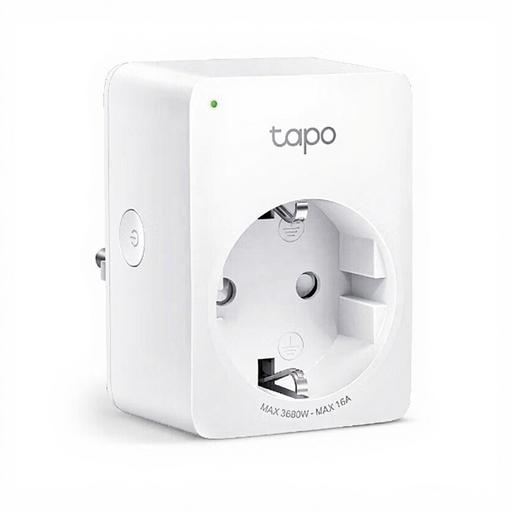
Why This Fits Their Persona: For users who want maximum control and transparency. By combining a fan heater (like the Totopia 2000W) with a smart plug, you can track consumption in real-time and control the device from anywhere.
This combination puts an end to vague energy-saving promises. The Tapo app displays real-time power consumption and helps you calculate costs precisely. You can create schedules that go far beyond a simple timer.
Full transparency over energy consumption. Remote control via app and compatibility with voice assistants like Alexa and Google Assistant.
To precisely control the energy consumption of your heating devices and reduce costs, an external timer is an effective solution, especially for older models without integrated functions. We have compiled a list of products that meet these requirements.
Power consumption depends directly on the set power level (in watts) and the operating time. A 1500-watt fan heater running for one hour at its highest setting consumes 1.5 kilowatt-hours (kWh). The "saving" aspect comes from the duration of use: a good thermostat switches the device off once the target temperature is reached, thus reducing the total runtime. To measure consumption precisely, using a smart plug with an energy monitoring function is recommended.
The noise level of a fan heater is primarily determined by the fan, not the heating element. Quiet models often use specially designed fan blades or brushless motors. In terms of safety, however, PTC ceramic fan heaters offer a clear advantage: the material self-regulates its temperature and cannot overheat as severely as traditional heating coils. Regardless of the technology, a functional tip-over protection and overheat protection are indispensable features.
This is only recommended for devices that are explicitly designed for it. Look for a model with a very quiet operating mode (under 35 dB), a reliable thermostat for temperature regulation, and a timer for automatic shutdown. The most important prerequisites are multi-level safety systems that immediately switch off the device in case of any malfunction. Always place the unit on a firm, level surface and never near duvets or curtains.