
Lieferung heute & morgen

Qualitätsgarantie

Willkommens-Angebote freischalten: KOSTENLOSE Lieferung | Bis zu 80 % RABATT | Kostenlose 30-Tage-JoyPlus-Testphase
App herunterladen
When central heating isn't enough, or you need to warm up a single room quickly and efficiently, a modern fan heater offers a convenient solution. However, concerns about high electricity bills and disruptive noise often deter potential buyers. This guide explains what to look for when choosing a model that is both energy-efficient and quiet. We will present objective criteria and a selection of devices suitable for various needs in homes and offices.
To find the right device for your needs, three factors are crucial: the heating technology, the operating noise level, and the integrated safety features.
Modern devices often use PTC (Positive Temperature Coefficient) heating elements. Such a ceramic heater has the advantage of being self-regulating: when it reaches a certain temperature, the material lowers its electrical resistance and thus its heat output. This prevents overheating and contributes to energy efficiency.
A fan heater with a thermostat is another key component of an energy-saving heater. The device automatically shuts off once the set room temperature is reached and turns back on when the temperature drops. This avoids unnecessary continuous operation and significantly reduces energy consumption. Look for models that allow for precise, degree-by-degree adjustment.
The noise level of a fan heater is measured in decibels (dB). Quiet operation is especially crucial in a bedroom or office. A quiet fan heater for the bedroom should ideally not exceed 40 dB, which is roughly equivalent to a whisper or a quiet library. Models with brushless DC motors are often superior in this regard, as they operate with less friction and are therefore quieter than conventional motors.
Safety is the top priority for any supplemental electric heater. A fan heater with tip-over protection is essential, especially in households with children or pets. A sensor detects when the device falls over and immediately shuts it off. Equally important is overheat protection, which deactivates the heater if internal temperatures get too high, minimizing fire hazards. Additionally, look for casings made of flame-retardant material and certifications like CE, which confirm compliance with European safety standards.
Based on the criteria above, we have compiled a selection of devices that stand out for their combination of performance, quiet operation, and safety features.
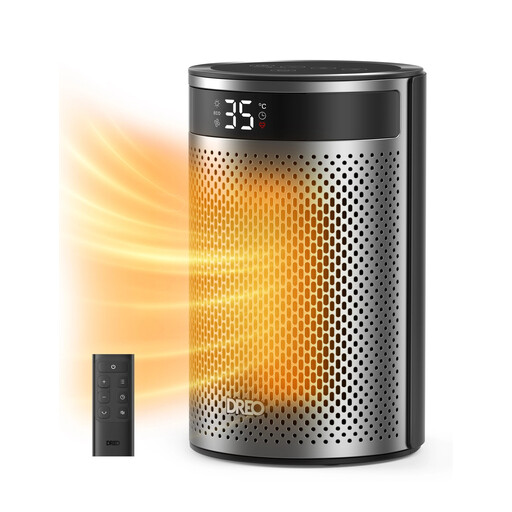
Why it stands out: The DREO Atom 416 is a compact fan heater designed for rapid warmth in small to medium-sized rooms. According to the manufacturer, its Hyperamics technology provides noticeable heat within two seconds. Its brushless DC motor allows for exceptionally quiet operation.
Benefits:
Who is it for? Ideal for individuals seeking a fast and quiet heat source for a single room, such as a home office, bedroom, or a small living area up to 20 m?.
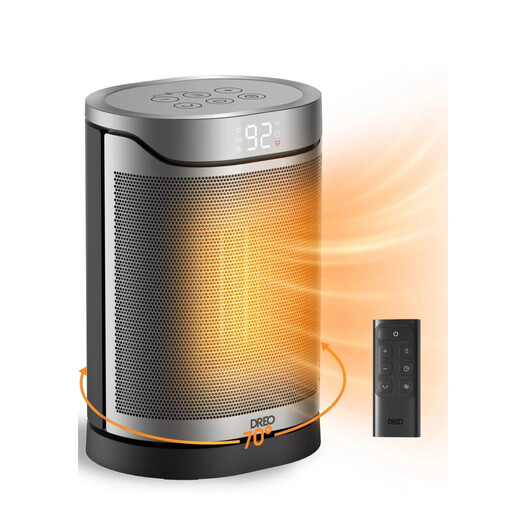
Why it stands out: The DREO Atom 318 combines the rapid heating performance of a ceramic heater with a 70° oscillation feature. This allows warm air to be distributed more evenly throughout the room. The dual DC motor ensures a quiet yet powerful airflow.
Benefits:
Who is it for? A great choice for users who prefer even heating in a medium-sized room and value wide distribution of warm air, for example, in a living room.
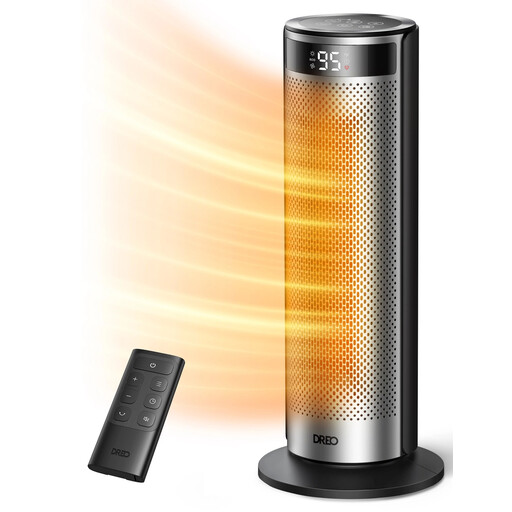
Why it stands out: With 2000W of power and a larger PTC heating element, the Solaris 628 is designed as a supplemental electric heater for larger rooms up to 25 m?. Its tower design and 70° oscillation ensure wide-reaching and rapid heat distribution.
Benefits:
Who is it for? Recommended for anyone needing a powerful yet quiet heating solution for larger living areas, open-plan offices, or poorly insulated rooms.
Was the right model for you not included, or would you like to compare more devices? Discover a wider selection of heating solutions for different needs and budgets in our category.
Discover More Electric Fan Heaters
1. How much electricity does an energy-saving fan heater use? Consumption depends on the device's wattage, duration of use, and the set temperature. A 1500-watt model running for one hour at its highest setting will use 1.5 kilowatt-hours (kWh). A fan heater with a thermostat and ECO mode significantly reduces consumption, as it only heats when necessary to maintain the temperature.
2. Are ceramic heaters really more efficient and safer? Yes, Ceramic heaters (PTC) are considered more efficient because they distribute heat more evenly and automatically reduce their output upon reaching a certain temperature. This reduces energy consumption and minimizes the risk of overheating compared to older models with heating coils.
3. What safety features are essential for a fan heater? A fan heater with tip-over protection and overheat protection are the two most important safety features. Also, look for a casing made of flame-retardant material (e.g., V-0 rating) and recognized safety seals like CE, which confirm compliance with European safety standards.