
Lieferung heute & morgen

Qualitätsgarantie

Willkommens-Angebote freischalten: KOSTENLOSE Lieferung | Bis zu 80 % RABATT | Kostenlose 30-Tage-JoyPlus-Testphase
App herunterladen
By: Joybuy Product Recommendation Officer
Chilly evenings or a draughty home office can significantly impact your comfort, especially as central heating costs continue to rise. An energy-saving fan heater offers a flexible and efficient way to generate targeted warmth exactly where you need it, without having to heat the entire house.
However, the market is filled with a vast array of models featuring different technologies and functions. This guide will help you understand the key criteria and make an informed decision. As your Joybuy Product Recommendation Officer, I have compiled the relevant information and product data to provide you with clear guidance.
To find a device that not only heats effectively but also keeps electricity consumption in check, three aspects are particularly important: the heating technology, the control options, and the power output suited to your room size.
Modern fan heaters often use PTC (Positive Temperature Coefficient) heating elements. These ceramic heaters offer several advantages over traditional devices with heating coils:
An electric heater designed to be energy-saving requires precise control. Look for the following features:
The right power and design are crucial for effective heat distribution.
Based on the criteria mentioned, we have put together a selection of models that stand out for their technical specifications and features.
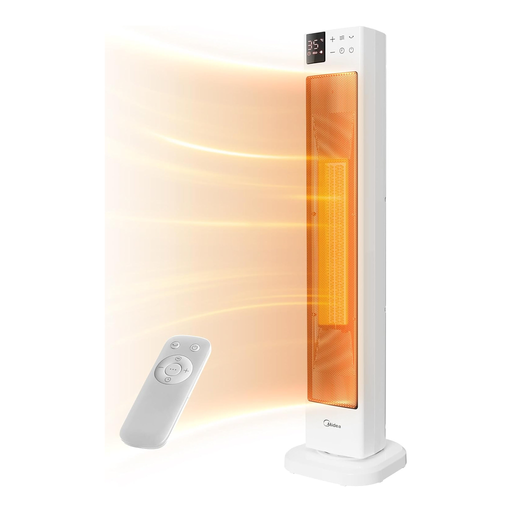
What makes it stand out: The Midea tower heater, with its 2000-watt output and wide 75° oscillation, is designed to heat medium to large rooms up to 30 m? quickly and evenly. According to the manufacturer, its PTC ceramic heating technology ensures it heats up in just 3 seconds. The ECO mode helps to efficiently maintain the set temperature.
Advantages:
Who it's for: This model is a great option for users looking for powerful supplemental heating for living rooms, large offices, or open-plan living areas, who value fast and wide-reaching heat distribution.
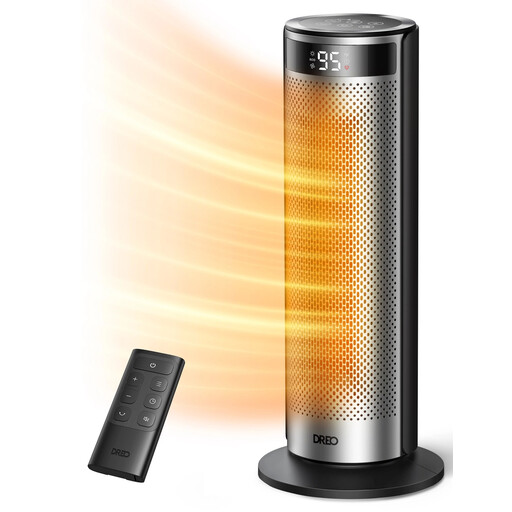
What makes it stand out: The Dreo Solaris 628 places a special focus on quiet operation and safety. According to the manufacturer, the device operates at a noise level of just 25–42 dB, making it ideal for noise-sensitive environments. The 8-stage "Shield360?" safety system includes tip-over and overheat protection, a flame-retardant casing, and a child lock.
Advantages:
Who it's for: Ideal for families with children, light sleepers, or for use in a home office where a low noise level and maximum safety are top priorities.
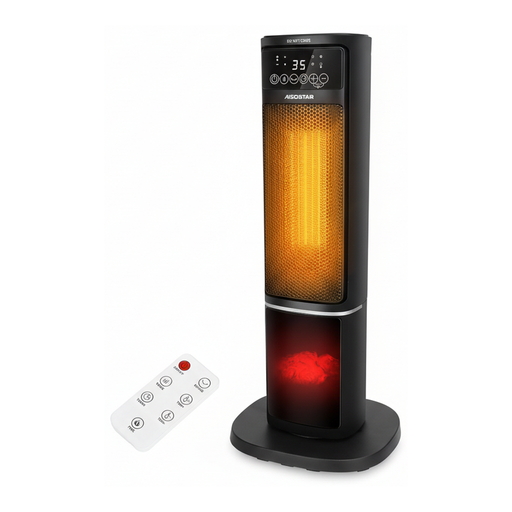
What makes it stand out: The Aigostar fan heater combines functionality with a special visual feature: a 3D flame effect that creates a cosy atmosphere. With 1500 watts of power, it is designed for small to medium-sized rooms up to 20 m?. Five different operating modes, including an ECO and an anti-frost mode, make it a versatile device.
Advantages:
Who it's for: This device is a great fit for users looking for a compact and versatile fan heater for their bedroom or office, who also appreciate an appealing design with an atmospheric light effect.
The models presented here are designed for use in dry living and sleeping areas. For humid environments like the bathroom, special safety requirements apply (e.g., protection against splashing water). If you are looking for a heater specifically designed for this purpose, you can find suitable models that meet these requirements in our Wall Mounted Bathroom Fan Heaters with Timer category.
How much electricity does an energy-saving fan heater use? Power consumption depends on the wattage and the duration of use. A 2000-watt (2 kW) fan heater uses 2 kilowatt-hours (kWh) when running for one hour at its highest setting. However, energy-efficient models significantly reduce actual consumption because the thermostat and ECO mode only switch the device on when needed, rather than letting it run continuously.
Are ceramic (PTC) heaters really more economical? Their efficiency lies primarily in their rapid heat-up time and self-regulating nature. They convert electricity into heat very directly and automatically reduce their power output when a certain temperature is reached. This prevents unnecessary energy consumption from overheating and makes their operation more economical compared to older heating coils that constantly run at full power.
How do I find a quiet fan heater? Look for the decibel rating (dB) in the product's technical specifications. A value below 45 dB is generally considered quiet and is suitable for bedrooms or studies. Models with brushless DC motors are often particularly low-noise.