
Lieferung heute & morgen

Qualitätsgarantie

Willkommens-Angebote freischalten: KOSTENLOSE Lieferung | Bis zu 80 % RABATT | Kostenlose 30-Tage-JoyPlus-Testphase
App herunterladen
Bikes suffering from the elements, a lawnmower left in the rain, or garden furniture with nowhere to go for the winter—these are common problems for many home and garden owners. An equipment tent promises a flexible and cost-effective solution. However, the market is flooded with products of widely varying quality. Many buyers find their new tent damaged after the first storm or the tarp turning brittle after just one summer.
This guide highlights the most common pitfalls to avoid when buying and explains which technical features you need to look for to find a durable and functional solution that will reliably protect your belongings.
Before you make a decision, it's important to understand the typical weaknesses that often only become apparent after the purchase.
To avoid these mistakes, you should base your choice on objective criteria. The following three parameters are crucial for durability and functionality.
The resilience of an equipment tent depends directly on the material of the tarp and the frame.
The external dimensions of a tent do not correspond to the actual usable interior space. Plan realistically and measure the items you want to store. Sizing a small storage tent too tightly often means that bikes only fit in at an angle or the lawnmower handle gets in the way. Always allow for a buffer of at least 15-20 cm in length and width to ensure comfortable access.
A good garden storage tent is distinguished by thoughtful details. These include robust zips, ideally protected by a storm flap to prevent water ingress. Check whether the tent has special ventilation windows to reduce condensation. Also essential are sturdy attachment points and included anchoring hardware (stakes, ropes) to securely fix the tent to the ground.
Based on the quality criteria mentioned, we have identified some products that are suitable for specific requirement profiles.
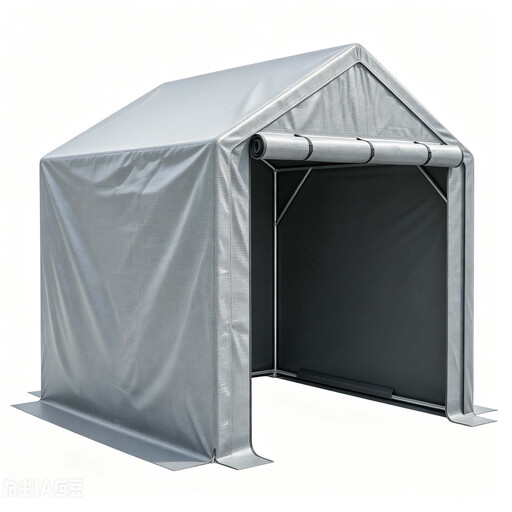
Why This Fits Their Persona: Ideal for users with limited space in their garden or yard who need reliable storage for 2-3 bikes or smaller garden tools like a lawnmower and hand tools. Its compact dimensions allow it to be set up even in smaller corners.
The tent uses a galvanised steel frame that prevents rust and a tarp made of 170g PE fabric, described as tear-resistant and UV-protected. This addresses the problems of low-quality materials and unstable constructions.
The roll-up door with a double zip allows for easy access and good ventilation. According to the manufacturer, assembly is possible without additional tools.
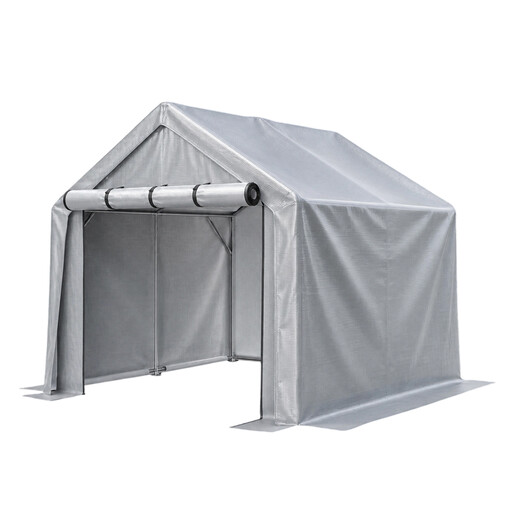
Why This Fits Their Persona: Suitable for users who need a fully-fledged shed alternative. With its generous dimensions, it offers space for a motorcycle, several bikes, or even a ride-on mower, serving as a year-round storage solution.
This model also relies on a galvanised steel frame and a 170g PE tarp. The larger footprint and height suggest a more robust construction designed for higher loads, thus minimising the risk of an unstable frame.
The key advantage is the very large interior space, which the manufacturer states is designed for 4-7 bikes or large garden equipment. This offers maximum storage flexibility.
Once your large equipment is safely stored, the next step is often organising smaller tools and accessories.
If you also want to keep small parts, screws, and tools neatly stored, we've curated a selection of suitable products.
How storm-proof is an equipment tent really? The storm resistance depends largely on two factors: the stability of the construction and, most importantly, proper anchoring to the ground. A tent with a robust, galvanised steel frame is more resilient. However, it is crucial that it is secured firmly at all designated points with the appropriate stakes for the specific ground type (e.g., ground anchors for grass, heavy-duty anchors for concrete). During storm warnings, doors should always be kept closed.
Does condensation form in a garden storage tent? Yes, condensation can form on the inside of the tarp during temperature fluctuations. This is a normal physical process. Good equipment tent models have integrated ventilation openings or windows that allow for air circulation and reduce moisture. Leaving the door open for a few hours on dry days also helps to keep the interior dry and prevent mould.
Can I use an equipment tent as a winter-proof motorcycle garage? Yes, this is possible if the tent meets certain criteria. Choose a model with a sturdy, galvanised steel frame that can also withstand snow loads. The tarp should be made of a heavy, UV-resistant material (e.g., high-quality PE or PVC). Secure anchoring is essential. For winter use, it is particularly important to ensure good ventilation to prevent corrosion on the motorcycle from condensation.